God Is Kind - So Why Does He Send Us to Hell?
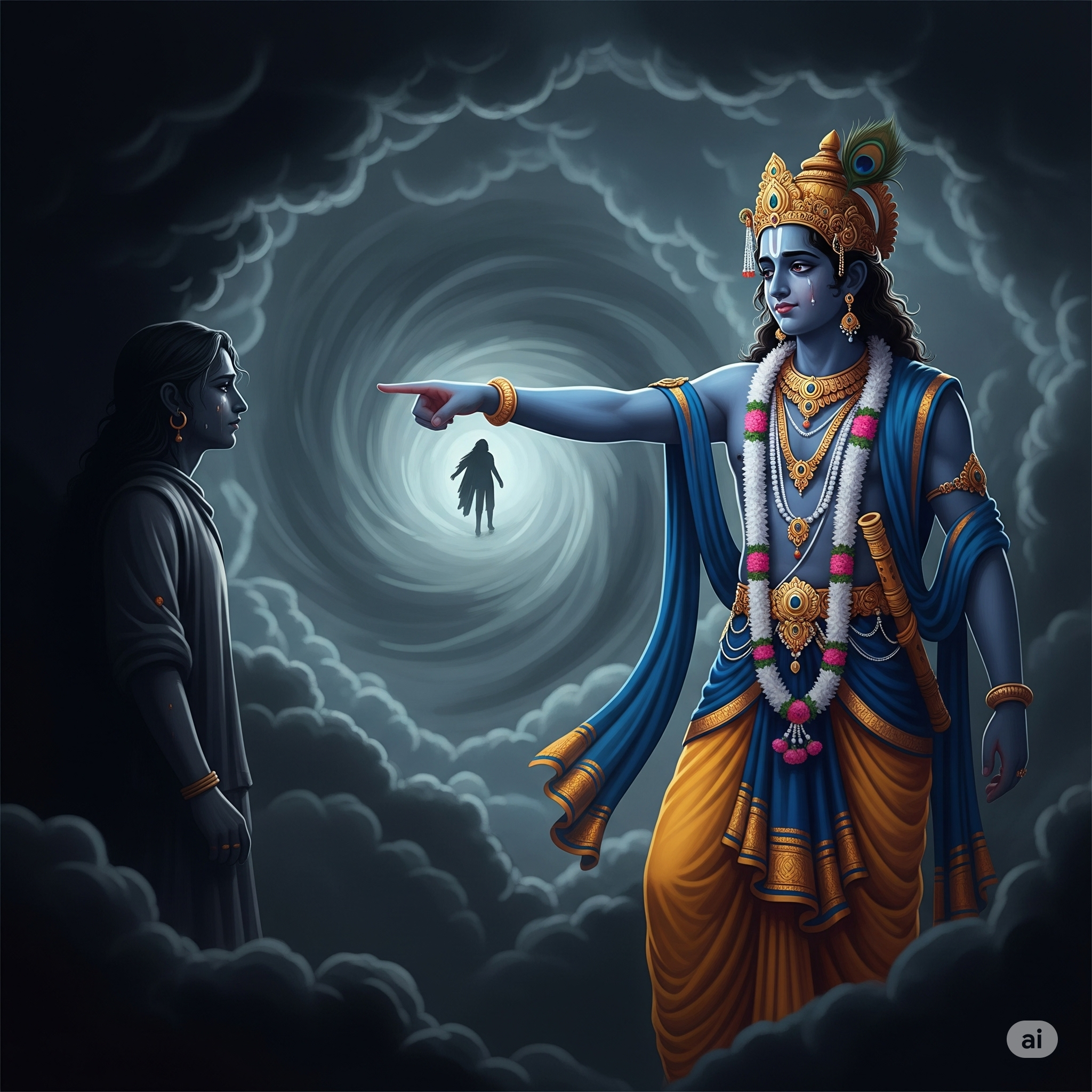
There are several subtle realms known as narak (hellish abodes), where sinners are sent after death to undergo terrifying punishments. These abodes, invisible to the material eye due to their subtle nature, are situated below the Earth in the southern region of the brahmand (cosmic egg) and are governed by Yamaraj, the god of death. Though material, narak exists on a level beyond our sensory perception.
According to the Vedas, paap are those which go against the prescribed rules in the Vedas. These actions lead to punishment in narak. But why does one sin?
First, let us tackle this question before answering how sending to narak is also grace.
Why does one sin?
The mind, a servant of the jiva, seeks happiness in the material world due to its ignorance and influence of Maya. Though the jiva is divine and cannot be fulfilled by material pleasures, the ignorant mind continues feeding it worldly things in a misguided attempt to satisfy it, leading to sinful behavior.
Mind is an eternal and faithful servant of jeev. Jeev desires eternal bliss. Mind alone is the worker. This mind is a faithful eternal servant of jeev. It cannot resign or revolt. In the wakeful conscious state it continually works to make the jeev happy.
This mind is under the control of Maya, so it is ignorant. Also, it is made of Maya, so it is attracted to the material world. Though the jiva is divine and cannot be fulfilled by material pleasures, the ignorant mind continues feeding it worldly things in a misguided attempt to satisfy it, leading to sinful behavior. That is why, before God realization numerous times everyone undergoes the sufferings of narak.
Process of punishment
These narak have varying degrees sufferings. Jeev is sent to these narak which commensurate with the gravity of sin.
Yamraj is responsible for executing the sentences given to the soul. His servants, Yamdoot, carry out his orders and punish the souls.
This punishment is for a fixed duration after which the jeev might take birth in lower forms of life. Please note nobody is sentenced to narak for eternity.

पापकर्माणस्तु चन्द्रलोकाद्यमलोकं गत्वा तत्र वेदनामनुभूय पुनुरूत्पद्यन्ते ॥
मायाबद्ध पापकर्म
pāpakarmāṇastu candralokādyamalokaṁ gatvā tatra vedanāmanubhūya punurūtpadyante ॥
māyābaddha pāpakarmī
“the sinful souls travels to the moon and from there it goes to the abode of God of death (Yamaraj), where they are made to undergo immense sufferings, before being granted birth in some form of life, as per their karmas”.
The earthly bodies are not designed to endure the level of torture the jeev are subjected to in narak. That is why, before sending the jeev to narak the All-Merciful God gives it a subtle body which can withstand that intense suffering and yet not die. Moreover, He stays right beside His children, even in narak. He does not desert them even for a moment.
God's Tough Love
The punishments in narak are unimaginable. Why would All-loving, All-gracious God subject His children to such atrocious suffering?
Let us understand this tough love with an everyday example.
A loving mother wants to inculcate good qualities in her child. When she notices some bad habits she tries various ways to nip them in the bud.
At first she might lovingly encourage the child to stop the bad behavior. She might use encouraging words and promise rewards for good behavior. If the child does not stop she might show anger to scare the child to stop.
If that doesn’t work then then she might tie hands and legs, skip giving a meal etc. If none of those punishments dissuade the child she might resort to more intense punishments.
When mother punishes the child, her child might call her cruel.
But think for a moment, the consequence of mother not taking corrective action when her child stole stole a pencil for the first time. If the mother didn’t take a corrective action then the child might grow up to be a robber causing great distress to himself and to the world.
When punished sometimes the children do think it is unjust. But really, it is mother’s care for the well-being of the child which makes her take all those steps.

A loving mother uses many tactics to mold her child’s to be a good responsible citizen of the society. Similarly, God employs multiple tactics to correct the ways of His children. God has two kinds of servants.
Loving servants
Scriptures and saints are God's servants who patiently explain the precepts of God to jeev. Saints try to persuade us to perform actions that attract God's grace to attain aim of life.
Their goal is to redirect us away from the wrong path onto the right path. They are fully committed to usher the jeev on the path to unlimited divine bliss.
His Saints leave no stone unturned to rectify our lives. They lovingly guide and try to infuse true knowledge in one's mind. They also practically demonstrate how to do devotion. They cajole, coax, inspire, beg, plead, order the jeev to do devotion.
Some jiva listen to them and follow what they say. Then what is the next step to discipline the child?
Strict servants
There are many jeev who refuse to listen to the loving servants of God. For them the God employs couple of more stricter ways to deter jeev from the path of unhappiness.
First, His strict servant Maya comes forth to wake us up from the slumber of ignorance. Maya unveils the real nature of the world. In the world the real face hiding behind the mask is everyone’s every action is motivated ONLY by self-interest.
Maya exposes the real intent of family members, friends and relatives. Seeing the selfishness behind every relationship in the world causes unhappiness and dissatisfaction with the world. It is at that fortunate moment that people realize the truth in the words of those saints and turn towards God.
When one does not correct the ways with this form of corrective action then what does God do?
Increasing Levels of Disciplinary Actions
For those who don't pay attention to the gentler forms of advice, God takes extreme disciplinary action. He sends them to narak for punishment. These punishments are geared towards dissuading the jeev, adamant about sinning, to turn them towards God.
There are 28 types of narak [1] which comparable to the extent of sin.
Due by His nature of grace and mercy God subjects His children to this extreme corrective action but only for a limited period of time according to the intensity of sin. After that He sends them to other forms of life and eventually gives them a human body as well.
Perpetual God's hope
Though punishments in narak seem too grueling yet these are acts of grace and concern of All Merciful God towards His misguided children. He does this so that they tread on the right path that leads of attaining the aim of life.
God is ever hopeful. He keeps giving His children chances in the hope that this time My child will use the human body to attain eternal bliss.
LEARN MORE