Samartha Rati (समर्था रति)
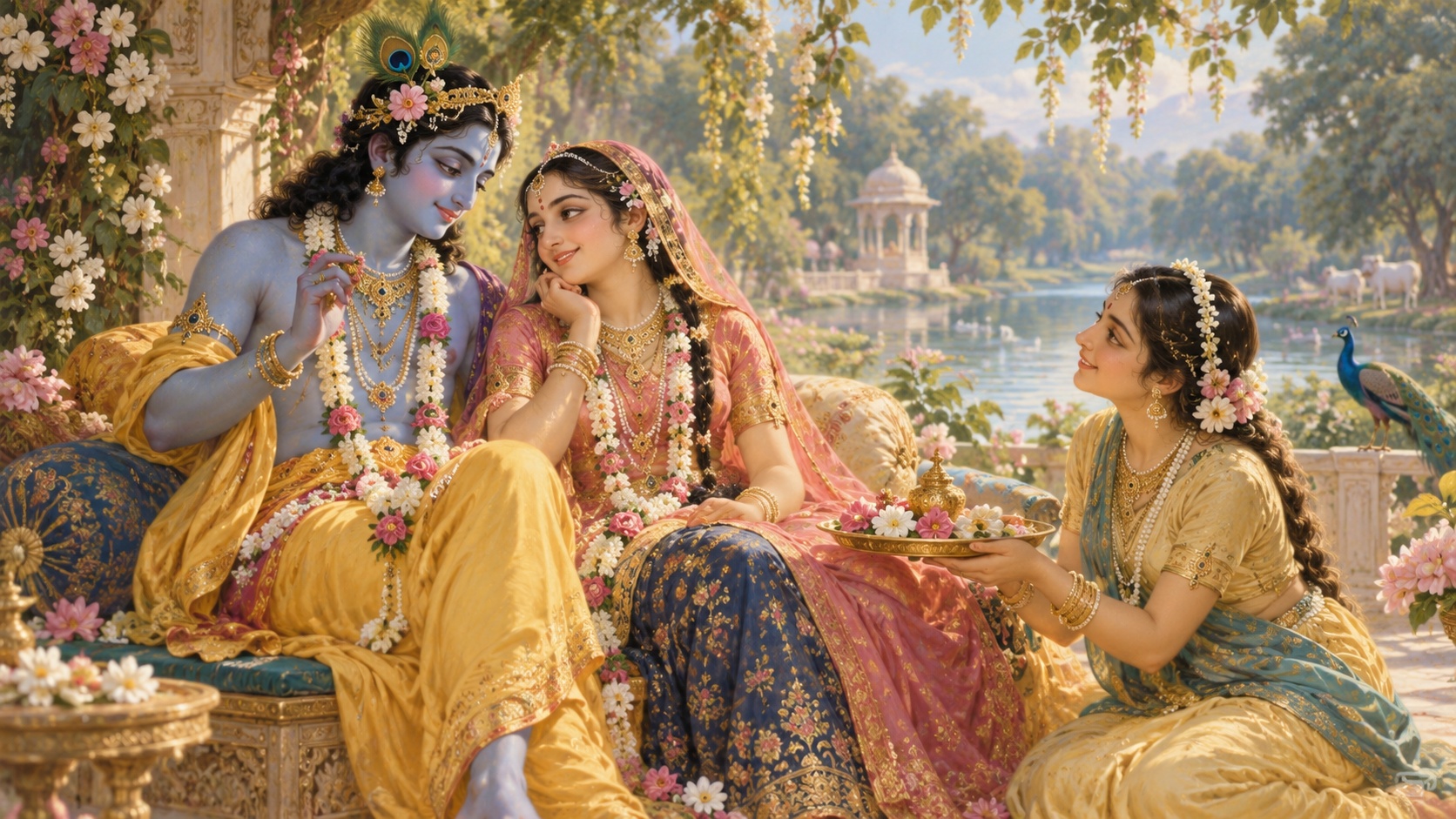
Samartha Rati is the highest state of Madhurya Bhav, marked by completely selfless love in which the devotee seeks only Shri Radha-Krishna's happiness.

Samartha Rati is the highest state of Madhurya Bhav, marked by completely selfless love in which the devotee seeks only Shri Radha-Krishna's happiness.

Satyakama (सत्यकाम | satyakāma) refers to Desires factualize. The Divine Attribute It means "one whose desires immediately come to fruition." It is one of the eight divine qualities of God described in the Dahara Vidya section of the Chandogya Upanishad. Attainment by the Soul While this power
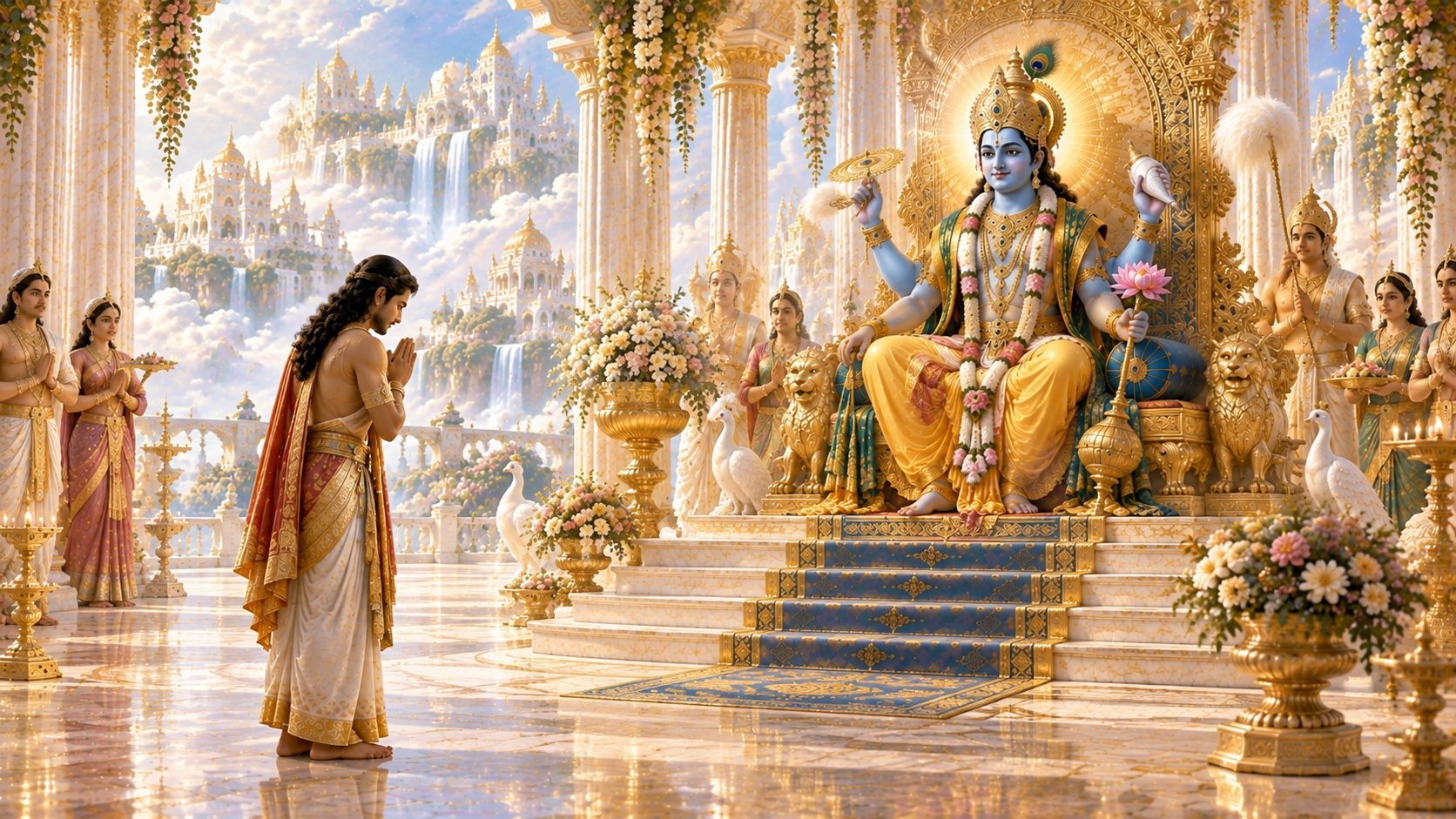
Shant Bhav is the devotional sentiment of loving God as King, with awe, reverence, and respectful distance.

Swansh are the divine expansions of God, identical to Shri Krishna in divinity and governors of Yogmaya Shakti.
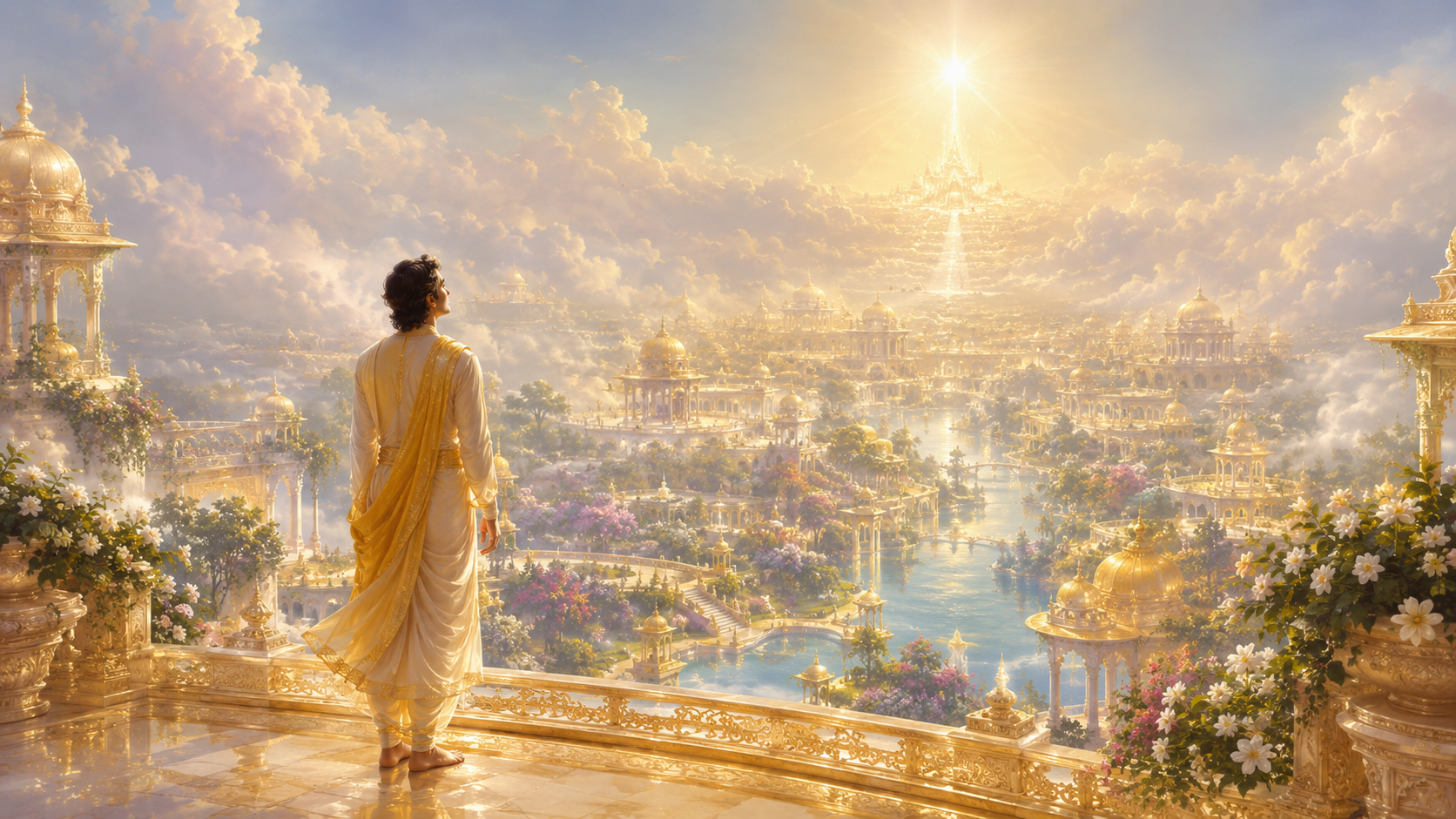
Swarg is a celestial realm within the material universe where souls enjoy Punya, but it is not the soul's ultimate destination.

Trimurti (Devanagari: त्रिमूर्ति; ISO 15919: trimūrti) refers to the Hindu Trinity or the "Three Forms." The Three Governors This term describes the three presiding deities appointed by the Supreme Lord to govern the affairs of each cosmic system (Brahmanda). They are responsible for the

Vasana (Devanagari: वासना; ISO 15919: vāsanā) refers to deep-rooted material desires or latent mental impressions. The Binding Force Unlike a fleeting thought, a Vasana is an intense, ingrained inclination toward the material world. These subconscious impressions are formed by the thoughts (Karmas) harbored by the jiva specifically in

Vatsalya Bhav is loving Shri Krishna as one's own child with the tenderness, care, and intimacy of parental love.

Veda (वेद; veda) refers to eternal divine knowledge. The Vedas are the eternal laws of the Supreme God (Brahm) and serve as the final authority on all matters of Sanatan Vedic Dharma. Divine Origin (Vinirgat Granth) The Vedas are not man-made. Before creation, while the Supreme Lord was

Vinirgat Granth (विनिर्गत ग्रंथ, vinirgata graṁtha) literally means "The Scripture that Emerged." This term is used to specifically refer to the Vedas, signifying their divine and non-created origin (Apaurusheya). The Vedas have emerged spontaneously from the very breath of Brahm— The Supreme

Shadvikar (षड्विकार; ṣaḍvikāra ) is made by blending two Sanskrit words. * shad - six * vikar - changes or deformations Every material body in the entire creation goes through the following six states. These are * Exists or asti (अस्ति; asti) - body starts to form. * Born or jayate (जायते; jāyate)

Scriptures describe many methods of sadhana bhakti. Saint Prahlad propounded by nine ways of performing devotion to God. These ways together are called Navadha bhakti (Devanagari: नवधा भक्ति ISO15919: navadhā bhakti ) , which translated to nine methods of devotion. These ways are most widely accepted and are advocated by most