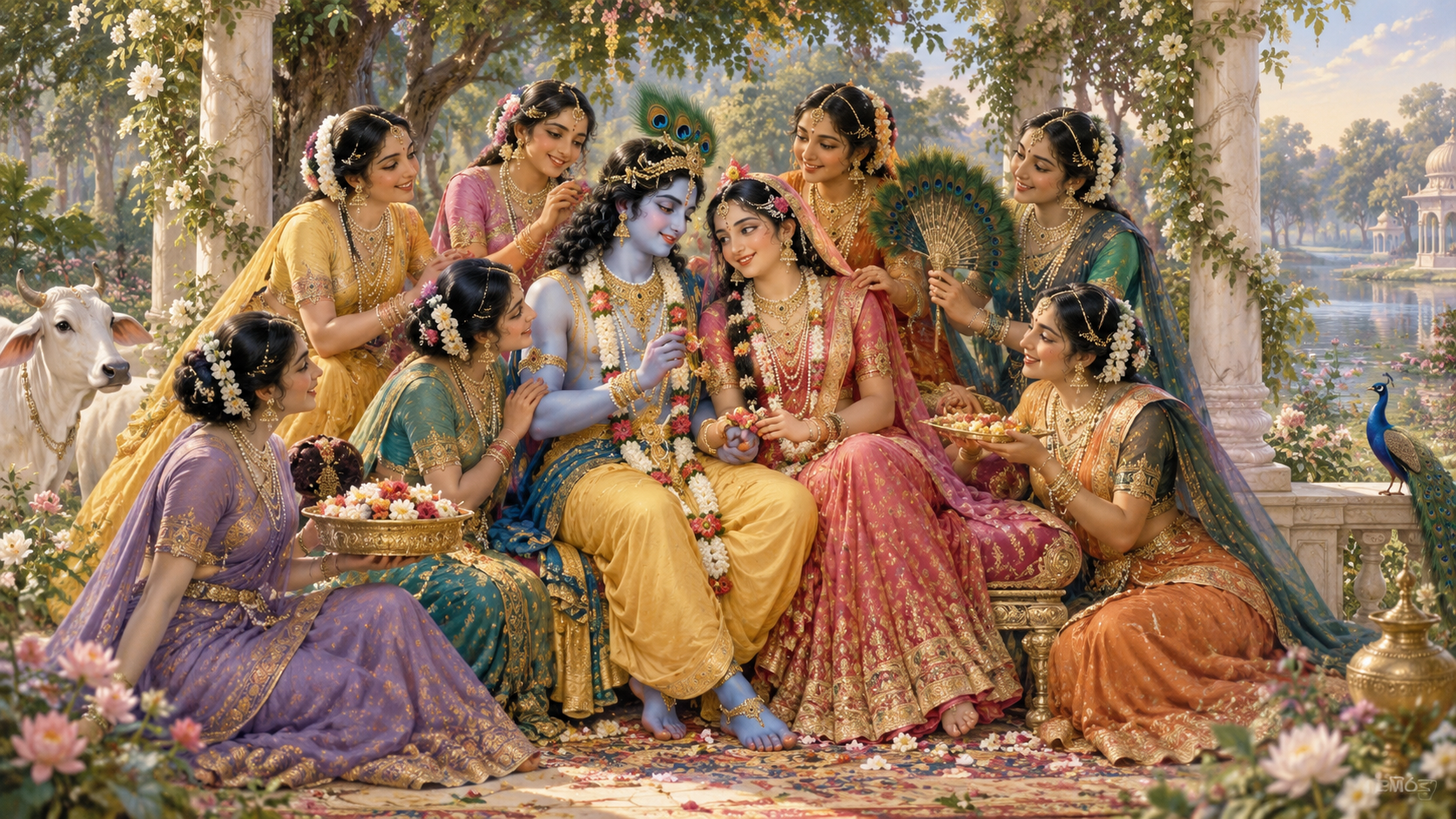
Swansh (स्वांश)
Swansh are the divine expansions of God, identical to Shri Krishna in divinity and governors of Yogmaya Shakti.
Swarg is a celestial realm within the material universe where souls enjoy Punya, but it is not the soul's ultimate destination.
Trimurti (Devanagari: त्रिमूर्ति; ISO 15919: trimūrti) refers to the Hindu Trinity or the "Three Forms." The Three Governors This term describes the three presiding deities appointed by the Supreme Lord to govern the affairs of each cosmic system (Brahmanda). They are responsible for the
Vasana (Devanagari: वासना; ISO 15919: vāsanā) refers to deep-rooted material desires or latent mental impressions. The Binding Force Unlike a fleeting thought, a Vasana is an intense, ingrained inclination toward the material world. These subconscious impressions are formed by the thoughts (Karmas) harbored by the jiva specifically in
Veda (वेद; veda) refers to eternal divine knowledge. The Vedas are the eternal laws of the Supreme God (Brahm) and serve as the final authority on all matters of Sanatan Vedic Dharma. Divine Origin (Vinirgat Granth) The Vedas are not man-made. Before creation, while the Supreme Lord was
Shadvikar (षड्विकार; ṣaḍvikāra ) is made by blending two Sanskrit words. * shad - six * vikar - changes or deformations Every material body in the entire creation goes through the following six states. These are * Exists or asti (अस्ति; asti) - body starts to form. * Born or jayate (जायते; jāyate)
Scriptures describe many methods of sadhana bhakti. Saint Prahlad propounded by nine ways of performing devotion to God. These ways together are called Navadha bhakti (Devanagari: नवधा भक्ति ISO15919: navadhā bhakti ) , which translated to nine methods of devotion. These ways are most widely accepted and are advocated by most
Behavior contrary to righteousness defined in Vedic Scriptures is called adharma. It is characterized by following four attributes * falsehood or asatya (असत्य | asatya ) * violence or hinsa (हिंसा | hiṁsā ) * lusty desires or trishna (तृष्णा | tr̥ṣṇā ) and * hatred or dvesh (द्वेष | dveṣa ) These are always
Yoni (योनि; yoni) carries two primary meanings in Vedic literature: 1. Life Form: It refers to a specific species or womb of birth. Vedic scriptures state there are 8.4 million distinct yonis (species of life) circulating within Samsara, ranging from aquatics to humans. 2. Reproductive Organ: In a
Occasionally a reflection of few symptoms of ecstasy of divine love might appear in material bodies for a brief duration. When such symptoms appear in material bodies they are called ratyabhasa (Devanagari: रत्याभास ISO15919: ratyābhāsa ). Some people deeply study scriptures, some might have practiced a lot of
How do we prove the truth? Explore Pramana: why senses and logic fail in spirituality, and why Shabda Pramana is the only way to know the Divine.
Trikaaldarshi (Devanagari: त्रिकालदर्शी; ISO 15919: trikāladarśī) refers to the Seer of the Three Times. The term is composed of Tri (three), Kaal (time), and Darshi (seer). It describes one who possesses the omniscient ability to witness the past, present, and future simultaneously. Possessors of this Vision