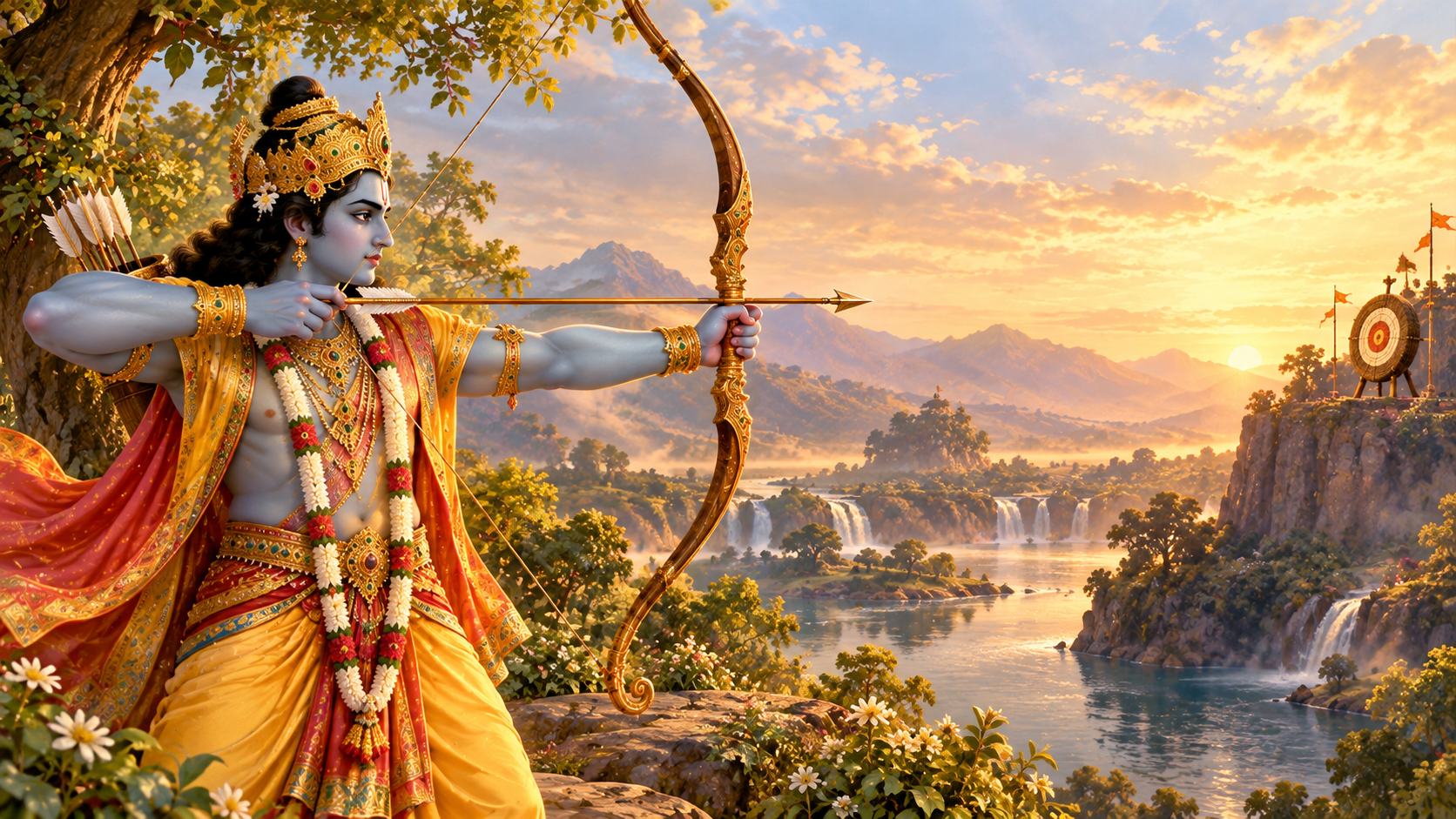
Ramban (रामबाण)
An unfailing remedy or solution, like Shri Ram's arrow, that is certain to achieve its intended result.

An unfailing remedy or solution, like Shri Ram's arrow, that is certain to achieve its intended result.

Rigveda (ऋग्वेद, r̥gveda) is the first of the four Vedas. The original body of Vedic knowledge was divided into four distinct books by Sage Ved Vyas, with the Rigveda serving as the foundational text. Further Reading and Reference * Related Concepts: The Vedas: Sacred Knowledge or Mythical Tales?

Rishi (ऋषि, r̥ṣi) signifies an ascetic, sage, or seer. It specifically describes an individual who has attained mastery over their senses through rigorous spiritual practice. Further Reading and Reference * Related Concepts: Rajrishi, Brahmrishi, pancha jnanandriya * Reference: Prema Rasa Siddhanta - Philosophy of Divine Love
Ramayana (रामायण, rāmāyaṇa) chronicles the life and story of Lord Rama. The Sanskrit epic, composed by Sage Valmiki, contains 24,000 verses. However, a widely popular version in North India is the Ramcharitmanas, which was written in a dialect of Hindi (Avadhi) by Saint Tulsidas. Further Reading and

raga (राग, rāga) has a few different means 1. Attachment with favourable feelings. When those favorable feelings are towards the material objects or people it is one of the five afflictions (panchklesh). On the contrary if this raga is for God then it attracts divine grace. 2. A symphonic

raddhanta (राद्धांत | rāddhāṁta ) means goal. Jeev (soul) has one and only one goal: to attain anand (eternal divine, unlimited bliss). That anand is God. So, the ultimate goal or param charam raddhant (परम चरम राद्धांत | parama carama rāddhāṁta ) of every jiva is to attain

Raganuga Bhakti (रागानुगा भक्ति | rāgānugā bhakti ) refers to spontaneous love for Shri Krishna that arises in the heart of a most fortunate soul, and is expressed by following the devotion of Ragatmika devotees. * rāga — deep attachment or loving inclination * anugāt — following What It Means In Raganuga

Rasa (रस | rasa) refers to Divine Bliss, Spiritual Essence, or the nectar-like experience of God. It is not merely an attribute of God, but His very nature. What It Means In Vedic understanding, Shri Krishna is not just the possessor of bliss — He is Rasa itself. Rasa is the

Occasionally a reflection of few symptoms of ecstasy of divine love might appear in material bodies for a brief duration. When such symptoms appear in material bodies they are called ratyabhasa (Devanagari: रत्याभास ISO15919: ratyābhāsa ). Some people deeply study scriptures, some might have practiced a lot of

The practice of absorbing the mind in loving remembrance of a mentally visualized form of God.