Varna (वर्ण)
The four Vedic classifications of human society, their prescribed duties, and their origin as described in the Rigveda.

Varna (वर्ण | varṇa) refers to the four classifications of human society described in the Vedas, based on people's skills and prescribed duties.
The four Varnas are:
- Brahmin (ब्राह्मण | brāhmaṇa): Those responsible for studying and teaching the Vedas, performing Yagya, and giving and receiving donations.
- Kshatriya (क्षत्रिय | kṣatriya): Those responsible for governance, administration, learning and teaching the use of weapons, and protecting the country.
- Vaishya (वैश्य | vaiśya): Those responsible for agriculture, trade, and rearing livestock and poultry.
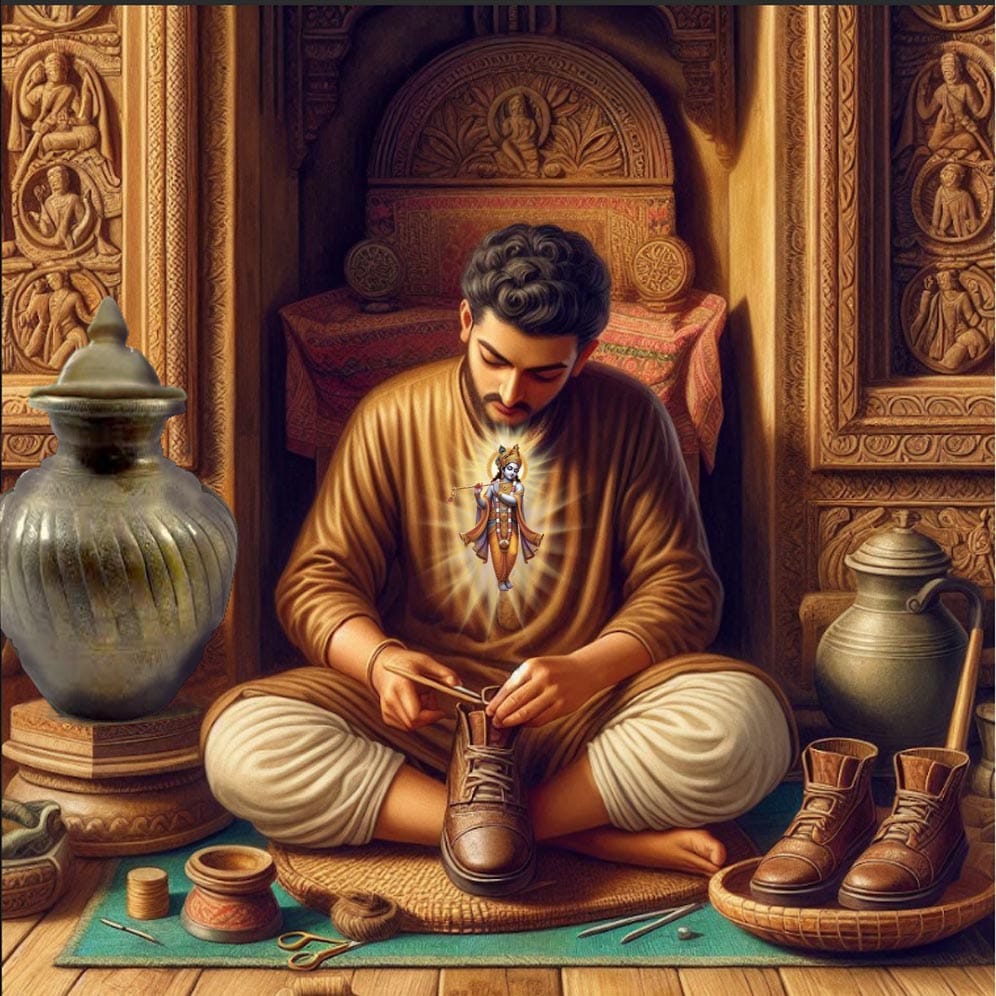
- Shoodra (शूद्र | śūdra): Those responsible for assisting the other three Varnas in carrying out their duties.
The Rigveda describes the four Varnas as emerging from different parts of the Divine Being:
ब्राह्मणोऽस्य मुखमासीद्बाहू राजन्यः कृतः ।
ऊरू तदस्य यद्वैश्यः पद्भ्यां शूद्रो अजायत ॥
Rigveda, Purusha Sukta 10.90.12
Brahmins emerged from the mouth, Kshatriyas from the arms, Vaishyas from the thighs, and Shoodras from the feet.
The fourfold classification forms part of Varnashram Dharm, the broader system of prescribed duties.
Go Deeper
 JKP Literature

 JKP Literature

Explore the spiritual significance of the four Varnas' divine origin and the question of superiority and inferiority.
 JKP Literature
Explore the relevance of the traditional system of social duties in the present age.