Karm Bandhan (कर्मबंधन)
Karm-Bandhan refers to the bondage created by karmic actions and their consequences. Through countless births, the jīva remains entangled in the cycle of action, reaction, and worldly suffering.
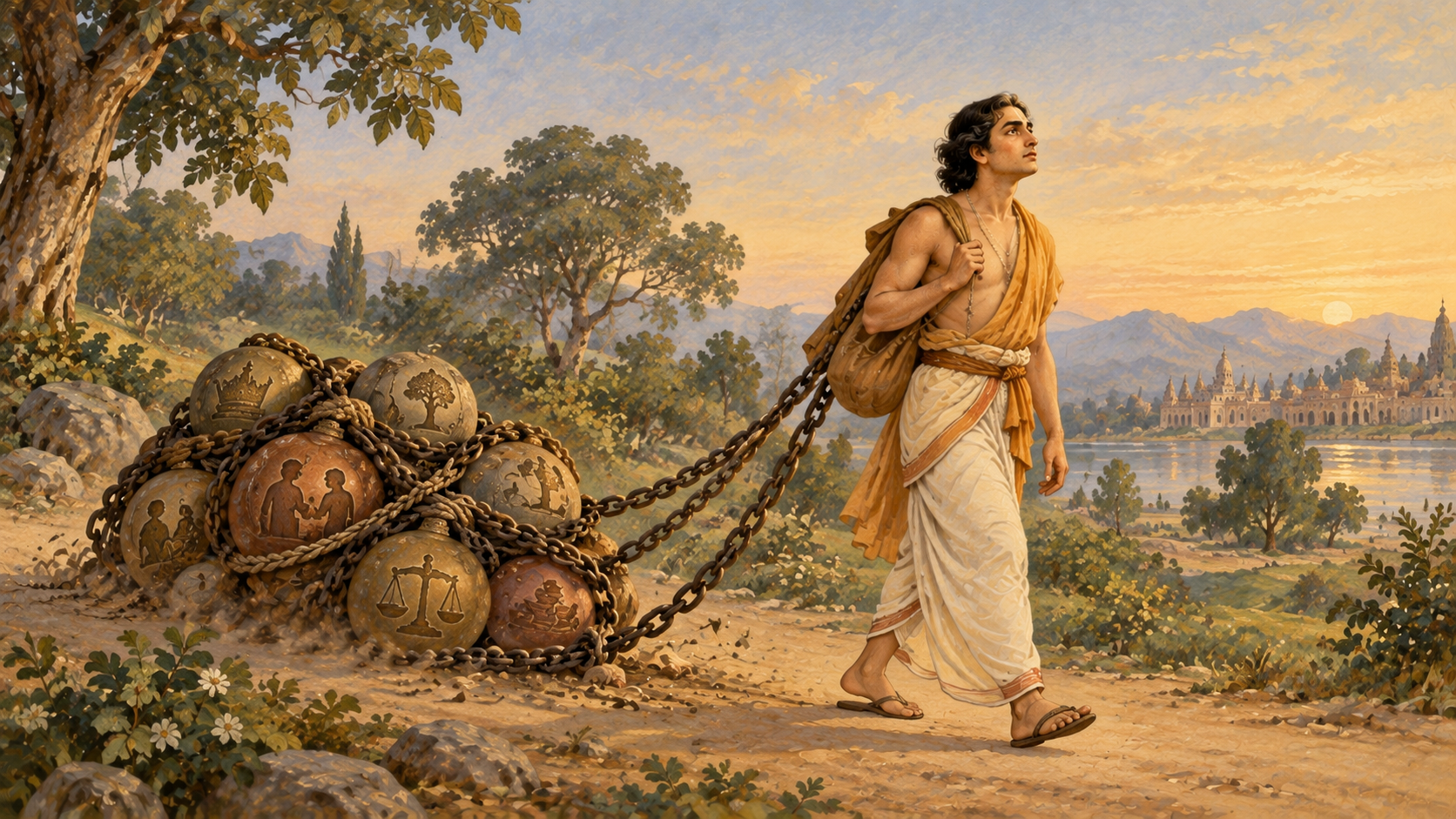
Karm Bandhan (कर्मबंधन | karma-bandhana) is the bondage created by the consequences of one's actions (karma), which bind the jeev to the cycle of birth and death.
In the human form, the jeev performs actions (karma). Some are sinful (paap), while others are virtuous (punya). Both produce consequences that the jeev must eventually experience.
The accumulated karmas from countless past lives, known as Sanchit Karma, also remain unresolved. With each human birth, the jeev performs further actions, adding to this accumulation.
Thus, the jeev remains entangled in an ever-growing net of karmic actions and their consequences, known as Karmajaal (कर्मजाल | karmajāla).
As a result, the jeev wanders through countless births, bound by karmic consequences, desires, attachments, and ignorance.
The imagery of chains, bondage, and nets conveys the helplessness of the jeev caught in Karm Bandhan.
Only the human form offers the opportunity to rise beyond karmic bondage through bhakti and Divine Grace
Go Deeper
 JKP Literature

Why ordinary karma and atonement cannot eliminate the underlying problem
 JKP Literature

How bhakti destroys karmic consequences
 JKP Literature

How bhakti ultimately leads to liberation from Maya