
Shri Maharaj Ji's Welcome Address — Chitrakoot, 1955
Historical reproductions of Shri Kripalu Ji Maharaj's welcome address delivered at the Chitrakoot Sammelan on 16 October 1955, presenting the philosophical questions he placed before the assembled Vedic scholars.
On 16 October 1955, Jagadguru Shri Kripalu Ji Maharaj, then known as Kripaludas, delivered the welcome address as President of the Welcome Committee at the Akhil Bharatvarshiya Bhaktiyog-Darshanic Sammelan in Chitrakoot.
Chitrakoot Sammelan, 1955 — Historical Account
Learn about the convention, the assembled scholars, and Maharaj Ji's role in reconciling the philosophical questions.
In this address, Shri Maharaj Ji placed before the assembled Saints and scholars a series of fundamental questions concerning the apparent contradictions among Vedic scriptures, philosophical schools, and their interpretations.
He called upon the scholars to reconcile these differences so that the public could understand the underlying unity of Vedic teachings.
The following printed reproductions preserve the text of that address.
Welcome Address — Printed Reproduction
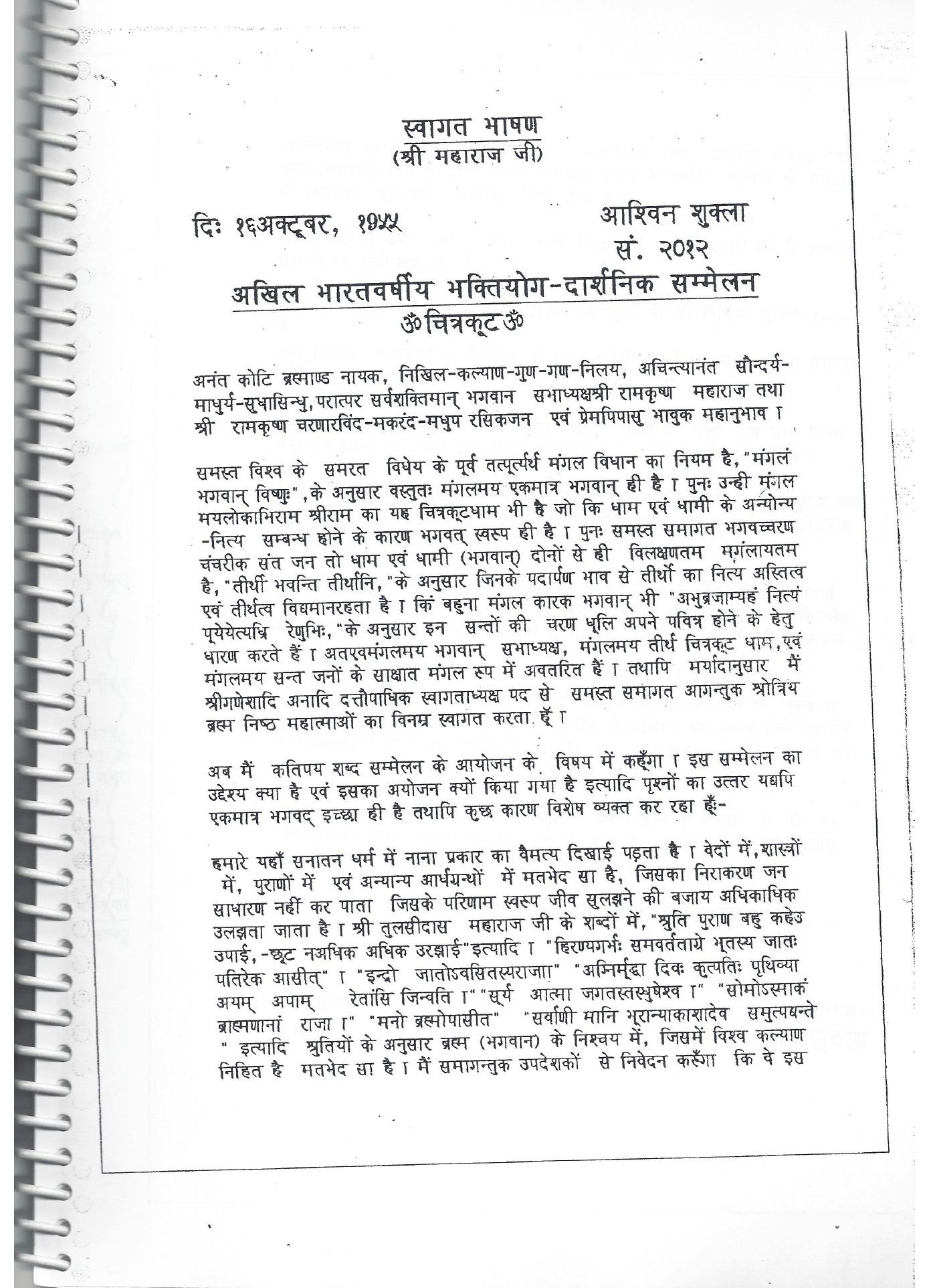
The opening of Maharaj Ji's welcome address, dated 16 October 1955, including scriptural references and the beginning of his philosophical questions.
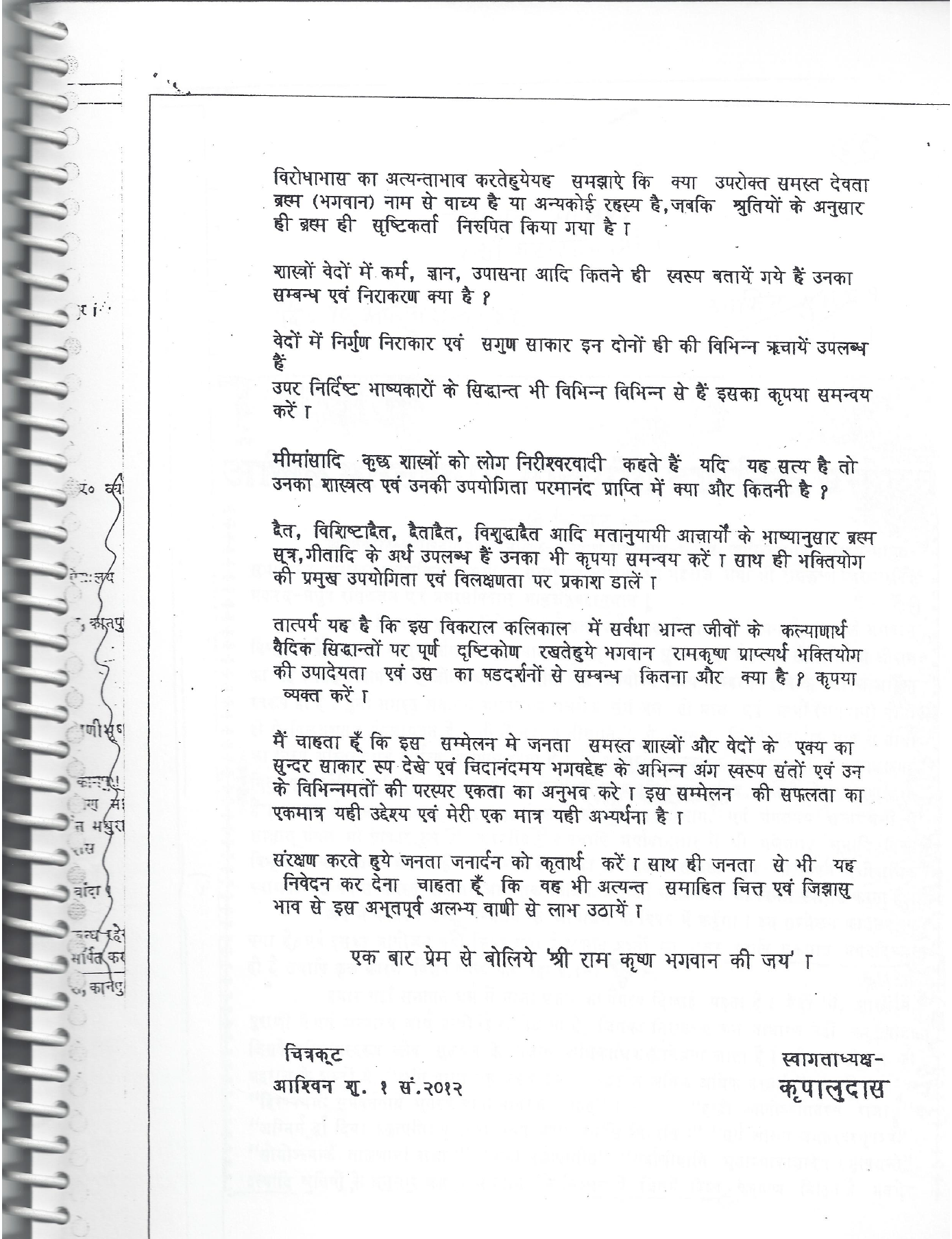
Continuation of the philosophical questions, including the relationship among Karma, Gyan, and Upasana; the reconciliation of Vedantic schools; and the importance of Bhakti Yog.
Additional Historical Reproduction
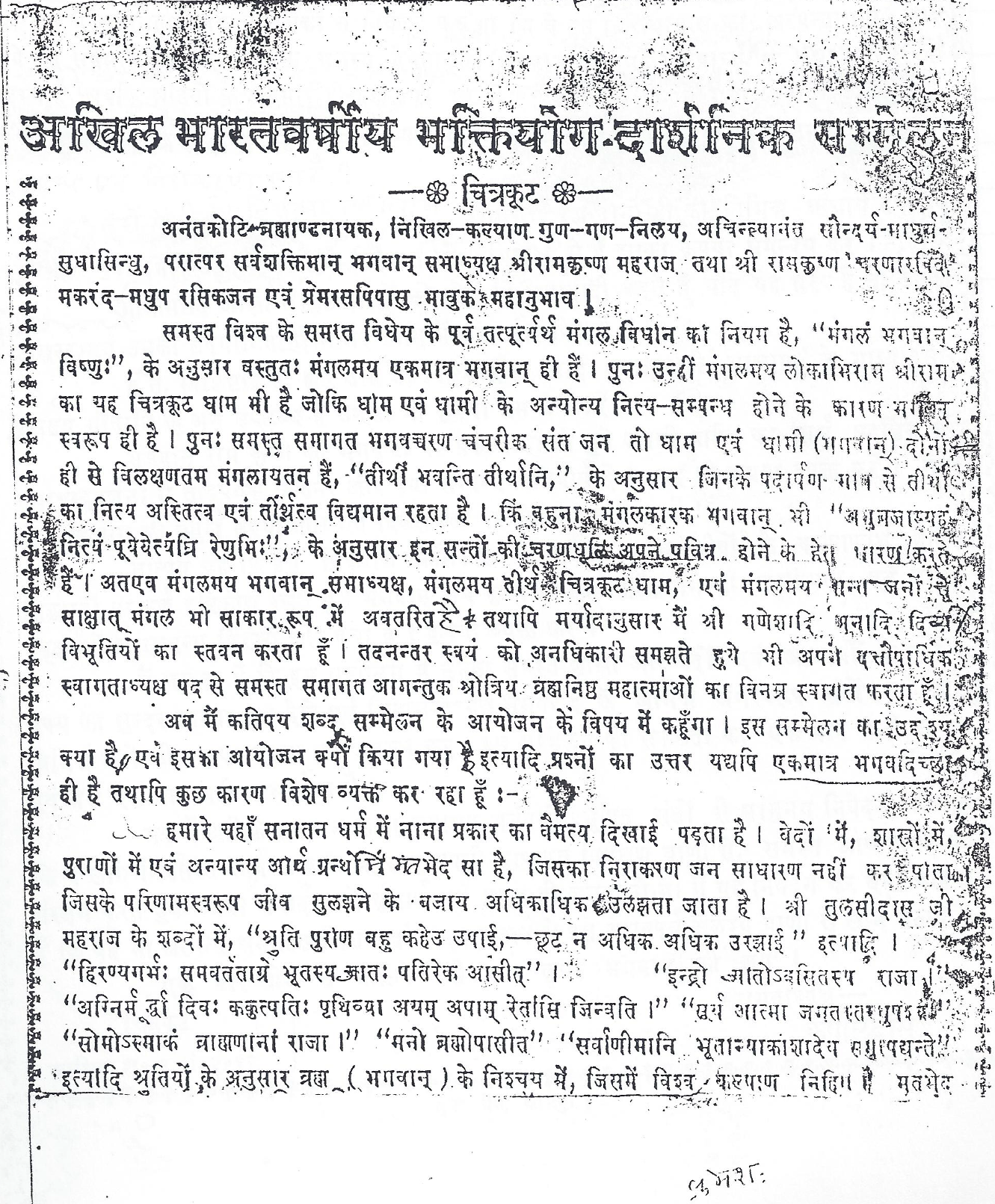
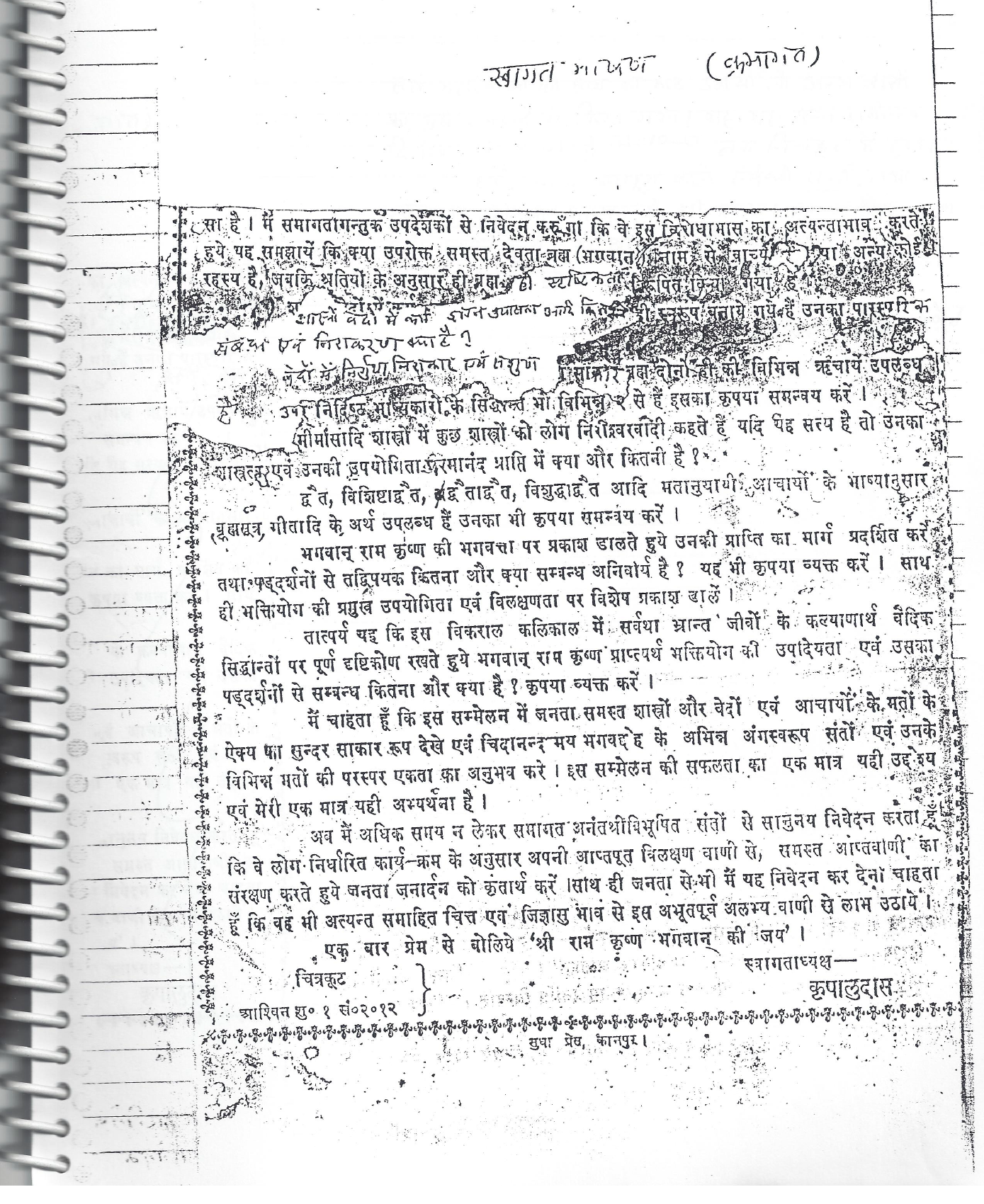
The following reproduction preserves another printed version of the same address. Its surviving copy is considerably deteriorated, with portions of the text difficult to read.
It is included for documentary completeness and comparison with the clearer reproduction above.
About This Historical Document
Document: Welcome Address (Swagat Bhashan)
Speaker: Shri Kripalu Ji Maharaj (Kripaludas)
Occasion: Akhil Bharatvarshiya Bhaktiyog-Darshanic Sammelan
Location: Chitrakoot, India
Date: 16 October 1955
Historical source: Printed reproductions preserved among JKP records.
The reproductions are presented as historical source material. They should not be confused with transcripts of the subsequent lectures delivered during the Sammelan.
The clearer reproduction provides a more legible version of the address. The older reproduction is retained as an additional historical witness. Their exact textual agreement has not yet been established through a complete line-by-line comparison.
Foundational Questions from the Welcome Address
The following excerpts preserve the philosophical questions raised in Maharaj Ji's Welcome Address, presented in the original Hindi with ISO 15919 transliteration.
For ease of reference, they are organized under seven editorial headings. These headings and divisions are not part of the original address, and the excerpts do not constitute a continuous transcription of the speech.
1. The Supreme Lord Described in the Vedas
Original Hindi
हमारे यहाँ सनातन धर्म में नाना प्रकार का वैमत्य दिखाई पड़ता है। वेदों में, शास्त्रों में, पुराणों में एवं अन्य आर्षग्रन्थों में मतभेद सा है, जिसका निराकरण जन साधारण नहीं कर पाता जिसके परिणाम स्वरूप जीव सुलझने की बजाय अधिकाधिक उलझता जाता है। श्री तुलसीदास महाराज जी के शब्दों में, "श्रुति पुराण बहु कहेउ उपाई — छूट न अधिक अधिक अरुझाई" इत्यादि। "हिरण्यगर्भः समवर्तताग्रे भूतस्य जातः पतिरेक आसीत्"। "इन्द्रो यातोऽवसितस्य राजा"। "अग्निर्मूर्द्धा दिवः ककुत्पतिः पृथिव्या अयम् अपाम। रेतांसि जिन्वति"। "सूर्य आत्मा जगतस्तस्थुषश्च"। "सोमोऽस्माकं ब्राह्मणानां राजा"। "मनो ब्रह्मोपासीत"। "सर्वाणी मानि भूतान्याकाशादेव समुत्पद्यन्ते" इत्यादि श्रुतियों के अनुसार ब्रह्म (भगवान) के निश्चय में, जिसमें विश्व कल्याण निहित है, मतभेद सा है। मैं समागन्तुक उपदेशकों से निवेदन करूँगा कि वे इस विरोधाभास का अत्यन्ताभाव करते हुए यह समझाऐ कि क्या उपरोक्त समस्त देवता ब्रह्म (भगवान) नाम से वाच्य हैं या अन्य कोई रहस्य है, जबकि श्रुतियों के अनुसार ही ब्रह्म ही सृष्टिकर्ता निश्चित किया गया है।
Transliteration — ISO 15919
Hamāre yahāṁ sanātana dharma meṁ nānā prakāra kā vaimatya dikhāī paṛatā hai. Vedoṁ meṁ, śāstroṁ meṁ, purāṇoṁ meṁ evaṁ anya ārṣagranthoṁ meṁ matabheda sā hai, jisakā nirākaraṇa jana sādhāraṇa nahīṁ kara pātā jisake pariṇāma svarūpa jīva sulajhane kī bajāya adhikādhika ulajhatā jātā hai.
Śrī Tulasīdāsa Mahārāja Jī ke śabdoṁ meṁ, "śruti purāṇa bahu kahe'u upāī — chūṭa na adhika adhika arujhāī" ityādi.
"Hiraṇyagarbhaḥ samavartatāgre bhūtasya jātaḥ patireka āsīt".
"Indro yāto'vasitasya rājā".
"Agnirmūrddhā divaḥ kakutpatiḥ pṛthivyā ayam apāma. Retāṁsi jinvati".
"Sūrya ātmā jagatastasthuṣaśca".
"Somo'smākaṁ brāhmaṇānāṁ rājā".
"Mano brahmopāsīta".
"Sarvāṇī māni bhūtānyākāśādeva samutpadyante".
Ityādi śrutiyoṁ ke anusāra brahma (bhagavān) ke niścaya meṁ, jisameṁ viśva kalyāṇa nihita hai, matabheda sā hai.
Maiṁ samāgantuka upadeśakoṁ se nivedana karūṁgā ki ve isa virodhābhāsa kā atyantābhāva karate hue yaha samajhāe ki kyā uparokta samasta devatā brahma (bhagavān) nāma se vācya haiṁ yā anya koī rahasya hai, jabaki śrutiyoṁ ke anusāra hī brahma hī sṛṣṭikartā niścita kiyā gayā hai.
2. The Relationship Between Karma, Gyan, and Upasana
Original Hindi
शास्त्रों वेदों में कर्म, ज्ञान, उपासना आदि कितने ही स्वरूप बताये गये हैं उनका सम्बन्ध एवं निराकरण क्या है?
Transliteration — ISO 15919
Śāstroṁ vedoṁ meṁ karma, jñāna, upāsanā ādi kitane hī svarūpa batāye gaye haiṁ unakā sambandha evaṁ nirākaraṇa kyā hai?
3. Nirgun Nirakar and Sagun Sakar
Original Hindi
वेदों में निर्गुण निराकार एवं सगुण साकार इन दोनों ही की विभिन्न ऋचायें उपलब्ध हैं।
Transliteration — ISO 15919
Vedoṁ meṁ nirguṇa nirākāra evaṁ saguṇa sākāra ina donoṁ hī kī vibhinna ṛcāyeṁ upalabdha haiṁ.
4. Differences Among the Scriptural Commentators
Original Hindi
उपर निर्दिष्ट भाष्यकारों के सिद्धान्त भी विभिन्न विभिन्न से हैं इसका कृपया समन्वय करें।
Transliteration — ISO 15919
Upara nirdiṣṭa bhāṣyakāroṁ ke siddhānta bhī vibhinna vibhinna se haiṁ isakā kṛpayā samanvaya kareṁ.
5. The Purpose of Philosophical Systems Such as Mimansa
Original Hindi
मीमांसादि कुछ शास्त्रों को लोग निरीश्वरवादी कहते हैं यदि यह सत्य है तो उनका शास्त्रत्व एवं उनकी उपयोगिता परमानन्द प्राप्ति में क्या और कितनी है?
Transliteration — ISO 15919
Mīmāṁsādi kucha śāstroṁ ko loga nirīśvaravādī kahate haiṁ yadi yaha satya hai to unakā śāstratva evaṁ unakī upayogitā paramānanda prāpti meṁ kyā aura kitanī hai?
6. Reconciliation of the Vedantic Schools
Original Hindi
द्वैत, विशिष्टाद्वैत, द्वैताद्वैत, विशुद्धाद्वैत आदि मतानुयायी आचार्यों के भाष्यानुसार ब्रह्म सूत्र, गीतादि के अर्थ उपलब्ध हैं उनका भी कृपया समन्वय करें। साथ ही भक्तियोग की प्रमुख उपयोगिता एवं विलक्षणता पर प्रकाश डालें।
Transliteration — ISO 15919
Dvaita, viśiṣṭādvaita, dvaitādvaita, viśuddhādvaita ādi matānuyāyī ācāryoṁ ke bhāṣyānusāra brahma sūtra, gītādi ke artha upalabdha haiṁ unakā bhī kṛpayā samanvaya kareṁ. Sātha hī bhaktiyoga kī pramukha upayogitā evaṁ vilakṣaṇatā para prakāśa ḍāleṁ.
7. The Place of Bhakti Yog in Kaliyug
Original Hindi
तात्पर्य यह है कि इस विकराल कलिकाल में सर्वथा भ्रान्त जीवों के कल्याणार्थ वैदिक सिद्धान्तों पर पूर्ण दृष्टिकोण रखते हुए भगवान रामकृष्ण प्राप्त्यर्थ भक्तियोग की उपादेयता एवं उस का षड्दर्शनों से सम्बन्ध कितना और क्या है? कृपया व्यक्त करें।
Transliteration — ISO 15919
Tātparya yaha hai ki isa vikarāla kalikāla meṁ sarvathā bhrānta jīvoṁ ke kalyāṇārtha vaidika siddhāntoṁ para pūrṇa dṛṣṭikoṇa rakhate hue bhagavān rāmakṛṣṇa prāptyartha bhaktiyoga kī upādeyatā evaṁ usa kā ṣaḍdarśanoṁ se sambandha kitanā aura kyā hai? Kṛpayā vyakta kareṁ.
Maharaj Ji's Purpose: The Unity of Vedic Wisdom
Maharaj Ji expressed the purpose of the gathering in the following words.
Original Hindi
मैं चाहता हूँ कि इस सम्मेलन में जनता समस्त शास्त्रों और वेदों के एकत्व का सुन्दर साकार रूप देखे एवं चिदानन्दमय भगवद्देह के अभिन्न अंग स्वरूप संतों एवं उन के विभिन्न मतों की परस्पर एकता का अनुभव करे।
Transliteration — ISO 15919
Maiṁ cāhatā hūṁ ki isa sammelana meṁ janatā samasta śāstroṁ aura vedoṁ ke ekatva kā sundara sākāra rūpa dekhe evaṁ cidānandamaya bhagavaddeha ke abhinna aṅga svarūpa santoṁ evaṁ una ke vibhinna matoṁ kī paraspara ekatā kā anubhava kare.
English translation
I wish that, at this conference, the public may behold a beautiful, tangible manifestation of the unity of all the Shastras and Vedas, and experience the mutual harmony among the Saints—who are inseparable limbs of Bhagavan's Divine Body, composed of consciousness and bliss—and their different philosophical views.
Understanding the Foundational Questions
The passages above preserve the philosophical issues Maharaj Ji placed before the assembled scholars. They are not a record of the answers delivered during the Sammelan.
For readers wishing to understand these questions, Kripalu Vedic Wisdom provides a separate explanatory companion. It presents English translations and explanations drawn from Maharaj Ji's teachings preserved in his lectures and literature.
Seven Foundational Questions on Vedic Wisdom — Chitrakoot, 1955
Editorial Note
The Hindi passages have been transcribed with reference to both surviving printed reproductions of the Welcome Address. The ISO 15919 transliterations follow the transcribed Hindi.
The seven headings and divisions are editorial aids, not original divisions of the address. The passages are selected excerpts rather than a continuous transcription of the complete speech.
Where the historical reproductions are unclear, the transcription represents the best reading obtainable from the available copies. The original reproductions are provided above so readers may consult the historical evidence directly.