Is God One or Many? The Great Hindu Mystery Solved
Is God one or many? Discover why Ram, Krishna, and Vishnu are all called Bhagavan. Learn about the 3 aspects of Truth: Brahma, Paramātmā, and Bhagavān.

The Question The scriptures present a seeming contradiction that often confuses seekers.
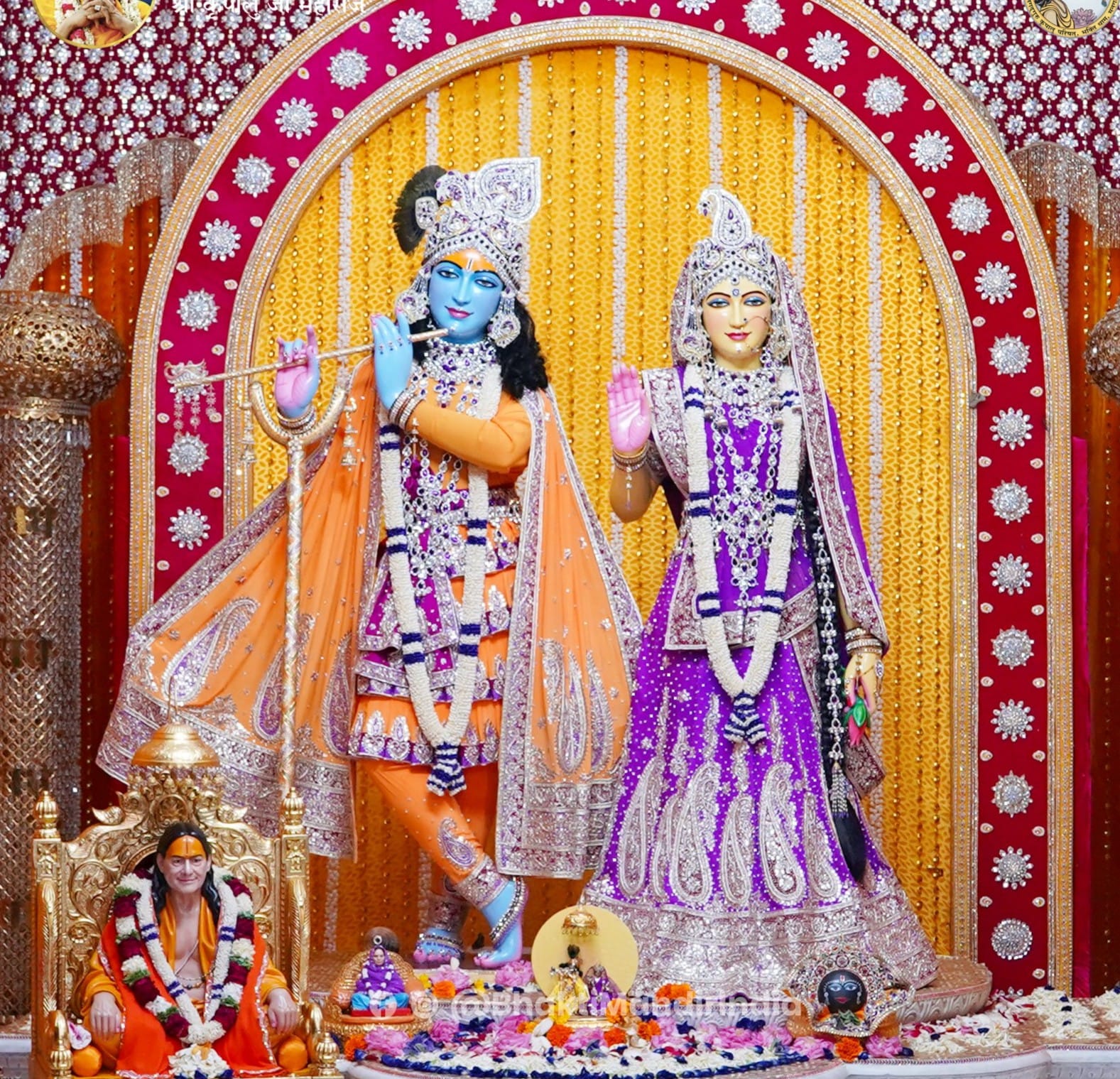
राम कृष्ण दोनों को गोविंद राधे । व्यास ने लिखा है भगवान क्यों बता दे ॥ rāma kṛṣṇa donom̐ ko goviṃda rādhe, vyāsa ne likhā hai bhagavāna kyom̐ batā de. "Why has Vedavyasa described both Rama and Krishna as Bhagavan?"
The Srimad Bhagavatam asserts that both Lord Ram and Lord Krishna are God. However, from the Vedas to the Ramayana, scriptures and Saints unanimously declare there is only one Supreme God.
To add to the complexity, the word भगवान (Bhagavān — God) is used to refer to many divine personalities, such as Lord Brahma, Lord Shiva, and Lord Vishnu. Even the spiritual master (Guru) is addressed as Bhagavan in the scriptures. If God is one, who are all these others referred to as "God"?
The Three Aspects of the One Truth
According to the Srimad Bhagavatam (1.2.11), the one Absolute Truth is realized in three progressive stages:
- Brahm (ब्रह्म • brahma): The impersonal, formless aspect consisting of pure existence and bliss.
- Paramatma (परमात्मा • paramātmā): The Super Soul who resides in the heart and governs the universe through three Vishnu expansions (Karanarnavashayi, Garbhodashyi, and Kshirodashayi), yet performs no pastimes.
- Bhagavan (भगवान • bhagavān): The third and most complete realization. This aspect reveals God as the Supreme Person with infinite names, forms, and attributes. Unlike the previous two, Bhagavan descends with His divine associates to engage in rapturous pastimes, specifically to reciprocate the love of His devotees.
Defining "God" (Bhagavan)
Why are so many called "God"? The answer lies in the six opulence (Bhaga).
ऐश्वर्यस्य समग्रस्य धर्मस्य यशसः श्रियः । ज्ञानवैराग्ययोश्चैव षण्णां भग इतीरणा ॥ aiśvaryasya samagrasya dharmasya yaśasaḥ śriyaḥ | jñānavairāgyayoścaiva ṣaṇṇāṃ bhaga itīraṇā ||
"One who possesses following six opulence in full is Bhagavan: Unlimited Majesty, Dharma (Righteousness), Glory, Prosperity (Beauty), Knowledge, and Detachment."
The Swansh are Also God
God possesses a personal power called Yogamaya.
Swansh (स्वांश • svāṁśa) or personal expansions of God (like Vishnu, Ram, Narsimha) are Governors of Yogamaya. They are God's Tadekatma Roop, so, they are also addressed as God.
A few of the Swansh are called Purush. These Purush further have expansions.
एतन्नानावताराणां निधानं बीजमव्ययं । यस्यांशांशेन सृज्यन्ते देवतिर्यङ्नरादय ॥ etannānāvatārāṇāṃ nidhānaṃ bījamavyayaṃ | yasyāṃśāṃśena sṛjyante devatiryaṅnarādaya || (Srimad Bhagavatam 1.3.5)
The scripture explains that the Third Purusha (Kshirodashyi Vishnu) is the source of the various incarnations known as Yugavatara. These avatars descend in every age (yuga) to restore Dharma. Since, they are all Swansh (expansions) of God they are naturally God.
The Exception: Krishna and Balram Lord Krishna is the Supreme God (Svayam Bhagavan), and Lord Balram is His direct expansion (prabhav prakash). They are not descensions of the Purusha (Vishnu); rather, the Purushas derive their power from Krishna / Balram.
Bade Thakur & Chhote Thakur: In Braj, Balram is addressed as the Elder Lord and Krishna as the Younger Lord.
While Yugavataras (descensions of Vishnu) appear in every age, Swayam Shri Krishna and Balram descend only once in a Kalpa (one day of Brahma, which is 4.32 billion years).
Some Jiva are also referred to as God
It is crucial to distinguish between God and the Soul. Every jeev (जीव • jīva) is a part of Krishna's Jiva Shakti, but there are two categories:
- Eternally Liberated Souls (Nitya Siddha): Eternal associates of the Lord and are eternally free from Maya. They are distinct from God and are not Governors of Swaroop Shakti; rather, they are governed by it.
- Bound Souls (Maya Baddha): Souls like us who are still under the control of Maya. We are not God. We are governed by material energy. Only after God-realization do we come under the care of Yogamaya and would be referred to as sadhan siddha.
Why are Saints called God? After God-realization, the jiva is fully inspired by God to perform actions. They become a transparent medium for God's will. Therefore, God-realized Saints are often reverentially addressed as "Bhagavan" because God is manifest within them, though they remain distinct in identity.
Conclusion
Is God One or Many? God is ONE. Hinduism is monotheistic because there cannot be 10 or 20 Gods. However, that one Supreme God is capable of manifesting in infinite forms (Brahm, Paramatma, and various Avatars) to respond to the need of the moment or to impart love to His devotees.