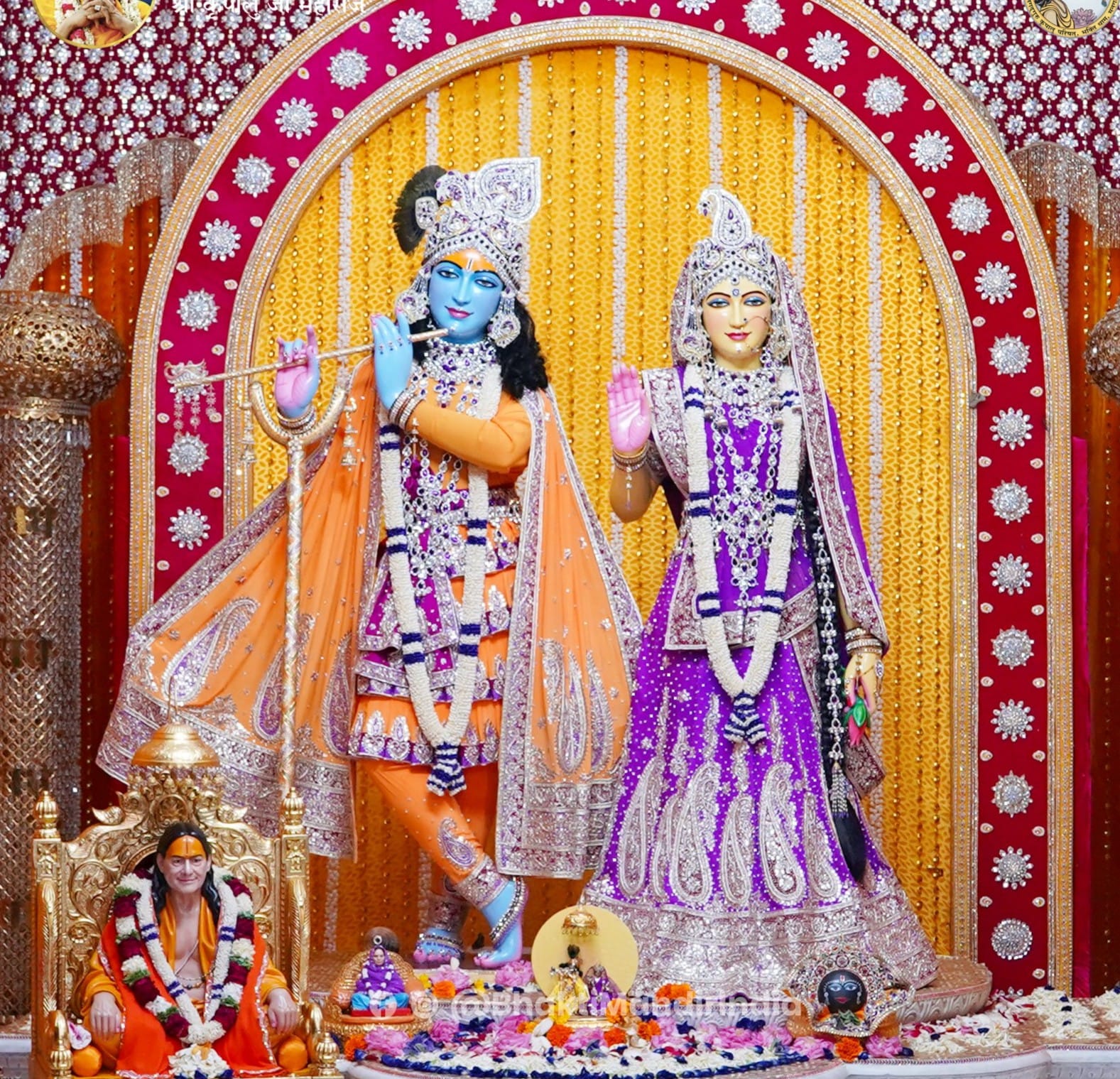
When God Becomes Your Provider and Protector

Understanding Yogakshema
Question: In Gita Shri Krishna said, "I bear Yogakshem of surrendered souls". What does "bearing Yogakshem " mean?
Answer: Yogakshema (Devanagari: योगक्षेम; ISO 15919: yōgakṣēma) is a compound Sanskrit word found in Bhagavad Gita 9.22, where Shri Krishna declares:
अनन्याश्चिन्तयन्तो मां ये जना: पर्युपासते |
तेषां नित्याभियुक्तानां योगक्षेमं वहाम्यहम् ||
ananyāścintayantō māṁ yē janā: paryupāsatē |
tēṣāṁ nityābhiyuktānāṁ yōgakṣēmṁ vahāmyaham || Gita 9.22
"To those whose are saturated with My thoughts and who exclusively worship Me, I personally grant what they don't have (Yoga) and preserve what they have (Kshema)."
To understand the depth of this promise, we must break down the two components:
Meaning:
- Yoga(योग, yōga): This refers to providing what is not yet possessed—gaining material necessities and spiritual wealth.
- Kshema(क्षेम, kṣēma): This refers to the protection of what has already been attained—securing it from loss.
In the context of this verse, it means God personally ensures both the spiritual and material well-being of His exclusive devotees.
How God Dispenses Justice
God keeps a flawless record of all our past deeds. He is just and also our ultimate well-wisher. Based on His judgment, He blesses us in two ways through the fruits of our actions:
- Good deeds of the past: He places us in favorable conditions (Good Fortune).
- Bad deeds of the past: He places us in challenging situations (Bad Fortune).
Since God is a genuine well-wisher with no ulterior motive, a real devotee considers both situations as the Grace of God.
सुख में भी राधे राधे, दुख में भी राधे ।
sukha mēṁ bhī rādhē rādhē, dukha mēṁ bhī rādhē |
"In happiness, sing Radhe Radhe; in distress, sing Radhe Radhe."
Even illness or poverty is viewed as a divine blessing in disguise because it cleanses the past bad karma of the jiva.
The Secret to Endurance
When you undergo difficult times, remind yourself repeatedly: "This is the outcome of bad deeds I performed in the past. My all-gracious Hari-Guru are helping erase those bad deeds so that I can make spiritual progress."
This is easier said than done. However, knowing that you must undergo the fruit of every deed without exception, this mindset shifts your focus from misery to divine bliss. When the mind is focused on Hari-Guru, Bhakti further reduces the effect of the Mayic afflictions.
A Personal Experience of Grace Let me share a wonderful experiences during my cancer-treatment in 2014. Although all the usual physical side-effects of the treatment were happening to my body, the intensity I experienced was significantly less than what other cancer patients describe. Sometimes, I literally felt as if someone was lovingly caressing my head or fixing my blanket. That touch was so soothing that it is impossible to forget the bliss of that experience.
- Braj Banchary
The True Essence of "Vahamyaham"
The phrase Vahamyaham ("I shall bear it") from the Bhagavad Gītā (9.22) is often misunderstood as a promise to alter physical circumstances. However, the authentic meaning is more subtle and powerful:
- Persistence of Circumstances: In many cases, the external situation or the physical cause of distress remains exactly as it is.
- Removal of the "Sting": Neither Hari nor Guru necessarily take away the situation, but rather remove the "sting" of the pain.
- Internal Shift: Through surrender (sharanagati), the devotee's mind is strengthened so that the external hardship no longer causes mental agony or suffering.
Protecting Against Misapprehensions
It is vital not to contort this spiritual truth to fit worldly expectations.
Correction of Doubts: Approaching these concepts with a purely material intellect often leads to "misapprehensions"—expecting God to act as a cosmic servant who fixes worldly problems.
As Jagadguruttam Shri Kripalu Ji Maharaj teaches, only a God-realized saint can explain the secret of these sacred texts; without their guidance, seekers often get lost in their own mental projections.
Does Grace Violate the Law of Karma?
You might ask: If God reduces pain, why does He allow suffering in the first place? Know that God and Guru work within the confines of divine laws. They do not violate them.
कर्म प्रधान विश्व रचि राखा । जो जस करइ सो तस फल चाखा ॥ karma pradhāna viśva raci rākhā | jō jasa karai sō tasa phala cākhā || (Ramayana)
"God created this world where everyone experiences the fruits of their actions."
No saint intervenes in this fundamental law. As Saint Kabir Das famously said:
करता था सो क्यों किया, अब करी क्यों पछिताय । बोया पेड़ बबूल का, आम कहाँ से खाय ॥
karatā thā sō kyōṁ kiyā, aba karī kyōṁ pachitāya | bōyā pēṛa babūla kā, āma kahām̐ sē khāya ||
"When you had the choice, you chose to perform the bad action. Now, what is the point of regret? You sowed seeds of the Acacia (a thorny tree); how can you expect to eat sweet mangoes now?"


The Conclusion For surrendered devotees, God does not remove the situation, but He reduces the pain the soul experiences. The statement "Guru Yogakshema vahan karte hain" means He gives you the strength to go through tough times. This is His immense grace. One ought to repeatedly think of this grace and sacrifice oneself (Balihaar) for Him.