The Truth Behind Ajamil's Tale
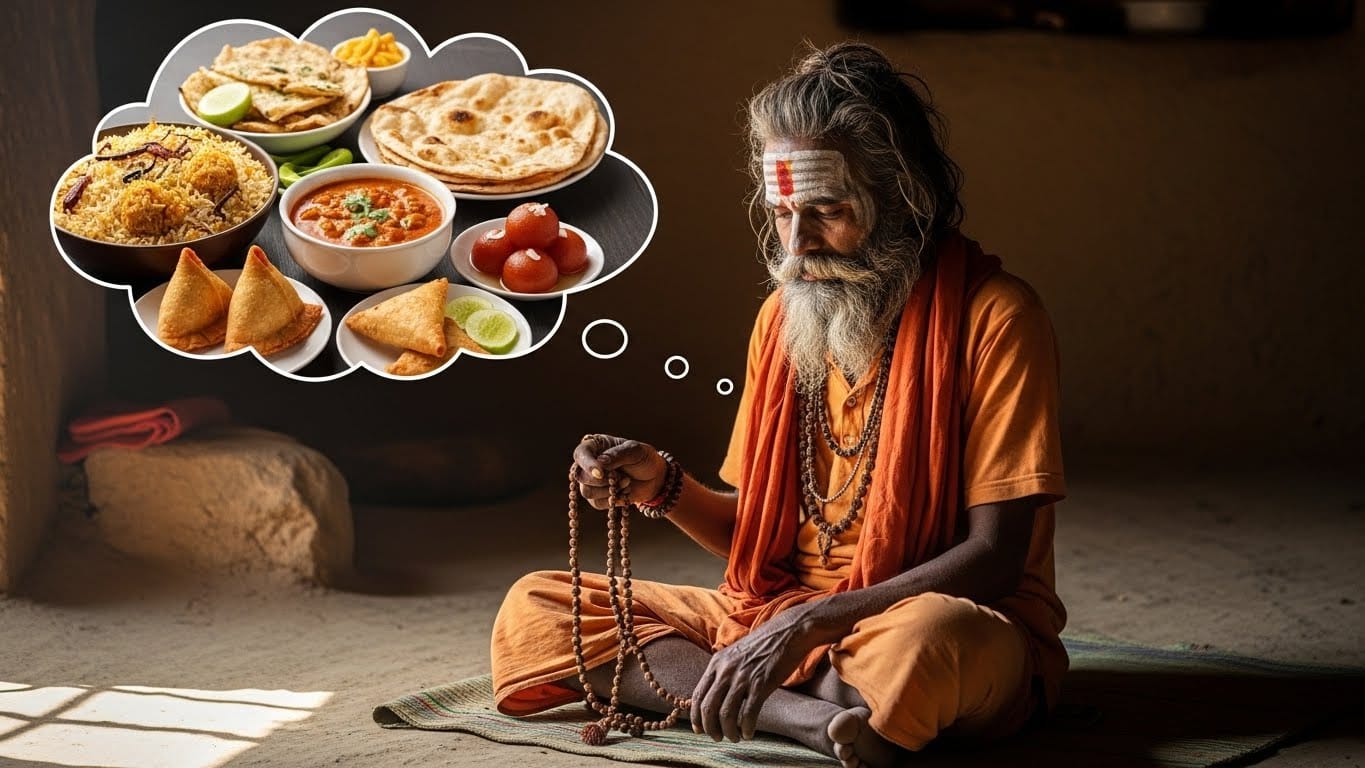
Does Accidental Chanting Lead to God?
The Srimad Bhagavatam narrates the famous story of Ajamil. Using portions of this story, many proponents of the path of devotion propagate the message that "it is sufficient to merely chant the name of God to attain His abode; having faith or mental absorption in God while chanting is not required."
Let us review this narrative in deeper detail and reassess the true message of this scriptural history.
The Fall of a Brahmin
Ajamil was originally an astute Brahmin with profound knowledge of the scriptures and a strong control over his senses. However, his life took a drastic turn. One day, while going through a forest, he saw a prostitute engaged in amorous activities. Despite his training, he became infatuated.
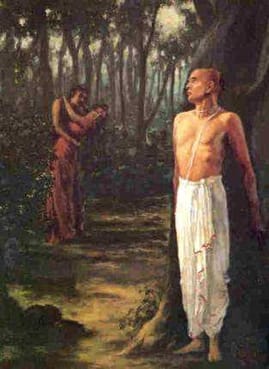
For the love of that woman, he abandoned his strictly regulated life, squandered his wealth, left his parents and wife, and eventually moved in with her. He lived with her for many years, fathering eleven children. He was very fond of his youngest son, whom he had named Narayan.
The Moment of Death
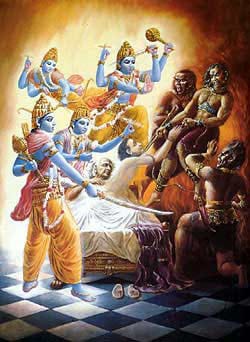
One day, the young Narayan was playing outside and wandered away. Ajamil, unable to see his beloved son, panicked and began calling out loudly, "Narayan! Narayan!" At that precise moment, he had a terrifying vision. In the vision he had died. He saw three ferocious messengers of Yamraj (the God of Death), known as Yamdutas, approaching to drag his soul to narak (hell).
The Yamdutas claimed that Ajamil must be taken to Yamloka (Hell) because he had spent his life violating religious principles and living lustfully. They presented the philosophy of Karma and the three modes of Maya (Trigunatmaka).
However, because Ajamil had uttered the holy name "Narayan" (even though he meant his son), four beautiful messengers of Lord Vishnu, the Vishnudutas, intervened. They countered that the holy name of God is so powerful that it neutralizes sins. He should go with them to Baikunth.
The Awakening
In the ensuing debate between the Yamdoots and Vishnudoots, Ajamil—who was witnessing this in a vision-like state—recollected the teachings of the scriptures he had studied in his youth.
This intervention from God jolted him back into his senses. He realized how far he had fallen, forgetting God in the pursuit of material pleasure.
He recalled that practice of devotion to God releases one from the cosmic bondage. Whereas while he himself despite being a gyani, had fallen to such low levels in the pursuit of material pleasures.
अजामिलोऽप्पथाकर्ण्य दूतानां यम कृष्णयोः ।
धर्मं भागवतां शुद्धं त्रैविद्यं च गुणाश्रयम् ॥ भा. ६.२.२४
ajāmilo'ppathākarṇya dūtānāṁ yama kr̥ṣṇayoḥ ।
dharmaṁ bhāgavatāṁ śuddhaṁ traividyaṁ ca guṇāśrayam ॥ bhā. 6.2.24
"Ajamil heard the conversation between the servants of Yamaraja and the servants of Lord Vishnu, discussing the pure Bhagavata-dharma (devotion) versus the ritualistic dharma based on the three modes of nature."
The Second Chance
This is the crucial turning point often missed by casual readers of Bhagavat. Ajamil did not go to Vaikuntha immediately after calling his son. By the extreme grace of Shri Krishna, who declares "न मे भक्तः प्रणश्यति" (na me bhaktaḥ praṇaśyati — "My devotee never perishes"), Ajamil was given a second chance. The vision ended, the messengers vanished, and Ajamil awoke.
Filled with deep remorse and detachment (vairagya), he renounced the women, the children, and her home. He traveled to the holy city of Haridwar to perform genuine penance.
इतिजातसुनिर्वेदः क्षणसङ्गेन साधुषु । गङ्गाद्वारमुपेयाय मुक्तसर्वानुबन्धनः ॥ itijātasunirvedaḥ kṣaṇasaṅgena sādhuṣu | gaṅgādvāramupeyāya muktasarvānubandhanaḥ || (Srimad Bhagavatam 6.2.39)
"Thus, having become detached by a moment's association with the saints (Vishnudoots), Ajamil became free from all material bondage and went to Gangadvara (Haridwar)."
The Real Liberation
There, for a whole year, he performed intense bhakti. He survived solely on the water of the holy Ganges and engaged his mind fully on the form of Lord Krishna. It was this intense bhakti—not the accidental chanting—that purified him completely.
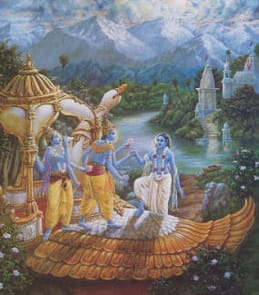
Once he was free from Maya, he obtained a divine body. This time, the Yamdootas did not come. Instead, the Viṣṇudootas returned with a divine aerial car (Pushpak Viman) to take him to the Divine Abode.
हित्वा कलेवरं तीर्थे गङ्गायां दर्शनादनु । सद्यः स्वरूपं जगृहे भगवत्पार्श्वर्तिनाम् ॥ hitvā kalevaraṁ tīrthe gaṅgāyāṁ darśanādanu | sadyaḥ svarūpaṁ jagr̥he bhagavatpārśvartinām || (Srimad Bhagavatam 6.2.43)
साकं विहायसा विप्रो महापुरुष किङ्करैः । हैमं विमानमारुमारुह्य ययौ यात्रा श्रियः पतिः ॥ sākaṁ vihāyasā vipro mahāpuruṣa kiṅkaraiḥ | haimaṁ vimānamārumāruhya yayau yātrā śriyaḥ patiḥ || (Srimad Bhagavatam 6.2.44)
"Giving up his material body at the holy pilgrimage site... he regained his original spiritual form... and boarded a golden airplane to travel to the abode of the Lord."
Conclusion
These verses clearly indicate that the accidental chanting of "Narayan" did not grant him liberation. Ajamil had practised bhakti previously. So, Shri Krishna intervened and granted Ajamil a vision of the future if he did not change his ways. His final reward was achieved only after he engaged his mind fully in devotion at Haridwar.
The mind is the doer. If the mind is not fully absorbed in thoughts of God, it will naturally contemplate material objects or people. Since everything other than God is Maya, thinking about them binds the soul. Therefore, seekers should not be under the illusion that simply pronouncing God’s syllables mechanically will deliver them. One must engage the mind in loving remembrance (Smarana) to attain the ultimate goal.
Further Reading and References
- Related Concepts:
 JKP Literature
 JKP Literature