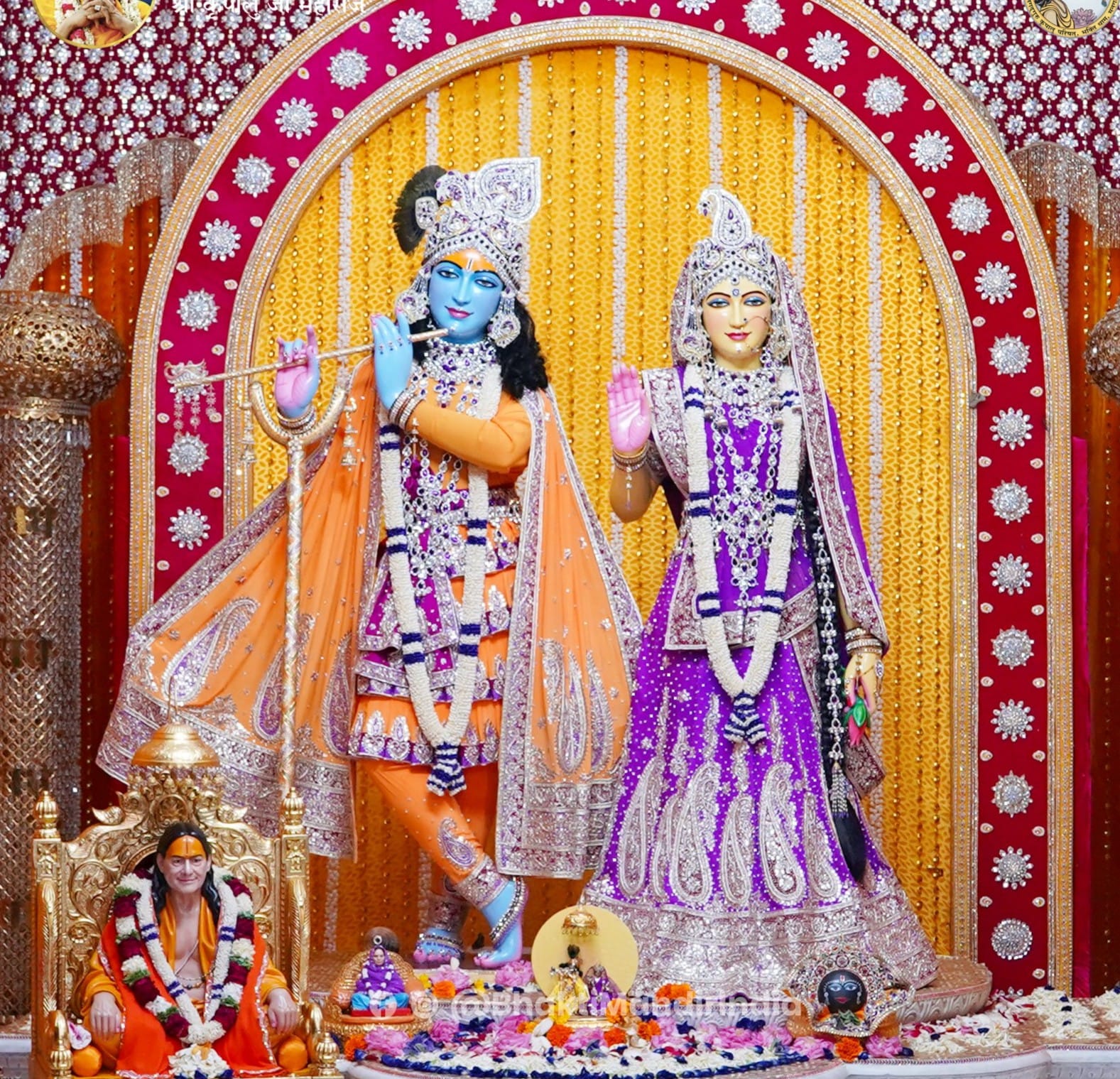
The Divine Secrets of Maharaas
Maharaas is the ultimate dance of divine love. Discover why this bliss is reserved for those with Samartha Rati and how human beings can attain this state.
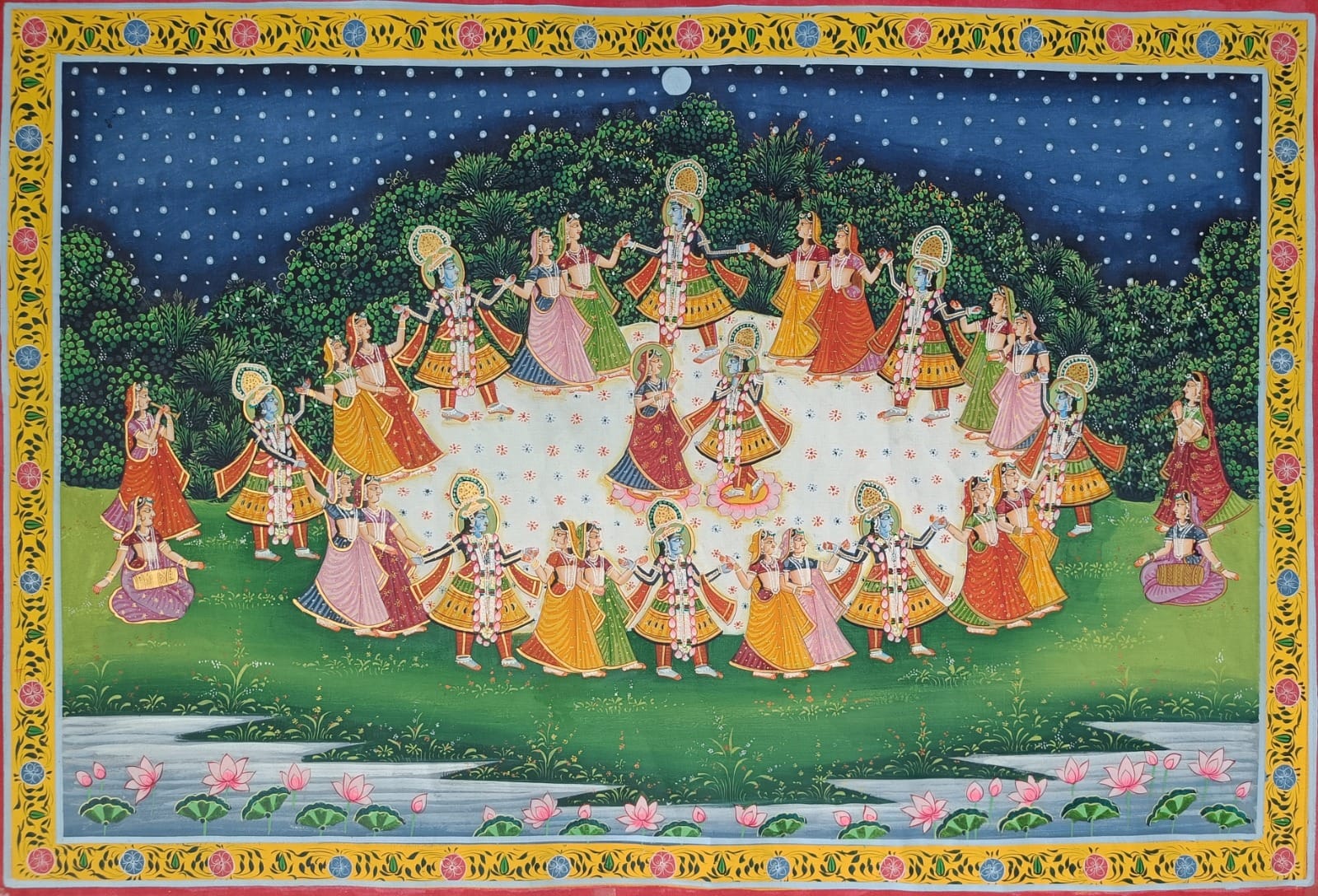
The Maharaas is a profound pastime of Shri Radha Krishna enacted with a select group of God-realized saints. It is of such deep spiritual significance that even among enlightened beings, only one in a million is able to truly comprehend it. Due to its extremely subtle nature, attempts to describe it often lead to misunderstanding.
The following points aim to clarify the true nature of the Maharaas.
The following points aim to clarify what the Maharaas truly is.
- What is Maharaas?
- Who is Eligible to attain Maharaas?
- Can human beings attain Maharaas?
- Maharaas vs Premanand: Are they the same ?
What is Maharaas?
The word Maharaas (Devanagari: महारास; ISO 15919: mahārāsa) is a combination of Maha (great) and Rasa. The root word, Rasa (Devanagari: रस; ISO 15919: rasa), means "the bliss of divine love." In spiritual terms, anand (bliss) is not just happiness; it is infinite, ever-increasing, and perpetually new.
When anand itself is limitless then who can describe the superlative form of bliss? This is bliss of samartha rati is experienced exclusively by those devotees who love Shri Krishna as their Supreme Beloved and Shri Radha as their Supreme Ladyship, without any desire for self-happiness.
The Vedas describe Lord Krishna as: .
रसो वै स:
rasō vai sa:
"the embodiment of divine love."
While this bliss can be experienced by gyanis who worship the formless God, , the highest and most profound form of ever-increasing bliss is experienced only by those who practice Samartha Rati Bhakti. Because this divine love provides many levels of bliss, the Vedas further describe Him as:
This divine love provides many levels of bliss. That is why, the Vedas further describe Him as
रसानां रसतमः परमः
rasānāṁ rasatamḥ paramḥ
"The Supreme Bliss”.
The Maharaas was the divine dance where this supreme bliss was showered upon the most selfless devotees. As described in the Bhagavat Purana (10.33.2):
अङ्गनामङ्गनामन्तरे माधवो माधवं माधवं चान्तरेणाङ्गना ।
इत्थमाकल्पिते मण्डले मध्यगः सञ्जगौ वेणुना देवकीनन्दनः ॥
2.35
aṅganāmaṅganāmantarē mādhavō mādhavṁ mādhavṁ cāntarēṇāṅganā .
itthamākalpitē maṇḍalē madhyagḥ sañjagau vēṇunā dēvakīnandanḥ .
2.35
"In a circle was formed with Shri Krishna then two women, then Shri Krishna then two women. Simultaneously, the son of Devaki played the flute in the center of the circle."
Who is Eligible to Attain Maharaas?
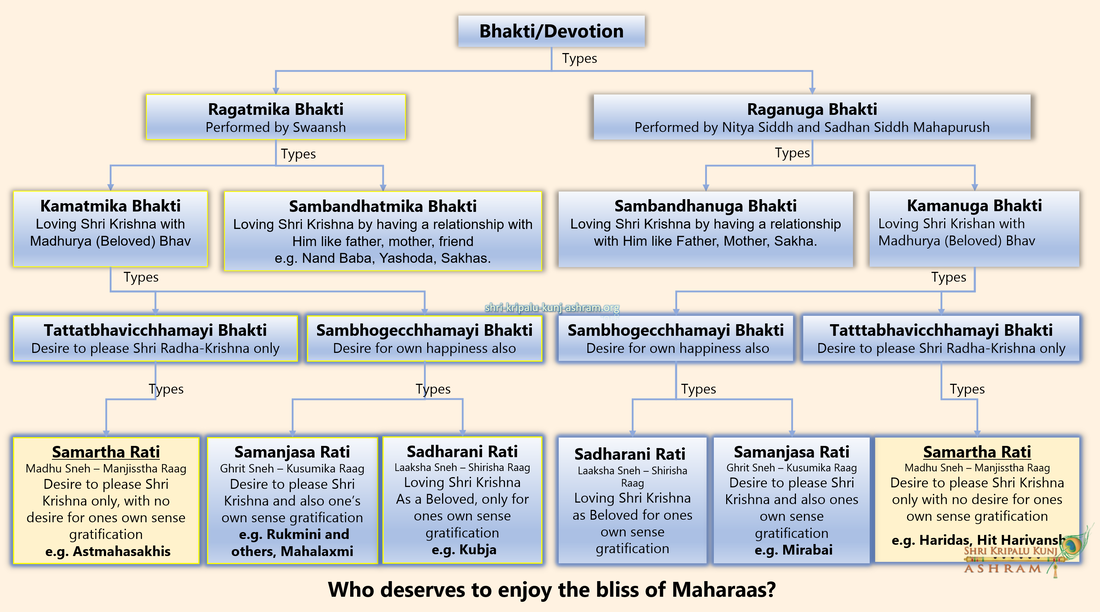
Everyone is not eligible to attain the bliss of Maharaas. As shown in the graphic, among all God-realized saints, only a select few are eligible to attain it. This is because eligibility is restricted to those who have reached the highest level of devotional love, specifically the samartha rati stage.
The Maharaas is not for everyone. Among all God-realized saints, only a select few are eligible to attain it. Eligibility is restricted to those who have reached the highest level of devotional love, specifically the samartha rati stage.
The two categories of devotees who attain this bliss are:
- Tattatbhavicchhamayi Kamatmika Ragatmika Samartha Rati Bhakti: Devotees like the Ashtamahaskahis (Eight Main Gopis).
- Tattatbhavicchhamayi Kamanuga Raganuga Samartha Rati Bhakti: Devotees who follow in the footsteps of the Gopis, such as saints like Swami Haridas and Hit Harivansh.
These devotees find pleasure only in the happiness of Shri Radha and Krishna. It is the second category—Kamanuga Raganuga—that we as human beings can strive for and attain.
Can human beings attain Maharaas?
Yes, any human being can attain the Maharaas. The key is to practice Madhurya Bhav bhakti under the guidance of a genuine Rasik saint who has attained this same level of love.
The philosophy one must live by is Tatsukhasukhitvam (Devanagari: तत्सुखसुखित्वम्; ISO 15919: tatsukhasukhitvam), which means "finding pleasure in the pleasure of the beloved." All actions and thoughts must be dedicated to pleasing The Divine Couple without any thought of self-gratification.
All actions and thoughts must be dedicated to pleasing the Radha Krishna - The Divine Couple , without any thought of self-gratification.
Maharaas vs Premanand: Are they the same?
No, they are not the same, though the Maharaas is the highest form of premanand.
- Brahmanand: This is the bliss attained by those who follow the path of gyan (knowledge) and realize the formless God. It is ineffable and divine, but it is a static state.
- Premanand: This is the bliss experienced by devotees who love a personal form of God. There are ascending levels of this bliss, corresponding to different devotional sentiment (bhav):
- Dasya Bhav - to adore God as your Master,
- Sakhya Bhav - to adore God as a friend,
- Vatsalya bhav - to adore God as son and
- Madhurya Bhav - to adore God as beloved. Madhurya bhav has three levels:
Madhurya Bhav itself has three levels: Sadharani, Samanjasa, and the highest, Samartha Rati.
It is only at this level of Samartha Rati—where there is completely selfless adoration and not even a trace of desire for personal happiness—that a devotee can experience the bliss of the Maharaas. This is a rare state. Even Rukmini, the principal queen of Shri Krishna, did not attain the Maharaas because she occasionally harbored a small desire for Her own happiness, as confirmed in the Bhagavat Mahapurana.
Further Reading and Reference
- Related Concepts: