Why Material Pleasure Cannot Satisfy
Material pleasure fades, diminishes, and ends—yet our desire for happiness does not. Why is there such a mismatch between what we seek and what the world provides?

The Pattern We Know Too Well
You achieve something you wanted.
For a moment, it feels great.
Then:
The excitement fades.
You want something more.
Or you fear losing what you gained.
Even pleasure weakens with repetition.
First bite? Amazing.
Tenth bite? Not the same.
This is not pessimism.
It is observation.
The Limits of Finite Things
Everything in this world shares three qualities:
It changes.
It diminishes.
It ends.
If something changes, its happiness will change.
If something ends, its happiness will end.
But our desire does not end.
We do not want temporary happiness.
We want something that stays.
The Mismatch
Here is the tension:
We desire lasting happiness.
We search among temporary things.
Finite objects cannot produce infinite fulfillment.
This is not a moral accusation against the world.
It is simply a limitation.
Something limited cannot satisfy an unlimited longing.
The Real Possibility
If lasting happiness cannot be found in temporary things,
then one of two things must be true:
Either lasting happiness does not exist,
or
It exists somewhere beyond what changes.
If infinite happiness exists,
it must belong to something infinite.
That possibility must be examined carefully.
Continue the Inquiry
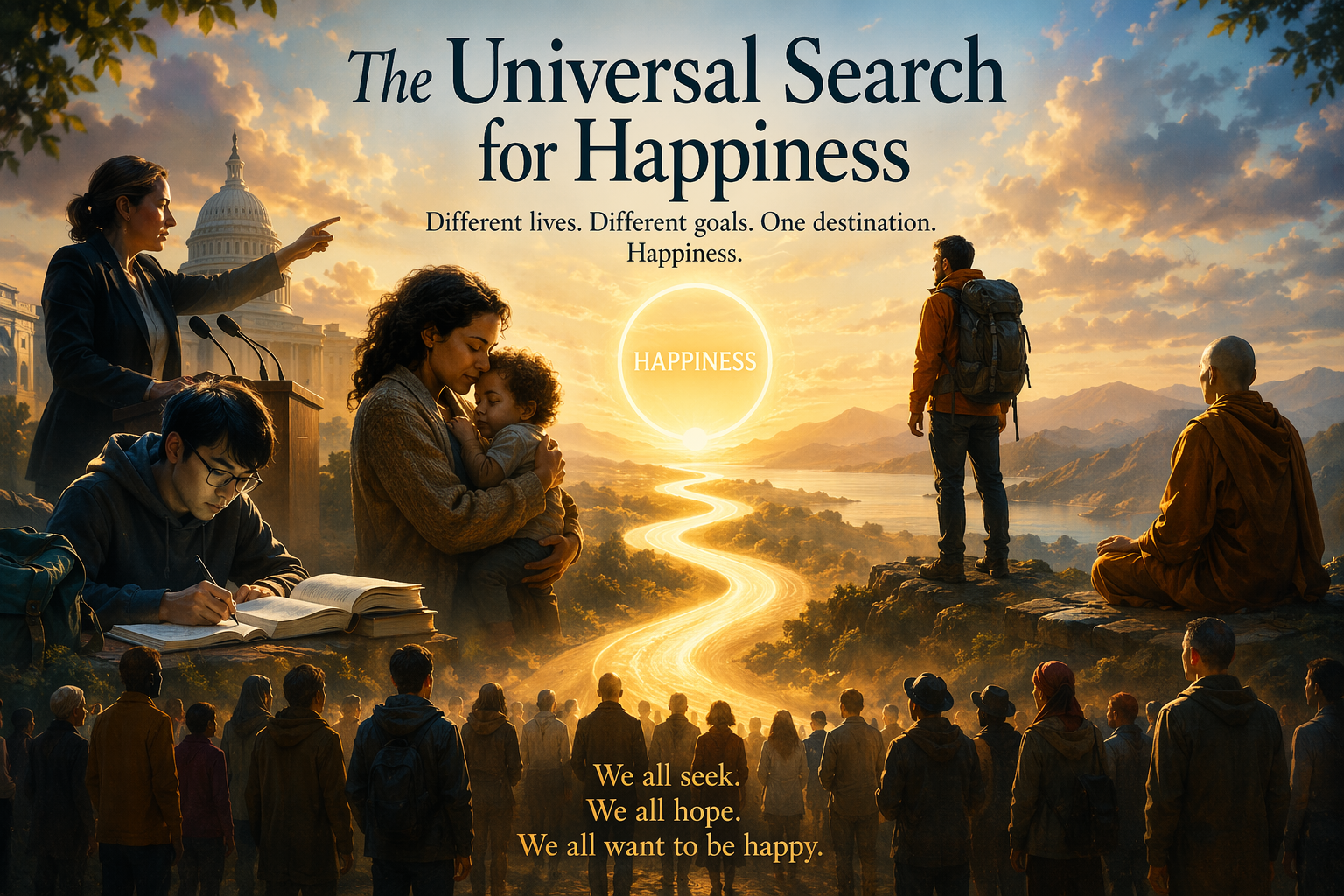
👉 Previous: The Universal Search for Happiness
👉 Next: If Infinite Bliss Exists — Where Is It?
Or return to the overview:
👉 Back to Start Here