paramahamsa | परमहंस

The title Paramhansa (Devanagari: परमहंस; ISO 15919: paramahaṁsa) denotes a highly elevated spiritual state and is used in two principal contexts, corresponding to the two eternal forms of The Supreme God: Nirakar Brahm (formless) and Sakar Brahm (with form).
👤 Nirakar Paramhansa (Non-Duality)
This term is used for those who follow the path of Advait Vaad (non-duality) who worship Nirakar Brahm (the formless Absolute). When such a person's mind is entirely absorbed in the Nirakar Brahm, the person is called a Paramhansa of Advait Vaad.
Examples: Shukdev Paramhans, King Janak, Sage Shaunk, Sage Soot, and Shankaracharya.
💖 Sakar Paramhansa (The Bhakti Path)
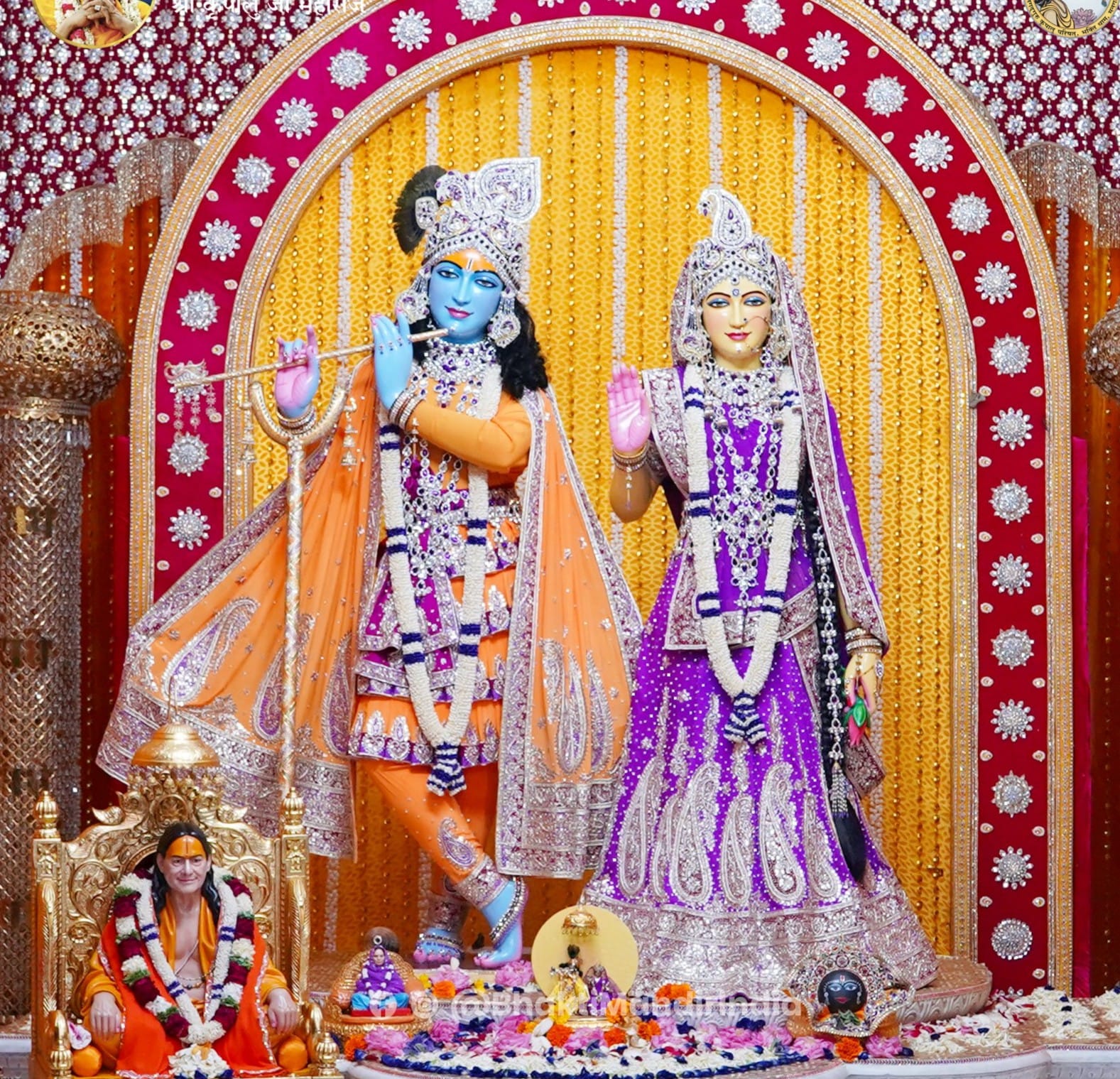
This term is used for those who practice Bhakti (devotion) to Sakar Brahm (God with form). When such a person's mind is fully absorbed in the Sakar Brahm, they are also called a paramhansa, often described in the context of the Dvait Vaad (duality) tradition.
Example: The Gopis. They were so immersed in the thoughts of Shri Krishna that they could not distinguish themselves from Him, demonstrating the highest form of selfless love.