Bhakti Siddhant Glossary dhama | धाम dhama (Devanagari: धाम; ISO 15919: dhāma) is the sacred place which Hari/Guru choose as their primary place of residence and for performing their lilas (pastimes). Examples * Vrindaban: The dhama of Shri Radha Krishna. * Nandgaon: The dhama of Shri Krishna. * Barsana: The dhama of Shri Radha. * Shri Kripalu Dham
Bhakti Siddhant Glossary deva rina | देव ऋण deva rina (Devanagari: देव ऋण ISO15919: deva r̥ṇa) is the debt every living being owes to celestial devatas. It is one of the three debts to be repaid to attain liberation. Further Reading and Reference * Also written as dev rina, dev rin * Related Concepts: tri rina, Repay Spiritual
Maharaj Ji's Poetic Dictionary chunari | चुनरी A shawl-like upper garment made of fine, delicate material, which is worn around the shoulders, covering the head. REFERENCE Prema Rasa Madira - The Intoxicating Bliss of Divine Love, Vol. 2, Ch. 10
chit shakti | चित् शक्ति The same as yogamaya, that is, the power to do everything possible, impossible, or otherwise. Also known as svarupa shakti and antaranga shakti. The same as yogamaya shakti. REFERENCE Bhakti Shatak - Hundred Gems of Devotion - an in-depth analysis
Bhakti Siddhant Glossary chintamani | चिंतामणि chintamani (Devanagari: चिंतामणि; ISO 15919: cintāmaṇi) is a touchstone capable of delivering every wish. Shri Radha is that chintamani gem who delivers every wish of her perfect bhakt. Further Reading and Reference * paras * Prema Rasa Madira - The Intoxicating Bliss of Divine Love, Vol. 3, Ch. 20
Maharaj Ji's Poetic Dictionary chhika | छीका Hanging basket for keeping food. REFERENCE Prema Rasa Madira - The Intoxicating Bliss of Divine Love
Maharaj Ji's Poetic Dictionary chhathi | छठी The sixth day after the birth of a child. Reference: Shyama Shyam Geet - Love Songs of Shri Radha Krishna
Maharaj Ji's Poetic Dictionary bulaka | बुलाक See besara. Reference: Prema Rasa Madira - The Intoxicating Bliss of Divine Love, Vol. 2, Ch. 10
Bhakti Siddhant Glossary brahmavidya | ब्रह्मविद्या Brahmavidya (Devanagari: ब्रह्मविद्या ISO15919: brahmavidyā) translates literally as "Knowledge of the Absolute Truth" or "Divine Knowledge." She is the sentient power of God (Shakti). Practitioners of the path of knowledge (Jnanis ) seek the grace of Goddess Brahmavidya as She is the one
Bhakti Siddhant Glossary brahmarishi | ब्रह्मर्षि brahmarishi (Devanagari: ब्रह्मर्षि ISO15919: brahmarṣi) is the highest class of rishi. Some examples are Sage Narad, Sage Vishwamitra after he surrendered to Sage Vashishtha. Further Reading and Reference * rishi * rajarishi * Main Kaun? Mera Kaun? Vol. 5, Ch. 87
Bhakti Siddhant Glossary brahmanishtha | ब्रह्मनिष्ठ Brahmanishtha (Devanagari: ब्रह्मनिष्ठ ISO15919: brahmaniṣṭha) is one who has attained prem: one with practical realisation of God. Scripture advise accepting such a person to be your Guru to guide you in your spiritual journey. Further Reading and Reference * Also written as brahmanishth, brahmnishth * Guru-Spiritual Master * Guru
Bhakti Siddhant Glossary brahmajnani | ब्रह्मज्ञानी brahmajnani (Devanagari: ब्रह्मज्ञानी; ISO 15919: brahmajñānī) is one who has attained the perfect knowledge of Brahm: a knower of the Impersonal aspect of God. Further Reading and Reference * Also written as brahmgyani * Nirakar Brahm * Who am I? Who is Mine? Vol. 1, Ch. 3
Bhakti Siddhant Glossary brahmadrava | ब्रह्मद्रव Brahmdrav (Devanagari: ब्रह्मद्रव ISo15919: brahmadrava) is the ocean of bliss where all mukt gyani remain immersed for ever and ever. See Viraja nadi for more details. Further Reading and Reference * Also written as brahmdrav * Viraja nadi * Karnarnav * Who am I? Who is Mine? Vol. 1, Ch. 6
Bhakti Siddhant Glossary brahmabhuta | ब्रह्मभूत brahmabhuta (Devanagari: ब्रह्मभूत ISO15919: brahmabhūta) one who has attained unity with God and is still in the human form. Such a jnani sees himself everywhere. Further Reading and Reference * Also written as brahmbhut, brahmbhootavastha, brahmbhoot * atmajnana * Types of Gyanis * Prema Rasa Siddhanta - Philosophy of Divine Love,
Maharaj Ji's Poetic Dictionary bitva | बिटवा A colloquial expression for son. Reference: Bhagavannama Mahatmya - The Glories of the Divine Name
Bhakti Siddhant Glossary bindi |बिंदी bindi (Devanagari: बिंदी; ISO 15919: bindī) is a dot, mark or spangle on the forehead placed slightly above and between the eyebrows. In Northern India the Bindi is a traditional part of a married woman's adornment representing her marital status. Further Reading and Reference * Prema Rasa Madira
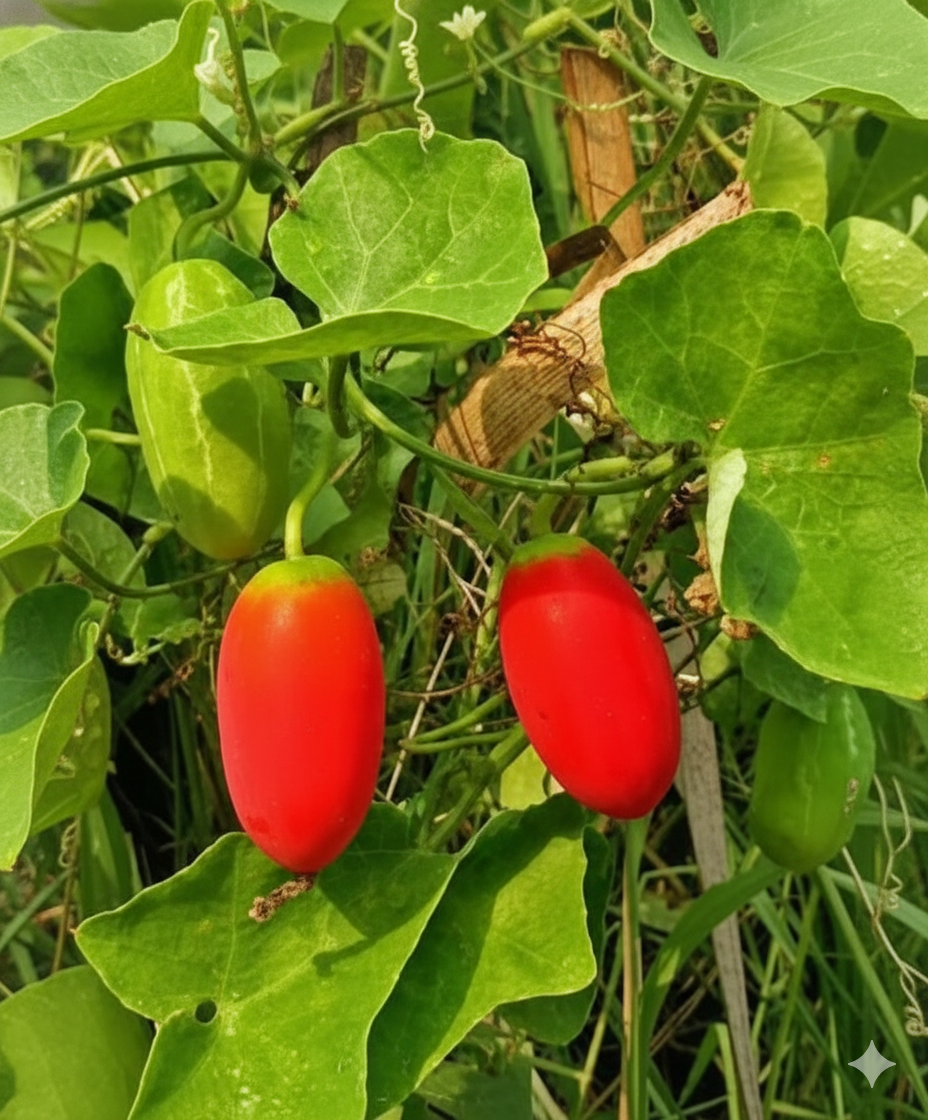
Bhakti Siddhant Glossary bimba | बिम्ब bimba (Devanagari: बिम्ब; ISO 15919: bimba) has two primary meanings: 1. The Ivy Gourd Plant Bimba is the Hindi name for the Ivy Gourd (Coccinia grandis). It is a tropical vine whose small, oblong fruits turn a vibrant red color when fully ripe. 2. Philosophical Terminology * Bimba refers
Bhakti Siddhant Glossary bhringi | भृंगी Bhringi (Devanagari: भृंगी; ISO 15919: bhr̥ṅgī) refers to an insect (often identified as a wasp) frequently cited in Hindi poetry. It serves as a metaphor for the mind's profound ability to take the form of the object upon which it focuses. Although the jeev (soul) has
Bhakti Siddhant Glossary bhranta | भ्रांत bhranta (Devanagari: भ्रांत; ISO 15919: bhrānta) means delusional. Further Reading and Reference * Also written as bhrant * Who am I? Who is Mine? Vol. 1, Ch. 10
Bhakti Siddhant Glossary bhrama | भ्रम bhrama (Devanagari: भ्रम; ISO 15919: bhrama) means incomplete knowledge which results in mistakenly considering one object to be another. Implying delusion: confusing something with something else, such as a piece of rope to be a snake, brass to be gold, or considering the body to be the self. This
Bhakti Siddhant Glossary bhedvadini | भेदवादिनी bhedvadini richa (Devanagari: भेदवादिनी ऋचा ISO15919: bhēdavādinī r̥cā) refers to those Mantras in the Vedas that assert differences between God, individual souls and material energy. These mantras categorically call-out the differences between God (Brahm), individual souls (jiva) and material energy (Maya). These differences are in terms
Bhakti Siddhant Glossary bhava deha | भाव देह Bhava Deha (Devanagari: भाव देह; ISO 15919: bhāva deha) is the Devotional body or contemplated body of the soul. The Bhava Deha is composed entirely of loving sentiments (bhavas) toward the Divine. Ripening Process: When an individual practices devotional activities, the bhava (spiritual emotion) that they concentrate on
Bhakti Siddhant Glossary bhautikvadi | भौतिकवादी Bhautikvadi (Devanagari: भौतिकवादी; ISO 15919: bhautikavādī) refers to a person defined by two primary characteristics: 1. Body Identification: Someone who identifies strongly with their physical body (the material self). 2. Empiricism: An empiricist—a person who is committed to believing only what can be perceived through the
Bhakti Siddhant Glossary bhanga | भांग Bhanga (Devanagari: भांग; ISO 15919: bhāṅga) is a psychoactive substance derived from the cannabis plant. The leaves are typically ground and mixed with liquid bases like milk, water, or incorporated into other cooked items for consumption. Further Reading and Reference * Also written as bhang * Prema Rasa Madira - The