
The Kashi Recognition (1957): Conferment of Jagadguruttam
In 1957, the Kashi Vidvat Parishad — one of India’s most respected bodies of Vedic scholarship — formally conferred upon Shri Kripalu Ji Maharaj the title of Jagadguruttam after evaluating his scriptural mastery.
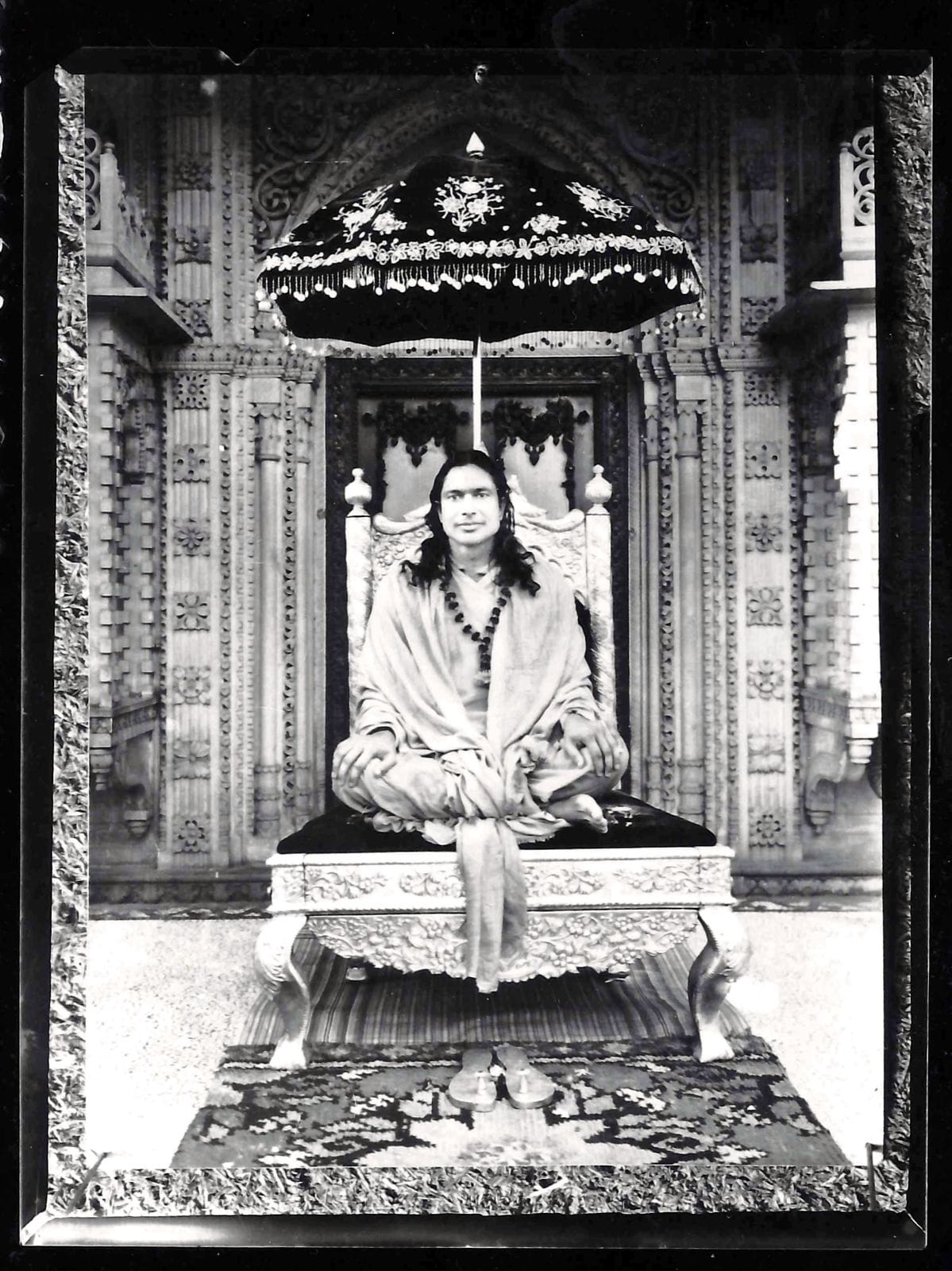
In 1957, an event took place in the ancient city of Kashi (Varanasi) that would enter the intellectual history of modern Vedic scholarship.
The Kashi Vidvat Parishad — an organization of Vedic and scriptural scholars based in Varanasi — formally recognized Shri Kripalu Ji Maharaj following a period of philosophical examination that had drawn increasing attention across scholarly circles.
This recognition did not arise suddenly.
It followed years of public discourse, most notably the major philosophical conventions held at:
- Chitrakoot (1955) — where foundational contradictions within scriptural interpretations were openly raised
- Kanpur (1956) — where those contradictions were systematically addressed before scholars, saints, and intellectual leaders
By the time invitations were extended from Kashi, the scholarly community was already aware that an unusual philosophical voice had emerged.
The Scholarly Setting
Kashi has long occupied a distinctive place within the intellectual landscape of India. The Kashi Vidvat Parishad functions as an assembly of Sanskrit scholars historically associated with examination, debate, and scriptural interpretation.
Within such an environment:
- Philosophical positions are tested
- Interpretations are examined
- Scholarly reputations are established
Recognition in this setting is traditionally preceded by scrutiny rather than granted through popularity or institutional influence.
It was within this context that Shri Maharaj Ji was invited to present discourses addressing complex theological and philosophical questions rooted in the Vedas, Upanishads, and allied scriptures.
The Period of Evaluation
Accounts describe extended Sanskrit discourses characterized by:
- Cross-scriptural referencing
- Logical continuity
- Precision of interpretation
- Clarity of synthesis
Observers noted not merely familiarity with individual texts, but an ability to reconcile diverse philosophical positions into a coherent framework.
For a body trained in debate, reconciliation carries particular weight — it requires mastery not only of conclusions, but of the reasoning underlying them.
It was this demonstrated capacity that led to formal acknowledgment.
Conferment of the Title
Following evaluation, the Parishad bestowed upon Shri Maharaj Ji the designation:
Jagadguruttam
“Supreme among Jagadgurus.”
Alongside this title, a formal Sanskrit offering — the Padya-Prasūnōpahāra, composed in seven verses — articulated the scholarly assessment of his philosophical stature.
The language employed in this offering has been preserved as part of the documented record.
Honorific Titles Recorded in the Offering
The brief explanations below are interpretive glosses intended to clarify the general sense of each honorific, not to replace the literal Sanskrit meaning.
Jagadguruttam (जगद्गुरुत्तम)
Supreme among Jagadgurus — acknowledging a teaching authority regarded as exceptional within the scholarly tradition.
Śrīmat-Pada-Vākya-Pramāṇa-Pārāvārīṇa
(श्रीमत्पदवाक्यप्रमाणपारावारीण)
An honorific suggesting expansive authority in matters of scriptural interpretation and philosophical reasoning.
Vēda-Mārga-Pratiṣṭhāpanācārya
(वेदमार्गप्रतिष्ठापनाचार्य)
Affirmed as an Acharya who established clarity regarding the path indicated in the Vedas, particularly where interpretive divergence had produced uncertainty.
Nikhila-Darśana-Samanvayācārya
(निखिलदर्शनसमन्वयाचार्य)
Recognized as a master of philosophical reconciliation, capable of harmonizing diverse doctrinal streams without dismissing their foundational insights.
Sanātana-Vaidika-Dharma-Pratiṣṭhāpana-Sat-Sampradāya-Paramācārya
(सनातनवैदिकधर्मप्रतिष्ठापनसत्संप्रदायपरमाचार्य)
Acknowledged as a preceptor who strengthened continuity within the Sanātana Vedic tradition while articulating its philosophical foundations with renewed clarity.
Bhakti-Yōga-Rasāvatāra
(भक्तियोगरसावतार)
An honorific expressing the perception that his teachings uniquely illuminated the experiential dimension of Bhakti.
Understanding the Nature of the Recognition
Scholarly titles often reflect evaluation rather than mere admiration.
When a body trained in textual scrutiny employs language suggesting exceptional synthesis or authoritative interpretation, it indicates that the scholarship encountered was regarded as distinctive within its context.
For readers today, the significance lies not primarily in ceremonial form, but in the intellectual environment from which it emerged.
Recognition in Kashi has historically followed examination.
Historical Continuity
Viewed in sequence:
- Chitrakoot (1955) witnessed the public raising of long-standing philosophical tensions.
- Kanpur (1956) expanded the examination before a broader assembly of scholars and public intellectuals.
- Kashi (1957) formally recorded and recognized the demonstrated capacity for reconciliation.
These were not isolated events. They represent progressive stages in the public evaluation of philosophical exposition.
Why This Moment Matters
Spiritual traditions often gain broader recognition only after initial evaluation within scholarly circles.
The 1957 recognition marks such a moment — when sustained philosophical discourse received formal acknowledgment within a traditional setting of examination.
For students of intellectual history, it reflects the recorded response of scholars to a body of work that had already drawn sustained attention.
Closing Perspective
Historical recognition does not compel belief.
It does something more constructive:
it invites examination.
The Parishad’s decision forms part of the documented scholarly response to a body of philosophical discourse presented in public settings over several years.
Understanding this context allows the modern reader to approach the teachings that follow with awareness of the intellectual environment in which they were received.
Internal Links
- Chitrakoot Sammelan (1955): The First Philosophical Convention
- Kanpur Convention (1956): The Public Verification of Scriptural Mastery
- Appendix — Padya-Prasūnōpahāra (1957) – Kashi Vidvat Parishad Honor
References
- Kashi Vidvat Parishad — Wikipedia: https://en.wikipedia.org/wiki/Kashi_Vidvat_Parishad
- Published accounts preserved by Radha Govind Samiti (RGS)