
Jagadguruttam Shri Kripalu Ji Maharaj | Scholarly Recognition
Explore the documented scholarly recognition of Jagadguruttam Shri Kripalu Ji Maharaj, culminating in his historic acknowledgment by the Kashi Vidvat Parishad.
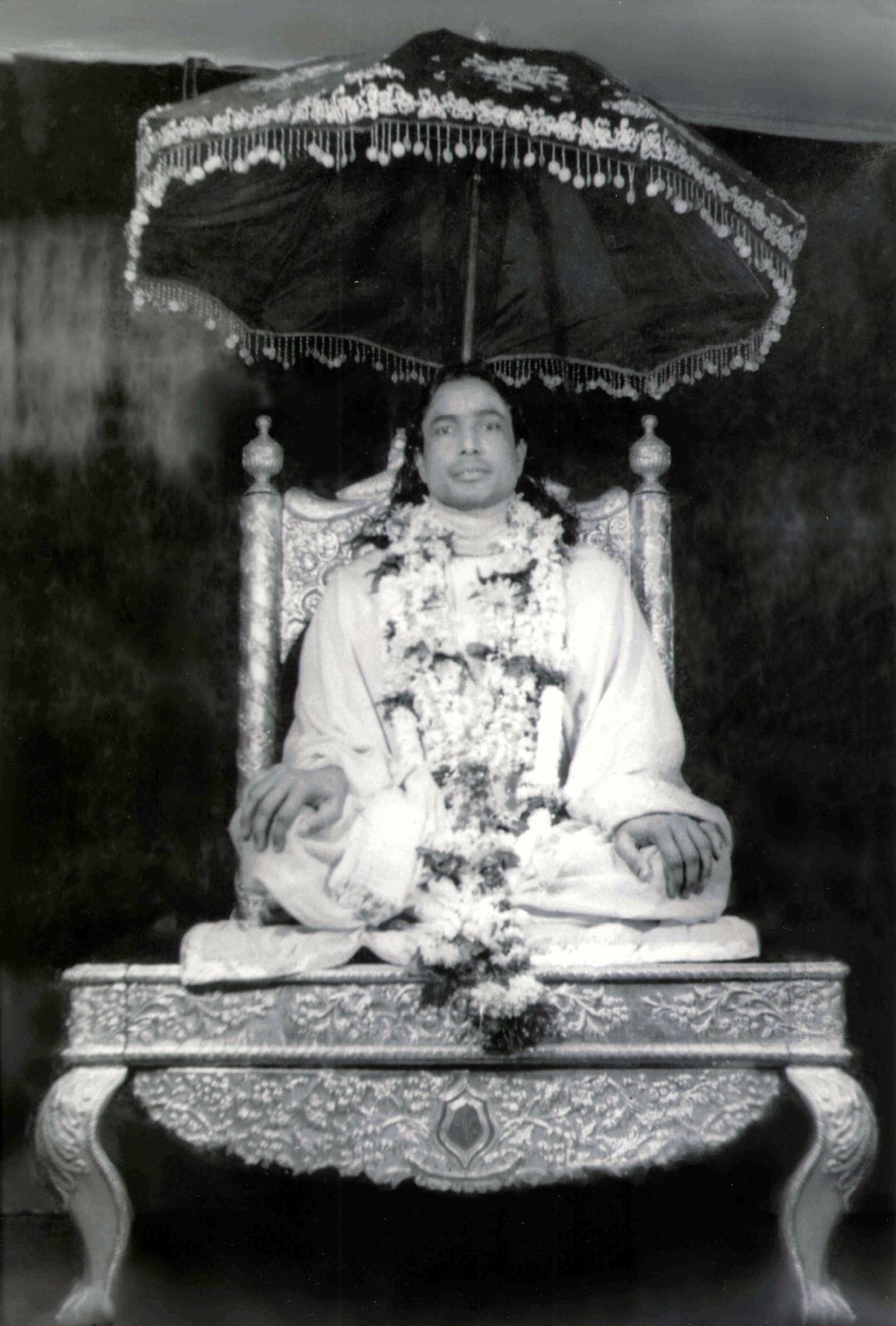
This section presents the documented scholarly recognition and intellectual authority of Jagadguruttam Swami Shri Kripalu Ji Maharaj.
Opening Narrative
Throughout history, the interpretation of the Vedas has demanded not only scholarship, but realization. The title Jagadguru—“World Teacher”—has therefore been bestowed only upon those rare masters whose knowledge resolved the deepest philosophical questions of their age.
In the modern era, such recognition did not arise from institutional appointment, popular following, or religious inheritance.
It emerged from public scholarly examination.
Before his teachings spread widely, Jagadguruttam Swami Shri Kripalu Ji Maharaj participated in a series of major philosophical conventions attended by respected saints, scholars, and intellectual leaders of India. These gatherings were not devotional assemblies—they were rigorous forums dedicated to resolving long-standing contradictions within Vedic thought.
What followed culminated in the 1957 recognition in Kashi.
The Historical Sequence
This section documents the major scholarly engagements and preserved records that preceded his formal recognition.
1) Chitrakoot Convention (1955)
A national philosophical gathering where foundational contradictions—debated for centuries—were placed before an assembly of saints and scholars, and a structured reconciliation was presented.
→ Read: Chitrakoot Convention (1955)
2) Kanpur Convention (1956)
A broader intellectual forum examining the relationship between spiritual truth and lived human reality, conducted in an atmosphere of closer scrutiny and evaluation.
→ Read: Kanpur Convention (1956)
3) Public Declaration of Acharya Rajnarayan Shukla (1956)
A preserved declaration delivered publicly at the Kanpur Convention by a Kashi-based authority in traditional scriptural debate, presented here as part of the record.
→ Read: Public Declaration (1956)
4) Recognition by the Kashi Vidvat Parishad (1957)
Following scholarly evaluation in Kashi (Varanasi), the Parishad formally conferred the designation Jagadguruttam—“Supreme among Jagadgurus.”
→ Read: Kashi Vidvat Parishad Recognition (1957)
5) Padya-Prasūnōpahāra (1957) — Certificate Text
The preserved seven-verse Sanskrit offering presented during the Kashi recognition, reproduced with Devanagari, ISO 15919 transliteration, and English translation.
→ Read: Padya-Prasūnōpahāra (1957)
Why This Recognition Matters
Spiritual history contains many teachers—but very few whose knowledge was examined in public scholarly forums before being widely accepted.
These events are therefore preserved not as devotional memory, but as part of the intellectual record of modern Vedic scholarship.
For the sincere seeker, such documentation serves an important purpose:
Before one entrusts their spiritual direction to a teacher, it is natural to ask whether that authority has been tested.
Here, the record invites examination.
Transition
Understanding this historical foundation helps place the teachings that follow in their proper context.
The philosophy presented throughout this site is not conjectural thought.
It rests upon a body of knowledge publicly examined and recorded within the Vedic scholarly environment.
The next step is therefore not biography, but the teachings themselves.
👉 Enter Siddhānt — The Spiritual Foundation
References
- Preserved accounts within the Radha Govind Samiti (RGS) record.
- Kashi Vidvat Parishad — Wikipedia: https://en.wikipedia.org/wiki/Kashi_Vidvat_Parishad