How Does One Find a True Guru?
Discover how sincere seeking, saintly association, and divine grace guide a soul toward a genuine Guru — even before faith fully awakens.

Once a seeker understands that God cannot be attained without guidance, a deeper question naturally arises:
How does one find a true Guru?
In today’s world, many speak about God.
Some are scholars.
Some are eloquent.
Some gather large followings.
Some display impressive abilities.
So how is an aspirant to discern authenticity?
Before answering that, we must understand something fundamental.
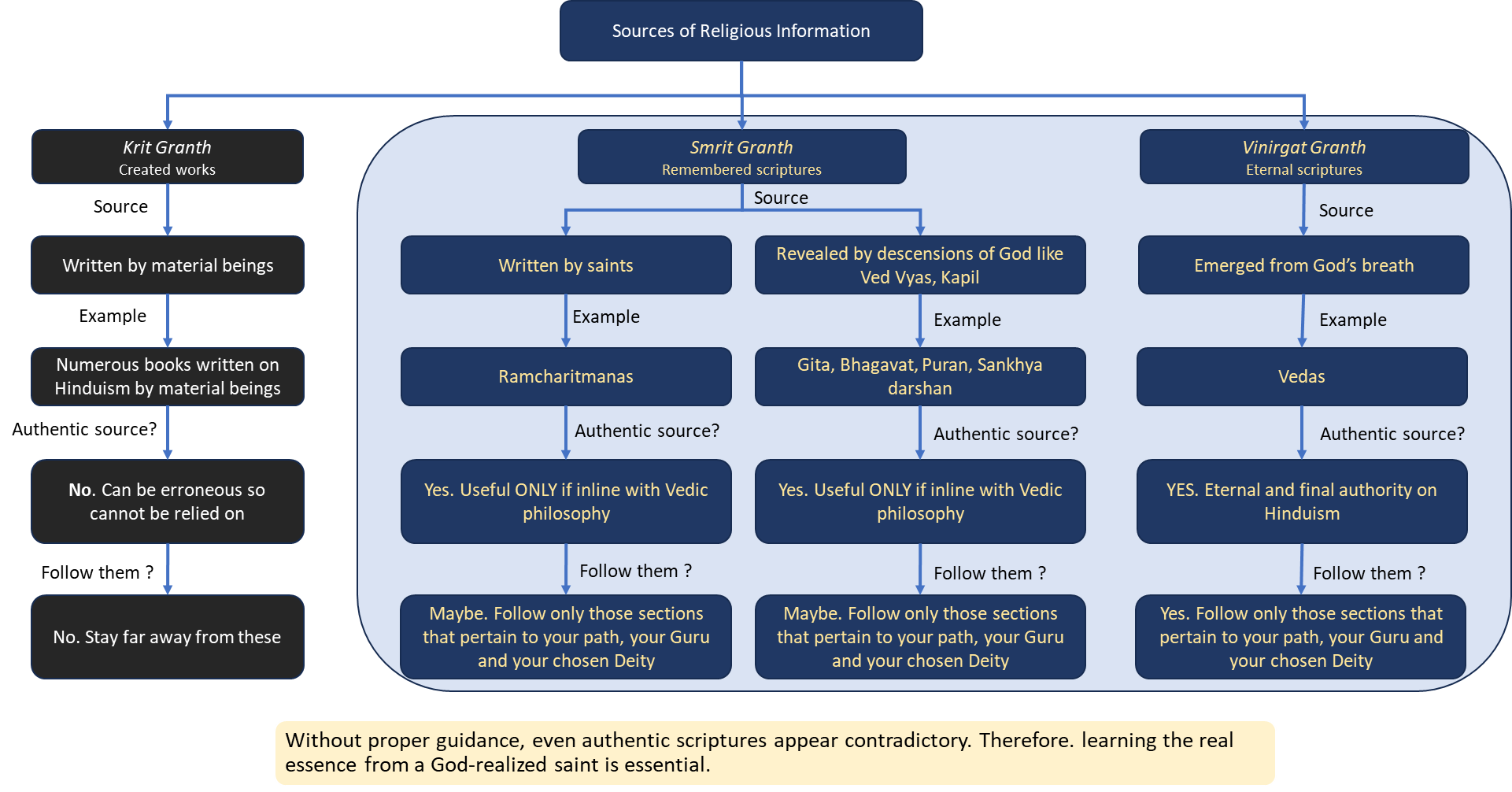
Why This Question Is So Difficult
An aspirant is searching for what he does not yet know.
He has not realized God.
He has not experienced divine love.
He does not yet possess spiritual vision.
So how can he confidently evaluate someone who claims realization?
Shri Maharaj Ji explains this very simply:
Just as a child cannot measure the depth of a professor’s knowledge, the bound soul cannot fully measure the qualification of a God-realized saint.
Discrimination helps.
Scriptural definitions help.
Observation helps.
But ultimately, intellect alone cannot complete this search.
The Scriptural Order of Progress
The scriptures describe a natural progression on the path of devotion:
आदौ श्रद्धा ततः साधुसङ्गोऽथ भजनक्रिया
ततोऽनर्थनिवृत्तिः स्यात् ततोनिष्ठा रुचिस्तथा
ādau śraddhā tataḥ sādhusaṅgo’tha bhajanakriyā
tato’nārthanivr̥ttiḥ syāt tato niṣṭhā rucis tathā
First faith.
Then association with a saint.
Then devotional practice.
Then purification.
Then faith.
Then steady interest.
Then taste.
At first glance, it appears that faith must already exist before one approaches a saint.
But life is rarely that simple.
What If I Have No Faith?
This is an honest question.
Some people have barely heard about God.
Some have heard — but do not believe.
Some believe one day and doubt the next.
Are such people excluded from bhakti?
No.
Shri Maharaj Ji explains something deeply reassuring.
Even if a person has no faith — even if he resists listening about God — there is still hope.
If such a person makes the effort to keep attending the assembly of a genuine saint, something begins to happen quietly.
The saint does not force belief.
He does not demand blind acceptance.
He speaks.
He explains the true aim of life.
He explains how to attain that aim.
He plants knowledge in the mind.
At first, the listener may remain doubtful.
But when good sanskars awaken, the knowledge already planted begins to take root.
Faith arises gradually.
In such cases, the order subtly reverses:
First association.
Then faith.
This is why bhakti is truly a path for all — not only for those who already believe.
So How Does One Actually Recognize a Guru?
You cannot measure God-realization directly.
But you can do this:
- Learn the scriptural qualifications of a true Guru.
- Observe carefully.
- Attend genuine satsang consistently.
- Remain honest within yourself.
Do not rush to accept.
But do not remain closed either.
The meeting is not forced.
It unfolds.
Divine Arrangement
Shri Maharaj Ji also explains that when longing becomes sincere, God arranges the meeting.
Not because you have become spiritually perfect.
But because you have become open.
Sometimes faith leads you to a saint.
Sometimes saintly association gives rise to faith.
In both cases, grace is working quietly.
Signs the Path Is Opening
When the right association occurs:
Confusion begins to clear.
Philosophy becomes directional.
Interest deepens naturally.
Worldly absorption loosens gradually.
Longing for God becomes more real.
Not overnight.
But steadily.
That steady inner shift is far more reliable than emotional excitement.
The Final Step
Finding is only the beginning.
Recognition must be followed by surrender.
Half-trust produces half-result.
Complete trust allows transformation.
And once proper guidance is accepted, the journey truly begins.
Next
From here, two streams unfold:
Siddhānt — correct understanding.
Sādhana — correct practice.
Under genuine guidance, both become clear.
And the wandering of many lifetimes begins to shorten.
👉 Back to: Start Here