
Forms of God and Descensions
Is God One or Many? The Great Hindu Mystery Solved
Is God one or many? Discover why Ram, Krishna, and Vishnu are all called Bhagavan. Learn about the 3 aspects of Truth: Brahma, Paramātmā, and Bhagavān.

Forms of God and Descensions
Is God one or many? Discover why Ram, Krishna, and Vishnu are all called Bhagavan. Learn about the 3 aspects of Truth: Brahma, Paramātmā, and Bhagavān.
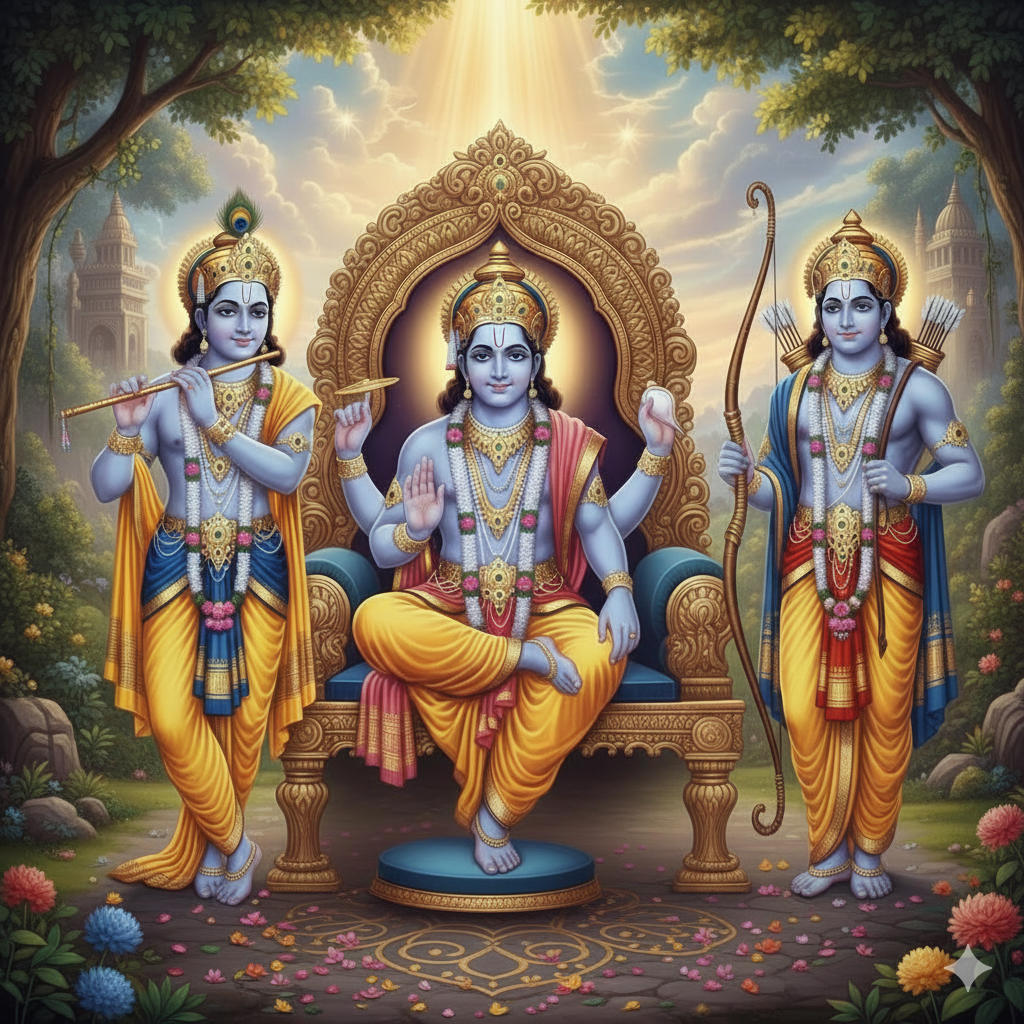
Forms of God and Descensions
One Actor, Infinite Roles Have you ever wondered why the Supreme Lord appears in so many different ways? Sometimes He is the playful cowherd in Vrindavan, other times the majestic King of Dwarika, or even the white-complexioned Balarama. Are these different Gods, or just different "costumes" of the

Forms of God and Descensions
Vedic scriptures reveal Avatars are infinite. From Aveshavatar to Purnatam, discover how God descends to Earth to facilitate the deepest Divine Love.
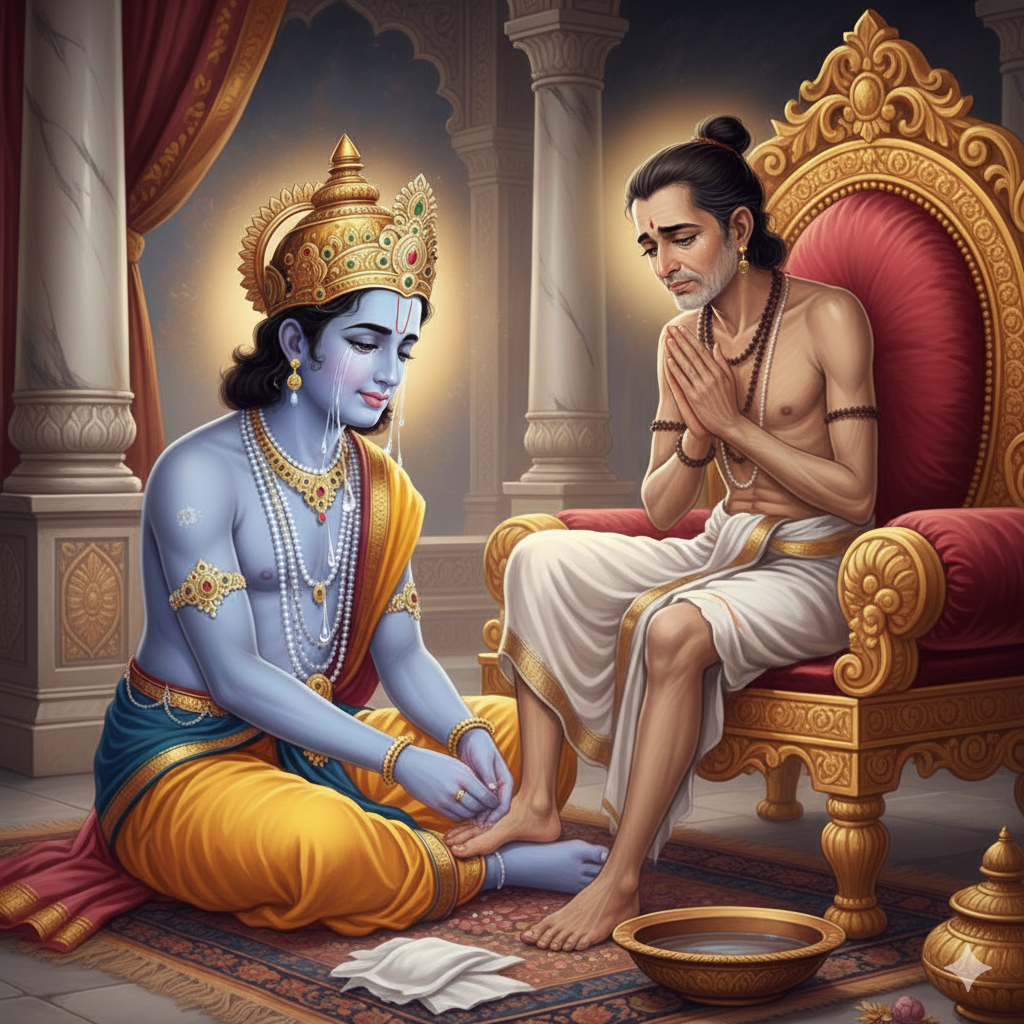
The Nature of God
What is Krishna's greatest quality? Discover "Bhaktvashya"—the divine attribute where the Supreme Lord allows Himself to be enslaved by the selfless love of His devotees.

Ultimate Goal of Life
Question Is God’s existence backed by scientific evidence or should His existence be accepted strictly based on scriptural evidence? Answer God exists and His existence is apparent in many ways, yet, we question His existence due to our inability to see Him in a physical form. There are 3

Parinamavada (परिणामवाद, pariṇāmavāda) refers to the doctrine of Actual Transformation. Often discussed in Vedantic philosophy alongside Advaita Vedanta, this theory proposes that Brahm (God) literally transformed Himself to become the material world. The Milk Analogy This concept is illustrated using the example of milk turning into yogurt
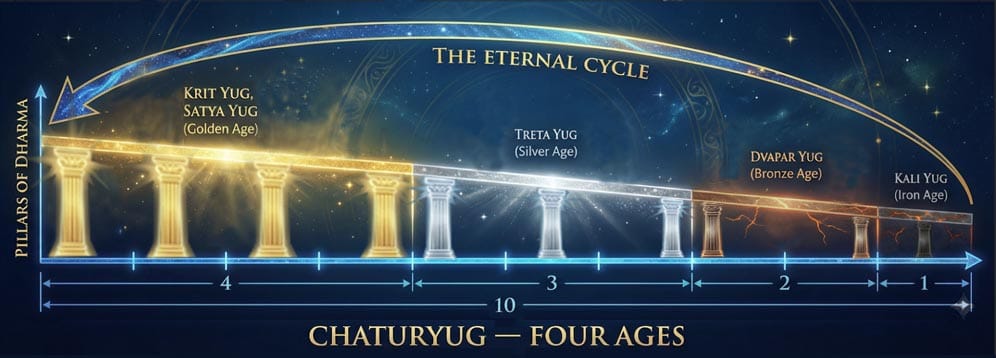
Chaturyuga (चतुर्युग, caturyuga) refers to the Cycle of Four Ages. It represents one cycle of cosmic time, comprising four distinct eras that rotate in a specific order. The duration and virtue of each age decline in a mathematical ratio of 4:3:2:1, corresponding to the

Gyan and Gyanyog
Explore Niranjana Jnana The highest state of non-dual detachment where the knower dissolves, yet why this stage remains risky without Bhakti.

This Samaveda Veda defines the samsangeet (साम संगीत, sāma saṁgīta). Each Veda mantra it set to precise tonal accents called svara (Devanagari: स्वर ISO15919: svara). These are used to preserve the correct pronunciation and intonation. These are crucial in Vedic chanting to maintain the original meaning.

Teachings
Sannyasi (Devanagari: संन्यासी; ISO 15919: saṁnyāsī) refers to a renunciant or monk who has completely abandoned material attachments to pursue God-realization, typically living a life of celibacy. Eligibility and Warning Scriptural law states that anyone, regardless of age or caste, may renounce their worldly duties the moment

In Depth - Bhakti Vocabulary
Shmashana Vairagya (cremation-ground renunciation) is a temporary detachment witnessed at funerals. This fleeting realization of impermanence vanishes, continuing the cycle of material attachment.
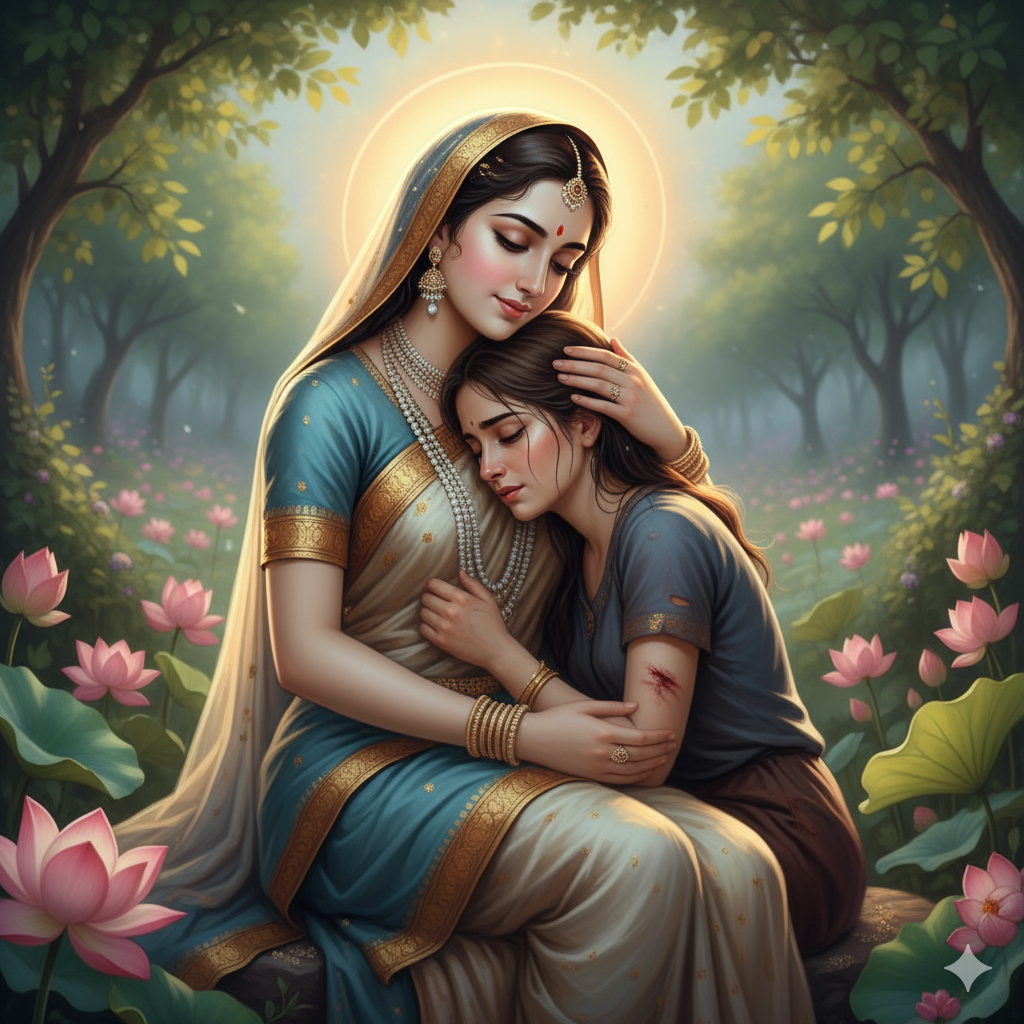
Dinata (दीनता, dīnatā) signifies extreme humility or a sense of spiritual destitution. The Reality of Dependence The jiva (soul) derives its consciousness entirely from God. It is through His power that the soul thinks, decides, acts, and even breathes. The very food essential for survival is His creation. Furthermore,