Why Impose the Condition of Selflessness in Bhakti?
Why is selflessness the condition for Bhakti? Discover why asking God for material things yields the "short end of the stick" and how selfless love enslaves the Divine.

Discover Why Asking God for Material Boons is Unwise
Question: Crying out to the Lord Almighty while harboring not even a trace self-happiness is said to be one of the cornerstones of devotion. However, we usually call out to God only when we are in despair, when all doors are closed, or when we desperately want something. Is there anything wrong with calling out to God in such situations?
Answer: It is true that God is all-powerful, all-merciful, and our only true well-wisher. He is the sole Master of the material and divine worlds and the only source of all happiness.
To understand why "asking" is discouraged in the highest path of Bhakti, we must analyze the characteristics of the different types of people who approach God.
1. The Surrendered Devotees (The Accomplished)
Devotees who are fully surrendered to God generally get whatever they ask for. However, there is a distinction based on what they ask for.
A. Those who ask for Material Protection History is full of surrendered devotees who called out for help in times of crisis:
- Draupadi: Called out to save her honor in the court of Dhritarashtra.
- Dhruv: Prayed for his father's kingdom.
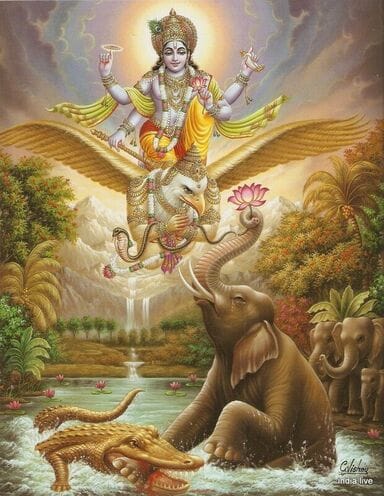
- Gajraj: The King of Elephants, trapped by a crocodile, fought until he lost all hope. Finally, he held up a lotus flower and called out to the Lord.
God answered all of them. However, in these cases, the devotee gets the "short end of the stick." They receive the specific object of their desire (kingdom, protection, life), but they miss out on the highest gift—God's enslavement by love.
The Clever Devotee's Perspective
God makes a comforting promise in the Bhagavad Gita:
अनन्याश्चिन्तयन्तो मां ये जना: पर्युपासते | तेषां नित्याभियुक्तानां योगक्षेमं वहाम्यहम् ||
ananyāścintayantō māṁ yē janā: paryupāsatē | tēṣāṁ nityābhiyuktānāṁ yōgakṣēmṁ vahāmyaham ||
"To those who worship Me exclusively, I grant what they lack and preserve what they have."
However, a clever devotee knows that true Bhakti encompasses all other rewards (Karma, Gyan, Yoga). As stated in the Bhagavatam (11.20.32), a devotee attains everything effortlessly.
यत्कर्मभिर्यत्तपसा ज्ञानवैराग्यतश्च यत् योगेनदानधर्मेण श्रेयोभिरितरैरपि ॥सर्वं मद्भिक्तियोगेन मद्भक्तो लभतेंजसा, स्वर्गापवर्गं मद्धाम कथंचिद् यदि वांछति ॥ भा.
yatkarmabhiryattapasā jñānavairāgyataśca yat yōgēnadānadharmēṇa śrēyōbhiritarairapi .sarvṁ madbhiktiyōgēna madbhaktō labhatēñjasā, svargāpavargṁ maddhāma kathañcid yadi vāñchati . bhā.
"Everything that is accomplished by karma, penance, knowledge, detachment, yoga, charity, or other duties, My devotee attains easily through My loving service—be it heaven, liberation, or My divine abode."
The Hidden Clause Notice that God cleverly added a condition at the end of the verse:
कथंचिद् यदि वांछति kathañcid yadi vāñchati
If—and only if—the devotee desires it."
A clever devotee catches this hint. They choose not to ask. They realize that asking limits the gift. Instead, they leave every decision to the Omniscient Lord, knowing He provides what is best. This is why wise saints like Hanuman Ji and Kagbhusundi Ji refused even Liberation (Mukti) when it was offered to them.
The Subtle Science There is a profound spiritual science behind this refusal. If a devotee asks for a specific thing, they get only what they asked for—and nothing more. The transaction is complete.
However, God is enslaved by selfless love. He is actually quite eager to bless souls with supernatural powers or liberation, as these gifts keep the soul satisfied but "at a distance." But He is very reluctant to impart Divine Love. Why? Because once He grants Divine Love, the Supreme Master becomes the eternal, bonded slave of that devotee.
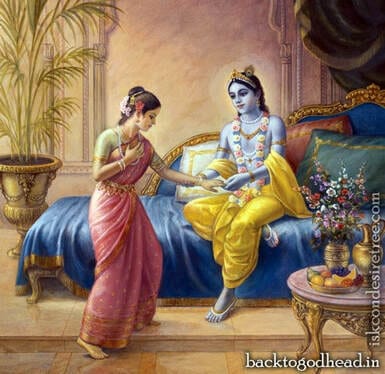
B. Those who desire Krishna for Self-Happiness Some, like Kubja, desired Krishna but for her own pleasure. While Shukdev Paramhansa admired her focus, this love is not the highest because it waxes and wanes depending on the beloved's attention.
b. Those who desire Shri Krishna only: Shri Krishna had transformed Kubja into such a beautiful damsel that many devatas offered to marry her, but she had her eyes set on Shri Krishna, the Supreme personality. Since she loved Shri Krishna for her own happiness, her love was not selfless.
दुराराध्यं समाराध्य विष्णुं सर्वेश्वरेश्वरम् ।यो वृणीते मनोग्राह्यमसत्त्वात् कुमनीष्यसौ ॥ भाग.१०.४८.११
durārādhyṁ samārādhya viṣṇuṁ sarvēśvarēśvaram .yō vr̥ṇītē manōgrāhyamasattvāt kumanīṣyasau . bhāga.10.48.11
“The exclusive object of her devotion was to attain the love of the purest Supreme personality, who is inaccessible by any austere practice. Hence, she got the rarest of rare opportunity to be a beloved of Supreme Brahm Shri Krishna.”
While Shukdev Paramhansa admired her focus, this love is not the highest because it waxes and wanes depending on the beloved's attention.
2. The Non-Surrendered (The Common Aspirant)
Most people fall into this category. Worshipping God while harboring material desires creates several spiritual dangers.
A. The Confusion of Values Just as a child chooses candy over a diamond because he doesn't know the value of the jewel, we choose worldly pleasures over Divine Bliss because we are ignorant.

If we truly believed happiness was in God, we wouldn't ask for material things. If we believe happiness is in the world, why go to God? Using God merely as a means to attain material ends denotes a lack of spiritual understanding.
B. The Conditional Faith When people pray for things:
- Success: They interpret getting what they want as "God's Grace."
- Failure: They interpret not getting it as "God's Wrath." This leads to a fragile faith that turns into atheism the moment desires are not met.
C. The Law of Karma God does not violate the Law of Karma.
कर्म प्रधान विश्व रचि राखा । जो जस करइ सो तस फल चाखा ॥ karma pradhāna viśva raci rākhā | jō jasa kari sō tasa phala cākhā ||
"One gets the assets of the world according to his own destiny created by his own karmas."
God is just. He does not fulfill every prayer contrary to destiny. Even Lord Ram did not prevent his father's death, and Shri Krishna did not save his nephew Abhimanyu. If the irrevocable divine law applied to them, why do we think it will be broken for us?
Ponder: what would be the point of asking Him to fulfill material desires, when none of them will be granted unless they are destined?
D. Ignorance of what is "Good" Being ignorant, we don't know what is truly good for us. God is the Omniscient well-wishing Father. If we leave everything to Him, the "disease of asking" disappears.
Ponder on the consequence of adding fuel to fire of ever growing material desires?
3. The True Nature of Grace
Paradoxically, the scriptures declare that lack of material possessions is the real Grace. Lord Krishna says:
यस्याऽहमनुगृह्णामि हरिष्ये तद्धनं शनैः ॥ yasyā’hamanugr̥hṇāmi hariṣyē taddhanṁ śanaiḥ ||
"When I am specially gracious to someone, I deprive him of his material wealth."
Deprivation leads to humility, and humility is the foundation of devotion. Recognizing this, Queen Kunti asked for an amazing boon:
विपदः सन्तु नः शश्वत्तत्रतत्र जगद्गुरो । भवतो दर्शनं यत्स्यादपुनर्भवदर्शनम्॥ vipadḥ santu nḥ śaśvattatratatra jagadgurō | bhavatō darśanṁ yatsyādapunarbhavadarśanam ||
"O Lord! I beg You to give me sufferings at each step of life, so that I may remember You all the time."
Ponder: What would be the point of asking for material things from God that distract us and cause us to forget Him?
Conclusion
God is the master of all powers, yet He becomes enslaved by selfless love. If a devotee asks for a specific thing, he gets only that thing. But if he asks for nothing but God's pleasure, God gives him everything—Divine Knowledge, Abode, Bliss, and Himself.
Therefore, in the path of devotion, we must renounce the desire for material objects and even liberation.
जब लौं न त्यागा स्वार्थ गोविंद राधे । तब लौं न प्रेम श्रीकृष्ण में बता दे ॥
jaba lauṁ na tyāgā svārtha gōvinda rādhē . taba lauṁ na prēma śrīkr̥ṣṇa mēṁ batā dē .
"Love for Shri Krishna will not take root until you give up the desire for self-happiness." — Jagadguru Shri Kripalu Ji Maharaj
If you at all want to ask for anything ask for His divine vision. When He is please with you can comes in front of you ask for selfless divine love. The sole aim of attaining divine love is to serve Him to please Him. This service is your eternal right because you are a part of God-The Infinite Divine Bliss!
LEARN MORE
- Deeds vs. Dectiny: Who Really Runs the Show?
- Who really shapes my Fate?
- What Does Bhakti-really-give-you/
- The Supreme Serves His Devotees?