The Ultimate Human Delusion
What is the greatest delusion? Discover Yudhishthira's profound answer to the Yaksha Prashna in the Mahabharata: the human denial of death and the illusion of immortality.

Lessons from the Yaksha Prashna
The biggest delusion of humanity is called out in the Aranya Parva of the great epic Mahabharata. What is it?
The Context: The Thirteenth Year The five sons of King Pandu, along with their wife Draupadi, were nearing the end of their twelve-year exile in the forest. They had just entered the thirteenth and final year, during which they were required to remain in complete anonymity.
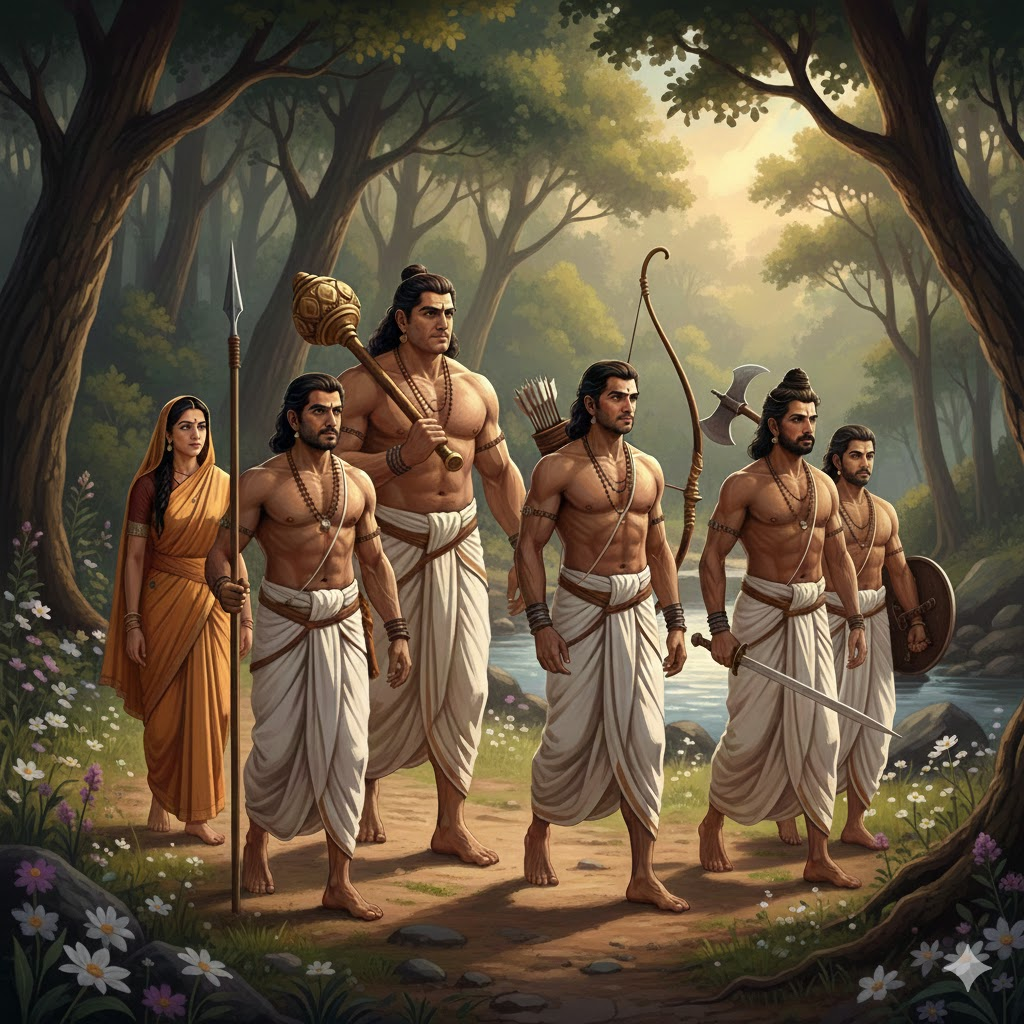
As the five brothers roamed the dense forests, trying to keep their identities secret, they felt tired and thirsty and decided to rest under the shade of a large tree. Yudhishthira, the eldest Pandava, asked the youngest brother, Nakula, to fetch some water for everyone.
The Encounter at the Lake After walking a short distance, Nakula spotted a beautiful lake with clean blue water. As he bent down to fill his pitcher, he heard a loud, powerful voice from the ether:
मा तात साहसम् ... पिबस्व च हरषस्व च ॥
mā tāta sāhasam ... pibasva ca haraṣasva ca
"Dare not touch the water without answering my questions, young man..."
It was the voice of a Yaksha (they are really mighty and are servants of Kuber), who lived in the lake. Nakula paid no attention to the voice. As soon as he drank the water, the Yaksha drew him in and sucked the life out of him.
When Nakula did not return, Yudhishthira sent Sahadeva to look for him. Sahadeva arrived to find Nakula lying dead. Intent on fulfilling his brother’s instruction, he bent down to fill his pitcher, ignored the same warning, and met the same fate.
Next was Arjuna, carrying his mighty Gandiva bow. Then came the powerful Bhima. Both challenged the voice, ignored the warning, and were struck down by the Yaksha.
The Dialogue: Wisdom Meets Power Eventually, Yudhishthira went to look for his brothers. He was faced with the devastating sight of his four brothers lying lifeless on the banks. After grieving, he looked around with the sharp eyes of a king:
नैशं शस्त्रप्रहारोस्ति पदं ... भ्रातरौ येन हतम् ॥
naiśaṁ śastraprahārōsti padaṁ ... bhrātarau yēna hatam
"There are neither signs of violence on their bodies nor footprints anywhere. The killer must be a supernatural being."
नैशं शस्त्रप्रहारोस्ति पदं ... भ्रातरौ येन हतम् ॥
naiśaṁ śastraprahārosti padaṁ ... bhrātarau yena hatam ॥
As he approached the water to perform the last rites, the voice startled him: "I am the cause of your brothers' death. If you drink from this lake without answering my questions, you will meet the same fate."
Yudhishthira asked, "Who are you, O Noble one? You must be very strong, as neither Gods nor Demons could stand against my brothers. What do you want?"
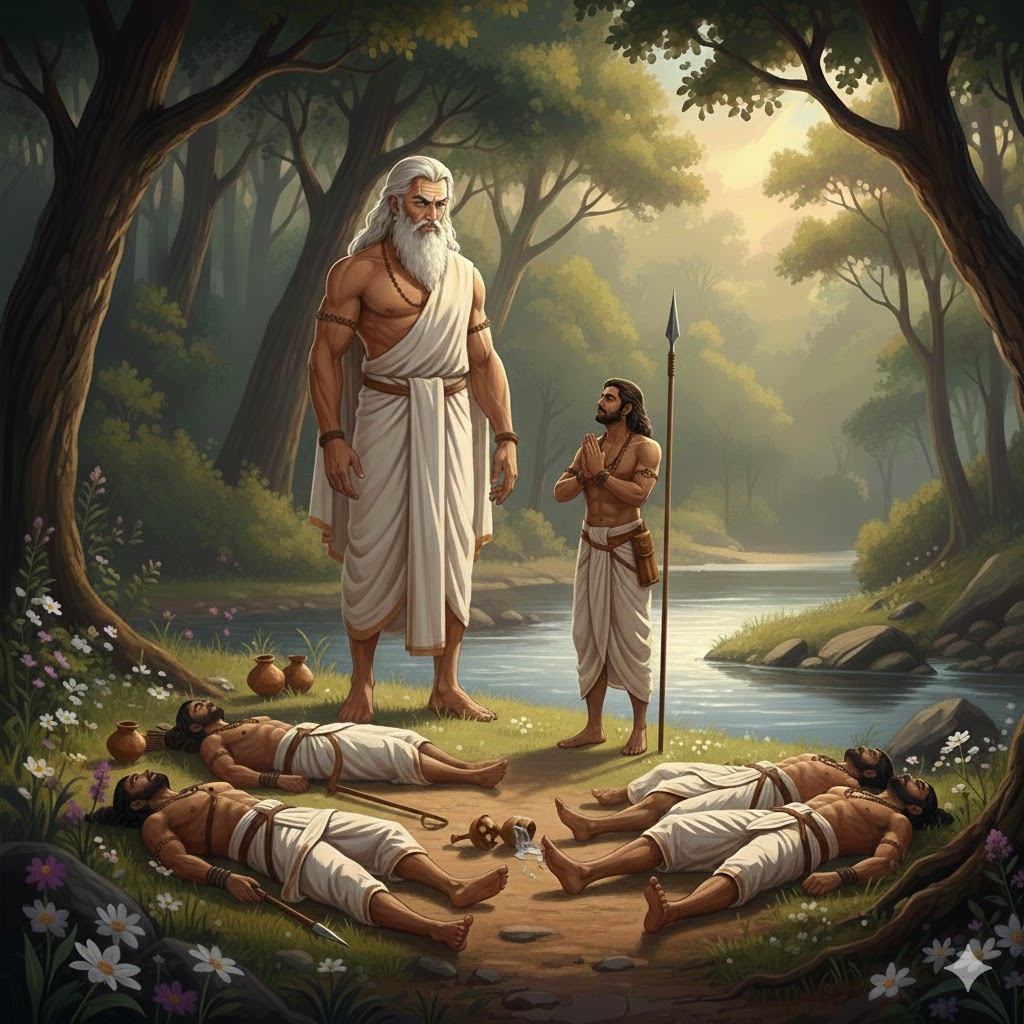
The voice replied: "Yudhishthira, I am a Yaksha." A massive form with fiery eyes and a thunderous roar emerged. He claimed the pool as his property. Yudhishthira, the embodiment of Dharma, replied humbly:
न चाहं कामये यक्ष तव पूर्वपरिग्रहम् ।
na cāhaṁ kāmayē yakṣa tava pūrvaparigraham |
"O Yaksha, I have no desire to violate your property rights."
पृच्छ माम् ।
pr̥ccha mām |
"Please, ask me."
Yudhishthira respectfully folded his hands and stood humbly in front of the Yaksha.
The Ultimate Delusion The Yaksha was pleased with Yudhishthira’s humility and asked him 60 questions covering the essence of the Vedas. The first and most important question was:
किमाश्चर्यम् ?
kimāścaryam ?
"What is the greatest surprise in the world?"
Yudhishthira answered:
अहन्यहनि भूतानि गच्छन्तीह यमालयम् । शेषाः स्थावरमिच्छन्ति किमाश्चर्यमतः परम् ॥
ahanyahani bhūtāni gacchantīha yamālayam | śēṣāḥ sthāvaramicchanti kimāścaryamataḥ param ||
"Every day, we witness living beings departing from this world to the abode of Yamaraj (Death). Yet those who remain alive believe they will live forever and consider themselves immortal! Can there be any bigger surprise than this?"
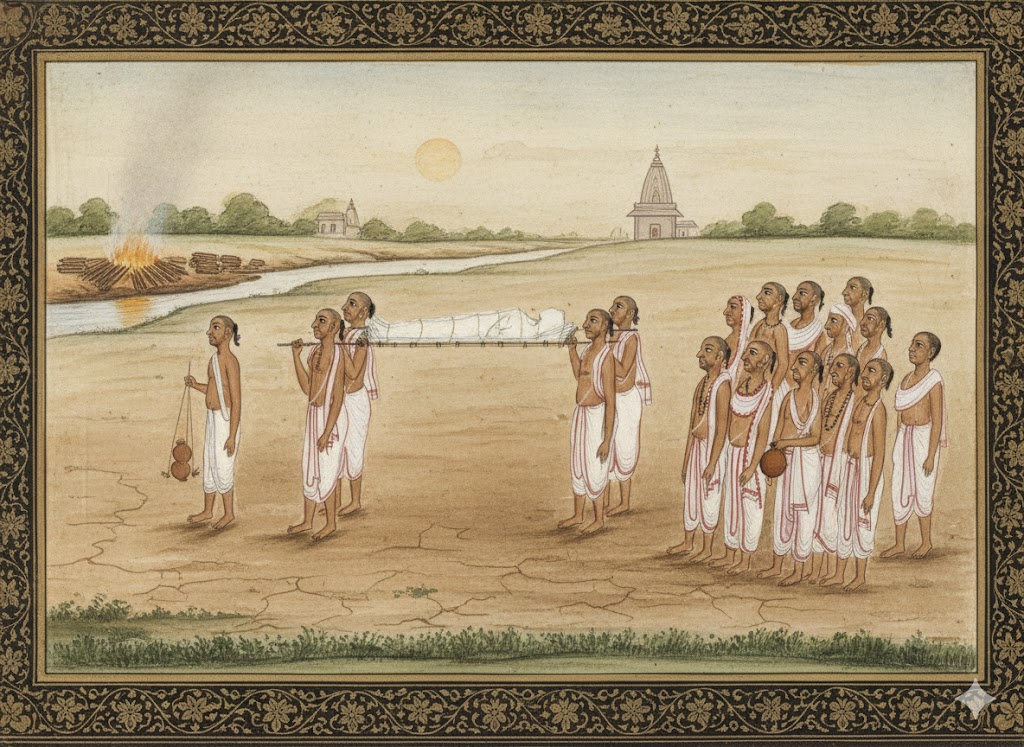
The Awakening This answer reminds us that the body is mortal. The jeev will have to leave this body without prior notice. It is our personal experience that we see people dying every day, yet we live in a state of denial, acting as if we are immortal.
Because we do not realize the transient nature of our own life, we postpone the spiritual practice that leads to our real goal—Ananda (Bliss). Instead, we become engrossed in material pleasures which ultimately result in sorrow.
This story inspires us to strive for real happiness now. As Adi Jagadguru Shankaracharya said:
यदहरेव विरजेत् तदहरेव प्रव्रजेत् , गृहाद्वा वनाद्वा ब्रह्मचर्याद्वा ॥
yadahareva virajet tadahareva pravrajet , gr̥hādvā vanādvā brahmacaryādvā ||
"The very day you get that awakening—regardless of whether you are a student, a householder, or living in the forest—renounce the world and proceed toward the ultimate goal of life."