The Science of Evidence
How do we prove the truth? Explore Pramana: why senses and logic fail in spirituality, and why Shabda Pramana is the only way to know the Divine.

How Do We Know What Is True?
To prove a theory or concept, one needs to provide evidence. In Vedic philosophy, valid evidence is called Pramana (Devanagari: प्रमाण; ISO 15919: pramāṇa).
How do we learn anything? We learn either by seeing it ourselves, deducing it from facts we know, or hearing it from those we trust. For example, if you were present at the World Trade Center during the Sept 11, 2001 tragedy, that is first-hand experience. If you were not there, you rely on the news, pictures, and testimonies of others. You take their word for it.
There are three primary ways of proving a theory or concept:
- Perceptual Evidence (pratyaksh praman): First-hand experience using senses.
- Inferential Evidence (anuman praman): Logical deduction from visible facts.
- Scriptural Evidence (shabd praman): Accepting the word of an authority.
While perceptual and inferential evidences are useful in the material world, we have no way of experiencing the spiritual realm with our material senses, nor do we know the divine rules to make deductions. Therefore, the evidence provided by God-realized saints—Shabda Pramana—is the only acceptable evidence to know the divine realm.
Pratyaksh praman
1. Pratyaksh praman (Devanagari: प्रत्यक्ष प्रमाण; ISO 15919: pratyakṣa pramāṇa) refers to Perceptual Evidence. This implies knowledge gained through the five senses: seeing, hearing, touching, tasting, and smelling.
While this is a common way of learning, it is actually the weakest form of evidence. Consider the following limitations:
- Scope: Many things cannot be perceived by senses, such as feelings. Can you "see" love or hatred? No, yet they exist.
- Imperfection: Our Gyanendriyas (senses of knowledge) are not perfect. For example, our eyes see the sky as blue, whereas the sky is actually empty space and has no color.
The Bias of the Mind Senses work only in association with the mind. If the mind is preoccupied, the senses cannot grasp data even if it is right in front of them.
- Confirmation Bias: The mind often perceives things according to its own preconceived notions.
- Limited Range: Eyes cannot see UV light; ears cannot hear ultrasonic frequencies.
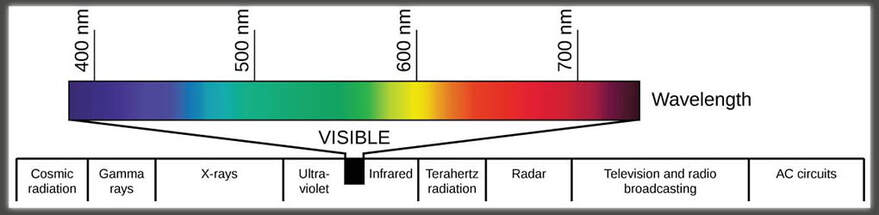
- Senses are blind without the Mind's Focus. When the antahkaran (mind) is intensely engaged elsewhere, the senses cannot grasp any data. We see this daily when children, deeply absorbed in play, cannot hear their mother's voice calling them for a meal.
The Story of the Artist A couple of centuries ago, an artist was busy painting in his shop in Jagannath Puri. Outside, the huge annual Rath Yatra procession passed by with thousands of people playing musical instruments. Yet, the artist did not hear a thing. When Swami Ramakrishna Paramhansa arrived late and asked, "Has the Rath Yatra passed?" the artist replied, "No." Others admonished him for lying, but the saint realized the truth: the artist was so engrossed in his art that his mind had disconnected from his ears. Thus, his "direct perception" was false.
So, perceptual evidence does not offer perfect evidence in all situations, yet it speaks to us the loudest.
Anuman praman

2. anumana pramana (Devanagari: अनुमान प्रमाण; ISO 15919: anumāna pramāṇa) refers to Inferential Evidence.
This involves using logic to infer a truth. When one knows the relationship between two things, seeing one allows them to deduce the presence of the other.
यत्र यत्र धूमस्तत्रतत्राग्निः |
yatra yatra dhūmastatratatrāgniḥ |
"Wherever there is smoke, there is fire."
If we see smoke atop a mountain, we know there is a fire, even if the fire is not visible. However, this requires higher intellectual prowess and a perfect knowledge of the rules of interaction between objects—something we do not possess regarding the Divine.
Shabd praman
3. Shabd praman (Devanagari: शब्द प्रमाण; ISO 15919: śabda pramāṇa) refers to Word Evidence or Scriptural Evidence.
Sensory perception and inferential logic are incapable of proving everything. Even Heads of State rely on intelligence reports (the words of others) to make critical decisions. You learn about most of the world not through visiting every country (pratyaksh praman-first hand experience), but through the reports of those who have.
The Only Way to Know the Divine The Vedas are the irrefutable evidence of spiritual truths because they are produced by God Himself. Other scriptures are produced by Trikaaldarshi (Seers of the past, present, and future) saints who have documented their personal experiences. This is solid, irrefutable research.
The Pilot Analogy Would any reasonable airline allow you to fly a passenger plane simply by reading a myriad of books on aerodynamics? No.
- You must take instruction from an experienced pilot.
- You must undergo intense practical training under their supervision.
- Only then do you get the license to fly.
Similarly, in spirituality, you cannot rely on your own reading. You must learn the theory and undergo practical training under the supervision of a Guru who has experienced God.
How do I know who has experienced God?
Finding Your Guide: The fundamental dilemma for every spiritual aspirant is knowing: Who has truly experienced God? Since success depends on following a genuine path, learning to distinguish saints from pretenders is essential. Jagadguruttam Shri Kripalu Ji Maharaj has provided the definitive, scripturally-backed answer to this life-altering question. (See Further Reading and Reference for detailed guidance.)