The Power of Kirtan: Why It Is the Easiest Path to God
Discover why Chaitanya Mahaprabhu called Kirtan the supreme devotion. Learn the benefits of solo and group chanting. The 3 Vedic methods: Vyas, Narad, and Hanuman.
The Essence of Kirtan In the Shrimad Bhagavatam, Saint Prahlad outlines nine forms of devotion (Navadha Bhakti). Among these, Kirtan—the act of audibly singing God’s names, pastimes, and attributes—is considered vital. However, for Kirtan to be a true devotional practice, it must be accompanied by Roopadhyan, which is the loving mental engagement and visualization of God’s form while singing.
Universality and Benefit to All
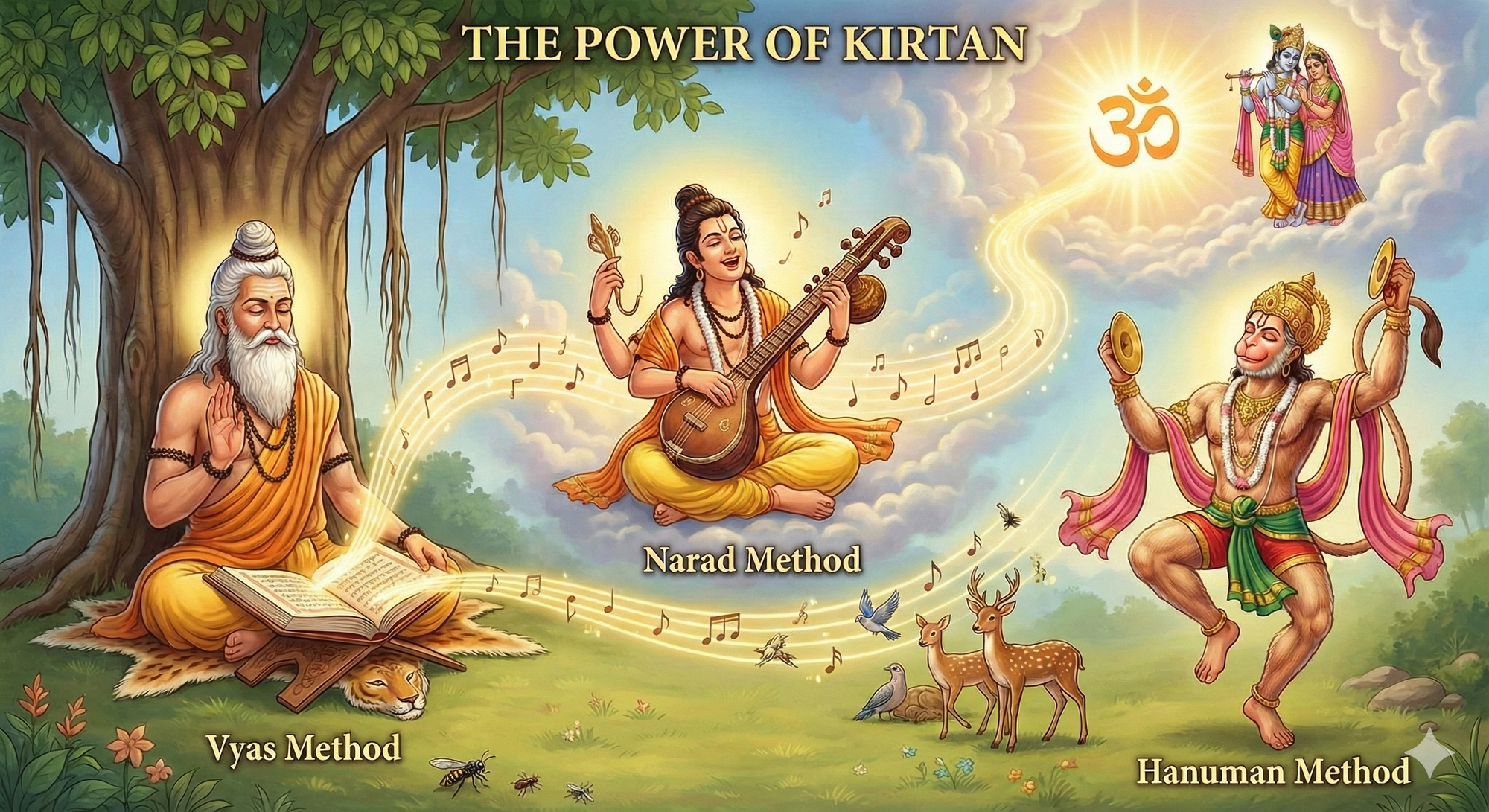
Chaitanya Mahaprabhu heralded Kirtan as the supreme method because of its simplicity and accessibility. It requires no specific time or place and is perfect for householders. Unlike solo chanting (kirtan), which benefits only the practitioner, group Sankirtan generates divine vibrations that benefit every living being who hears it—including animals, birds, and insects—making it an act of service to others.
Overcoming Obstacles
Using musical instruments during Kirtan serves a practical purpose beyond melody. The sound helps drown out distracting external noises, allowing the devotee to meditate for longer periods without interruption. Furthermore, the active use of vocal chords and hands (clapping or playing instruments) prevents lethargy and sleepiness, keeping the mind alert and focused on the Divine.
Three Styles of Practice
Devotees can practice Kirtan through three distinct methods:
- the Vyas method, which focuses on attentive listening to God’s glories;
- the Narad method, which involves singing accompanied by musical instruments (like the Veena); and
- the Hanuman method, where the devotee dances in ecstasy while singing. An aspirant is free to choose any of these methods based on their preference and circumstances.
Further Reading and References
- Related Concepts:
- Reference: