Practical Sadhana
Why Impose the Condition of Selflessness in Bhakti?
Why is selflessness the condition for Bhakti? Discover why asking God for material things yields the "short end of the stick" and how selfless love enslaves the Divine.
Learn the lessons on Bhakti from the life of Pandavas
Practical Sadhana
Why is selflessness the condition for Bhakti? Discover why asking God for material things yields the "short end of the stick" and how selfless love enslaves the Divine.
Pandavas
Akshaypatra (अक्षयपात्र, akṣayapātra) refers to the inexhaustible vessel or divine bowl. The term is derived from Akshaya (un-decaying/inexhaustible) and Patra (vessel). In the Mahabharata, this vessel was gifted by the Sun God (Surya) to the Pandavas during their exile. It provided an unlimited supply of food

Practical Sadhana
Mind is the doer. Karma — Karma performed by the mind or with the association of the mind are considered as actions. Karma — Karma performed by the senses alone without the involvement of the mind are not considered as actions. But the mind, by nature, is fickle, unrestrained, and ponders over
Surrender
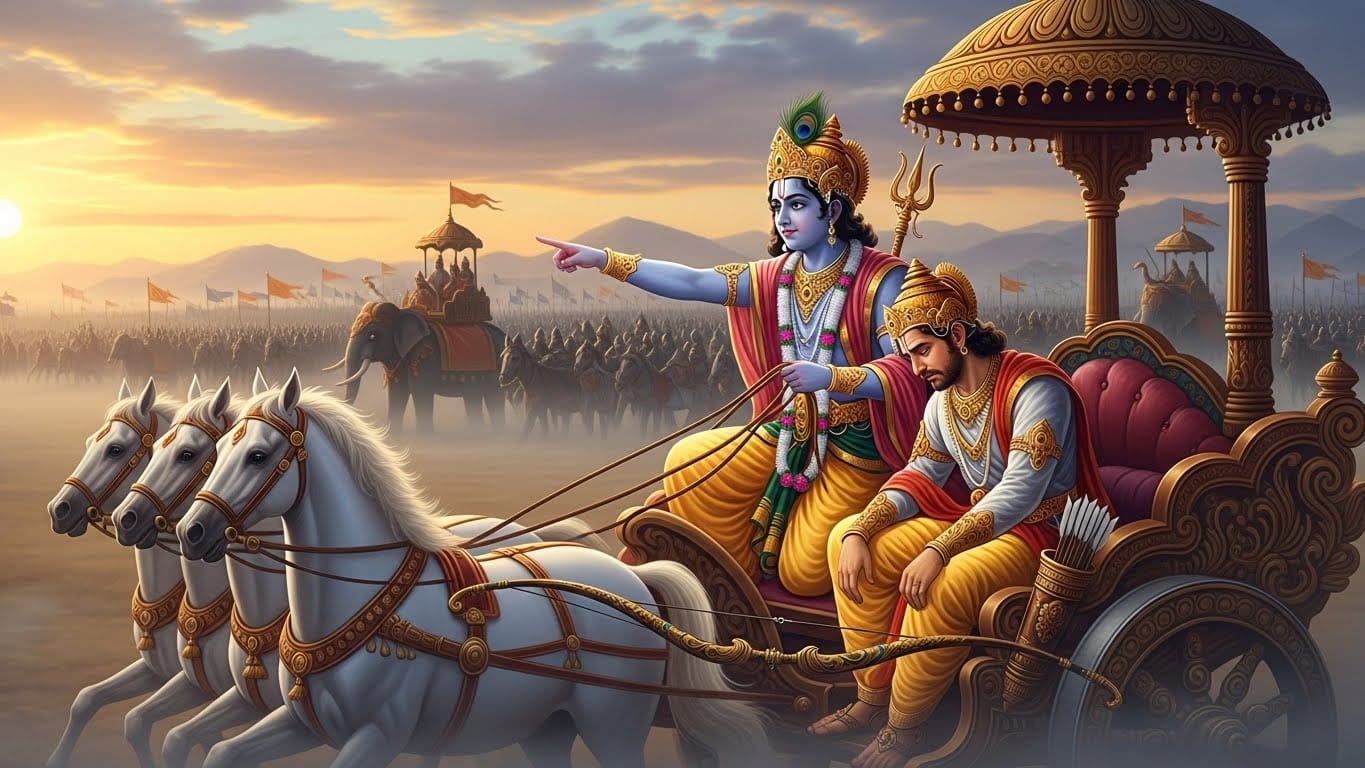
The Shrimad Bhagavad Gita is a Hindu scripture containing 700 verses. These verses were sung over 5,000 years ago, by the supreme Lord Shri Krishna to Arjun in the battlefield of Mahabharat. Hence the compilation of these verses is called the “Bhagavad Gita” which means Divine lyric. This scripture
The Saint
Arjun was the chosen one by Bhagavan-Shri Krishna to execute the destined plan of “killing the unrighteous and reestablishing righteousness in the world”. In the olden times blowing conches was the battle cry. In the battlefield of Kurushetra after all the conches were blown to announce the start of the
Bhakti Siddhant Glossary
sakama bhakti (सकाम भक्ति, sakāma bhakti ) is devotion to God which is inspired with the desire to please oneself. This type of bhakti is called rajasi or tamasi bhakti also. This bhakti is performed for one's own happiness. A few examples of this type of devotion
Bhakti Stories
Prince Arjuna, alongwith his 4 brothers and Kaurav cousins were learning the art and science of battlefield under the guidance of their Guru Dronacharya, the greatest professor of Archery and other acts of warfare. Looking at the sincerity and the extraordinary skills of Arjuna, Dronacharya promised Arjun to prepare him
Bhakti Stories
This is a leela narration from the great epic Mahabharat, wherein the Supreme Lord performs seemingly understandable actions to protect His devotees. Enjoy! It was the last day of the great battle of Mahabharata. All Kauravas except Duryodhana had been killed. In the face of death, Duryodhana approached his friend
Bhakti Stories
Before the beginning of the battle of Mahabharat, Lord Krishna took a vow that he will not lift a weapon during the battle. This vow was well known to everyone. Bhishma Pitamah was the commander in chief of the Kaurava army and was a God-realized saint. He also knew about
Surrender
Question In Ramayan, Kagbhusandi tells Garud that “nonviolence is the greatest virtue”. Gita begins with Arjun not wanting to fight the war and massacre so many people. But Shri Krishna convinced him to fight. In that war billions of human lives were lost. I have read that the whole world
The Nature of God
Question: How can Omnipresent God experience separation (viraha) from His devotee? If He doesn’t feel separation, in the Bhagavad Gita (4.11), why did Shri Krishna tells Arjun, “I reciprocate the sentiments and intensity of my devotees.” This implies that when a devotee cries out of love and longing
The Soul, Material world and detachment
What is the greatest delusion? Discover Yudhishthira's profound answer to the Yaksha Prashna in the Mahabharata: the human denial of death and the illusion of immortality.