Kripalu Vedic Wisdom
  • Home
  • About
  • A-Z Glossary
Sign in Subscribe
Bhakti Siddhant Glossary

suhaga | सुहाग

JKP Literature

08 Jun 2024
suhaga | सुहाग
Photo by Pablo Heimplatz / Unsplash

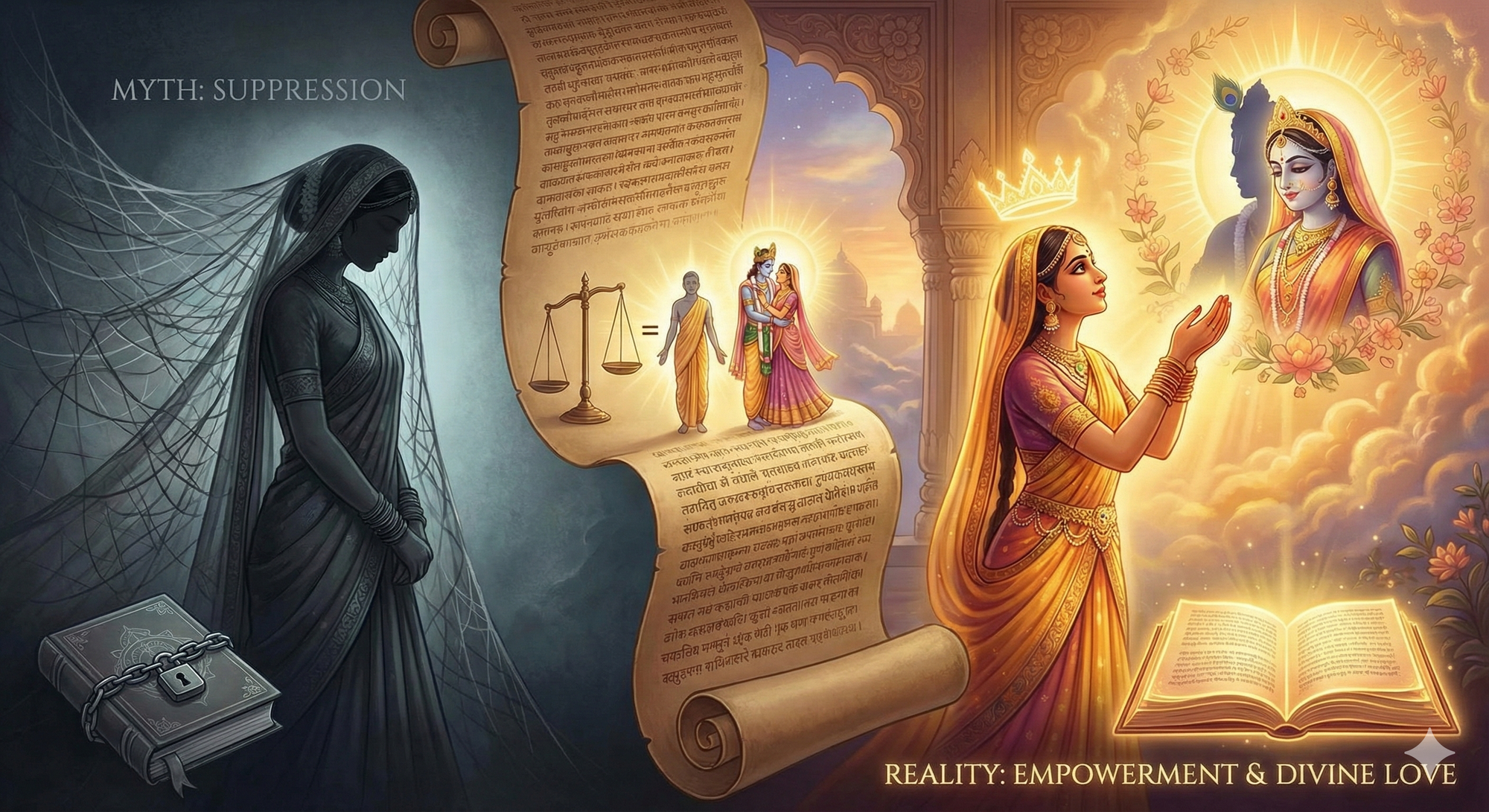
Suhag (Devanagari: सुहाग; ISO 15919: suhāga) refers to the husband of a married woman, symbolizing her marital auspiciousness.

For example, Shri Ram is revered as the suhag of Mother Sita.


Further Reading and Reference

  • Related Concepts: suhagini (Married woman), Sindoor (Symbol of Suhag).
  • Reference: Prema Rasa Madira - The Intoxicating Bliss of Divine Love, Vol. 2, Ch. 16
Sign up for more like this.

Enter your email
Subscribe
parinamvaad | परिणामवाद

parinamvaad | परिणामवाद

Parinamavada (Devanagari: परिणामवाद; ISO 15919: pariṇāmavāda) refers to the doctrine of Actual Transformation. Often discussed in Vedantic philosophy alongside Advaita Vedanta, this theory proposes that Brahm (God) literally transformed Himself to become the material world. The Milk Analogy This concept is illustrated using the example of milk
07 Dec 2025 1 min read
Chaturyuga | चतुर्युग

Chaturyuga | चतुर्युग

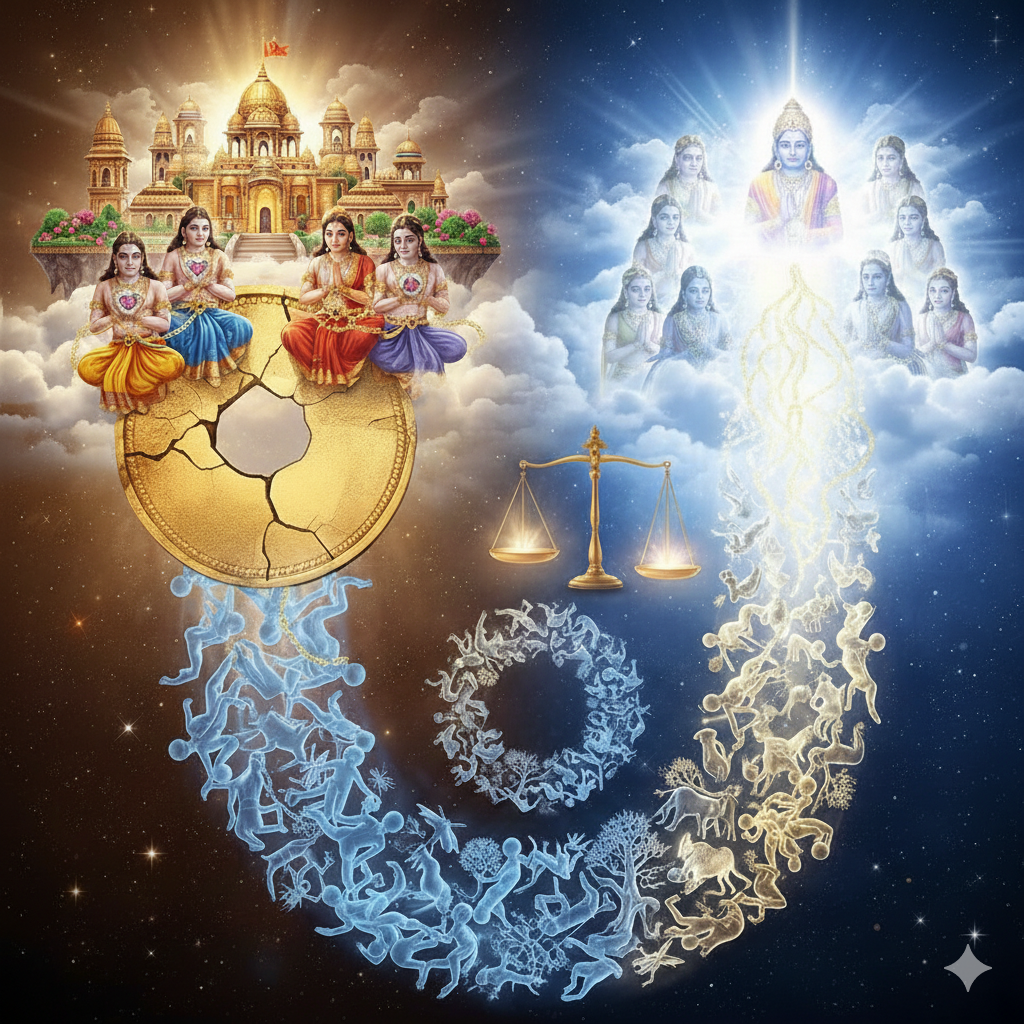
Chaturyuga (Devanagari: चतुर्युग; ISO 15919: caturyuga) refers to the Cycle of Four Ages. It represents one cycle of cosmic time, comprising four distinct eras that rotate in a specific order. The duration and virtue of each age decline in a mathematical ratio of 4:3:2:1,
07 Dec 2025 1 min read
Akshaypatra | अक्षयपात्र

Akshaypatra | अक्षयपात्र

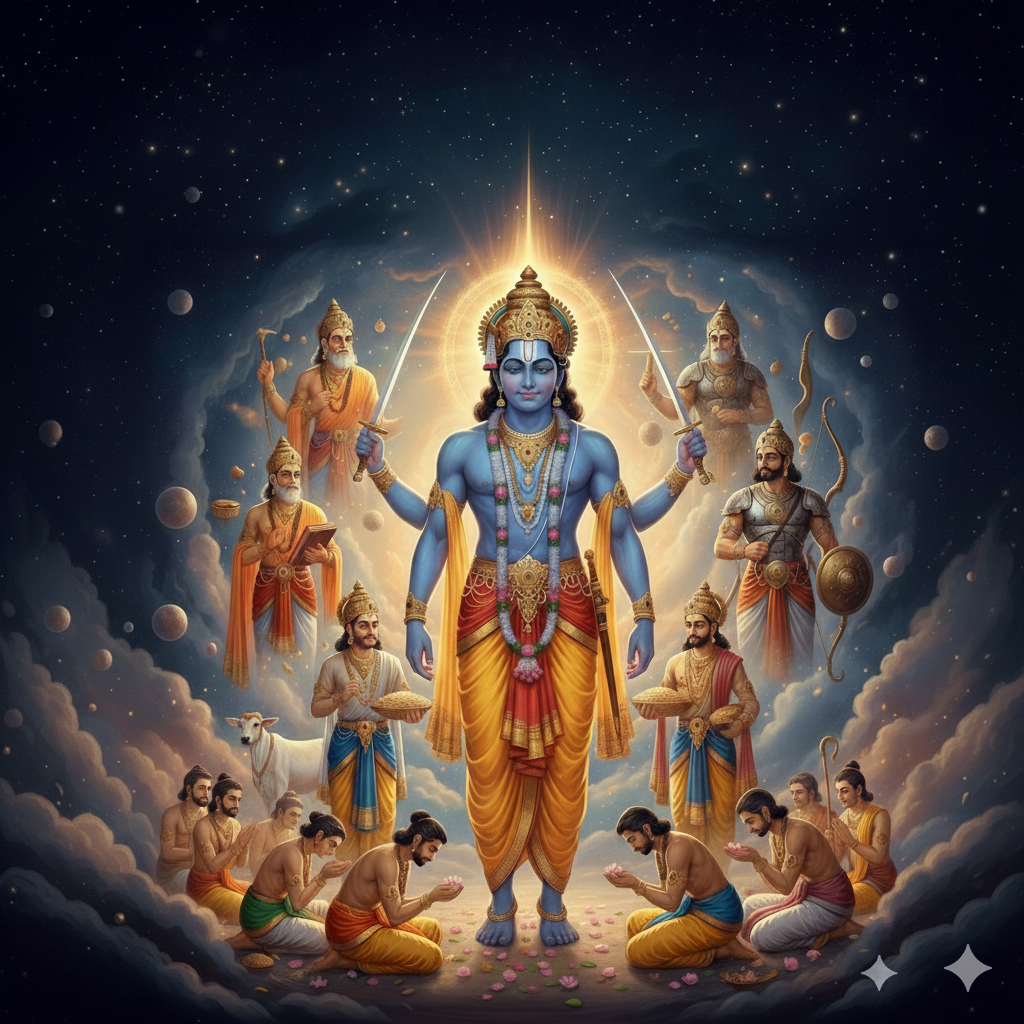
Akshaypatra (Devanagari: अक्षयपात्र; ISO 15919: akṣayapātra) refers to the inexhaustible vessel or divine bowl. The term is derived from Akshaya (undecaying/inexhaustible) and Patra (vessel). In the Mahabharata, this vessel was gifted by the Sun God (Surya) to the Pandavas during their exile. It provided an unlimited
07 Dec 2025
Kripalu Vedic Wisdom © 2025
  • Sign up
Powered by Ghost