
Why the Mind Remains Bound to the World
The soul seeks eternal fulfillment, yet the materially conditioned mind remains absorbed in Maya. This creates the inner conflict of material bondage.

The soul seeks eternal fulfillment, yet the materially conditioned mind remains absorbed in Maya. This creates the inner conflict of material bondage.

The soul is eternal, conscious, subtle, and Divine in nature. As an eternal part of God, it can never be fully satisfied by material happiness.
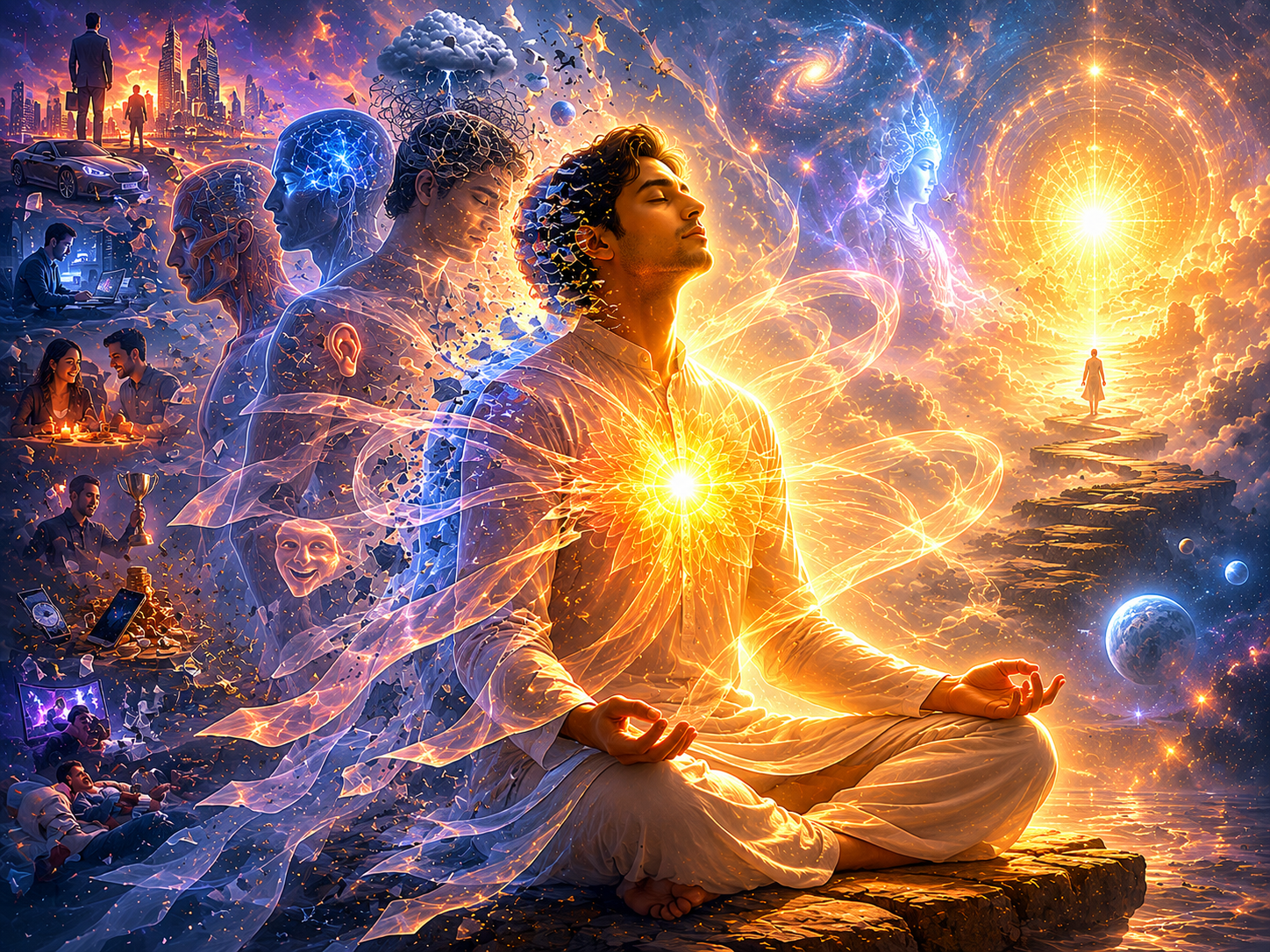
The body changes, the senses become active and inactive, and the mind fluctuates constantly. Yet the conscious self remains. Then who are we really?

If the self were material, material happiness should completely satisfy it. Yet dissatisfaction continues. This inquiry becomes the beginning of understanding the true nature of the soul.
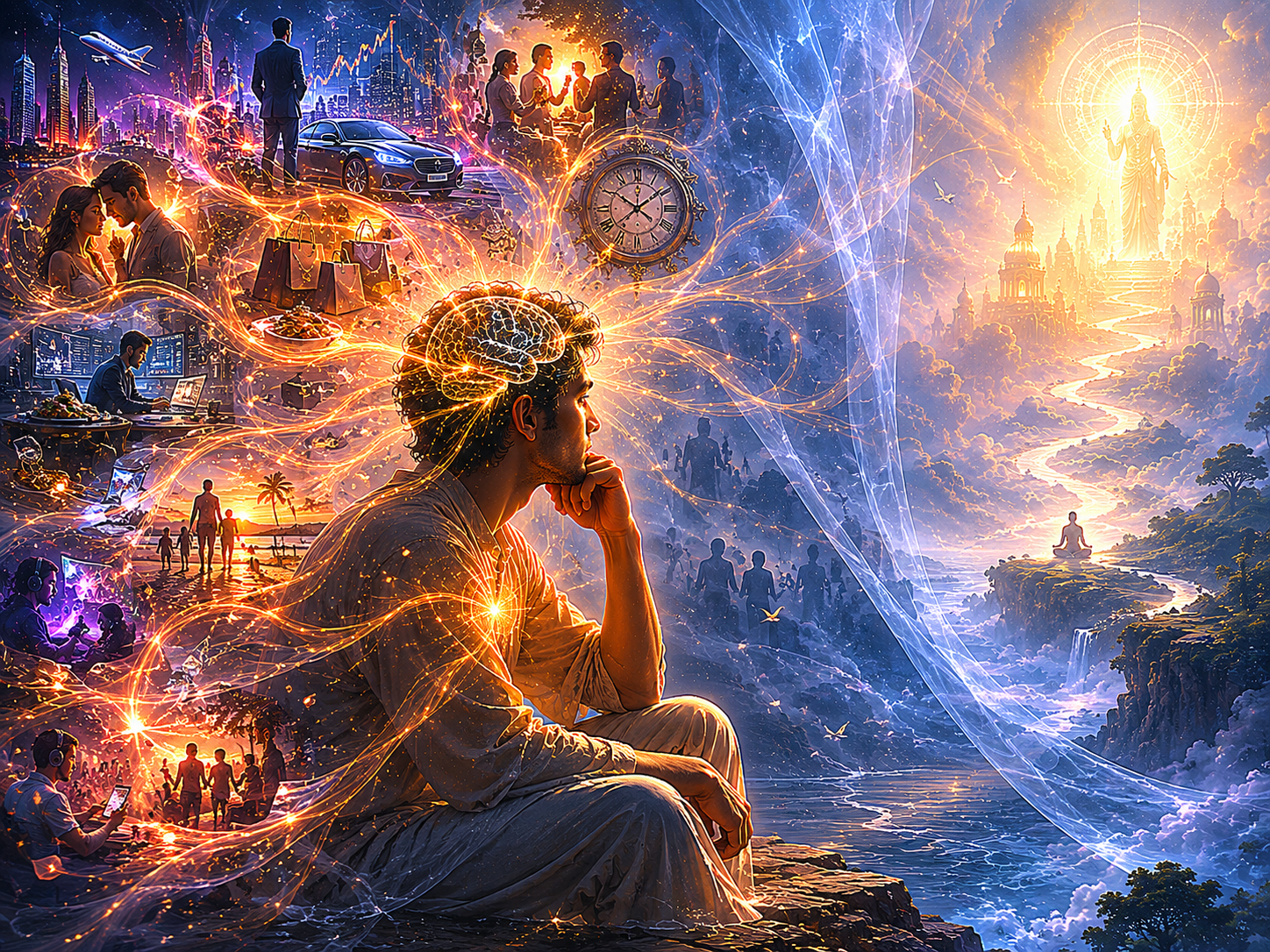
The material mind and the material world are both formed from Maya. This creates natural worldly attraction and becomes the root of spiritual misidentification.
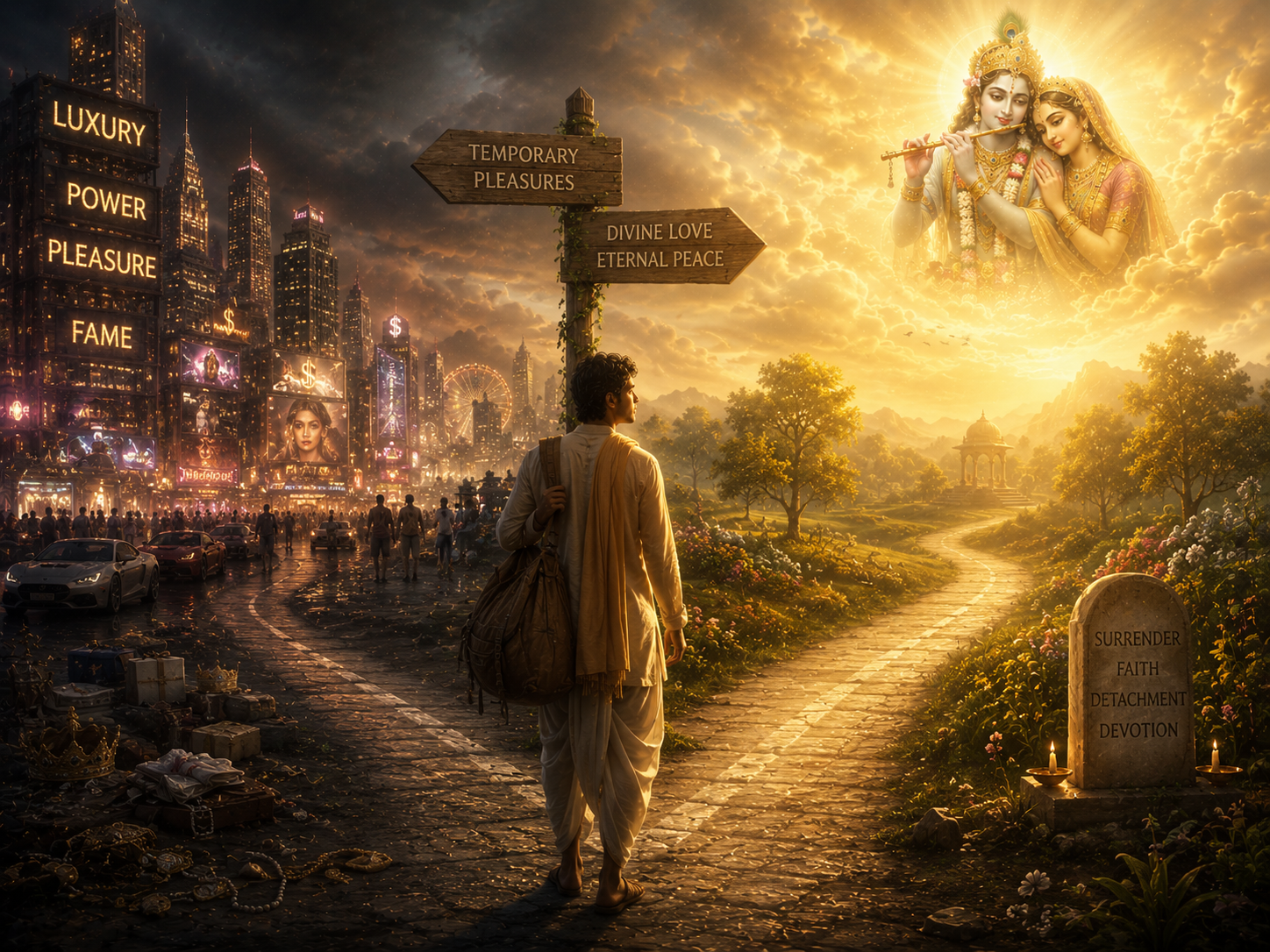
Why does the mind continue clinging to the world? Explore how worldly attachment blocks surrender and why detachment becomes essential on the spiritual path.
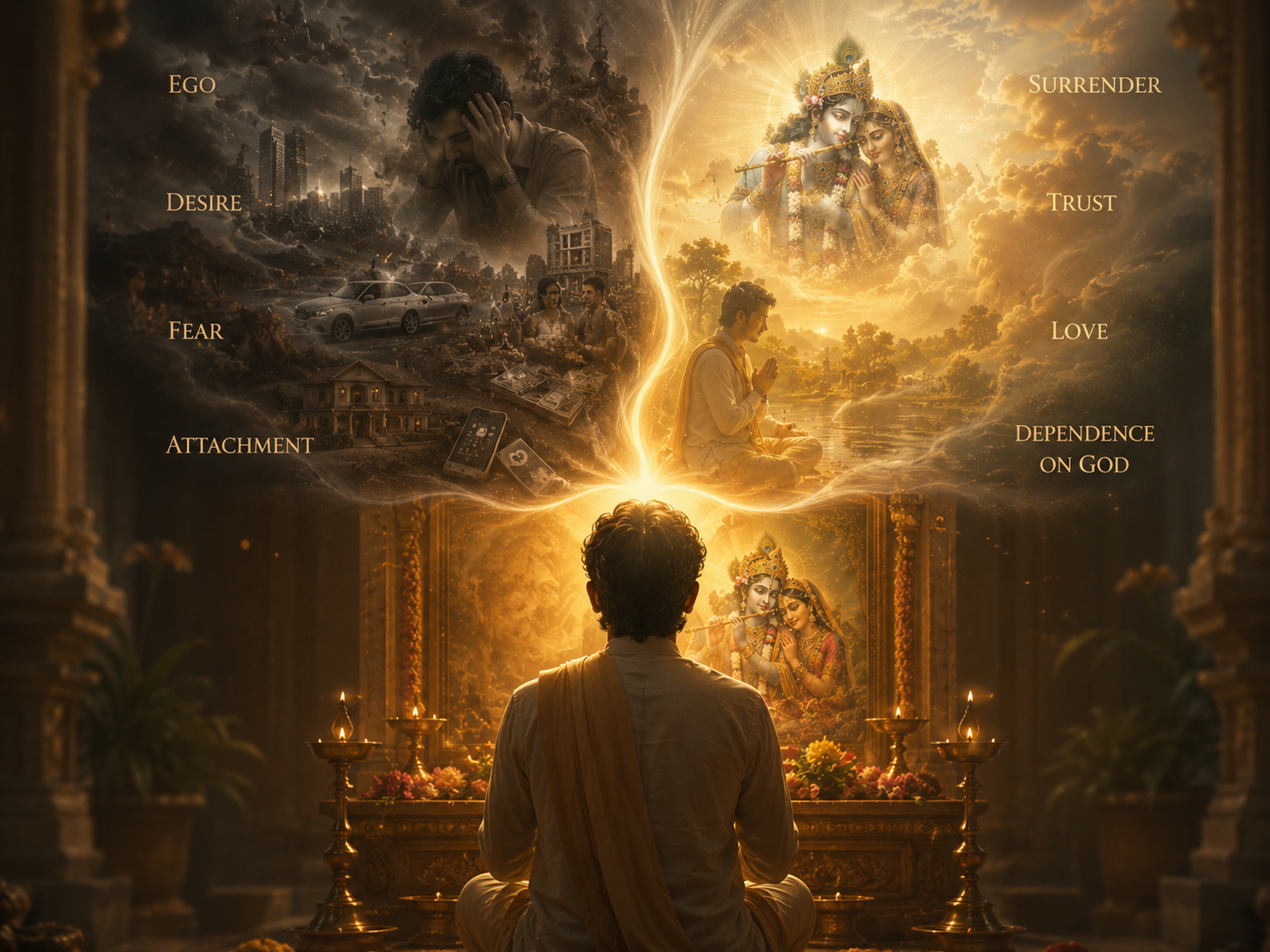
Learn why true surrender is not merely external action, but the gradual surrender of attachment, ego, and false dependence within the mind.
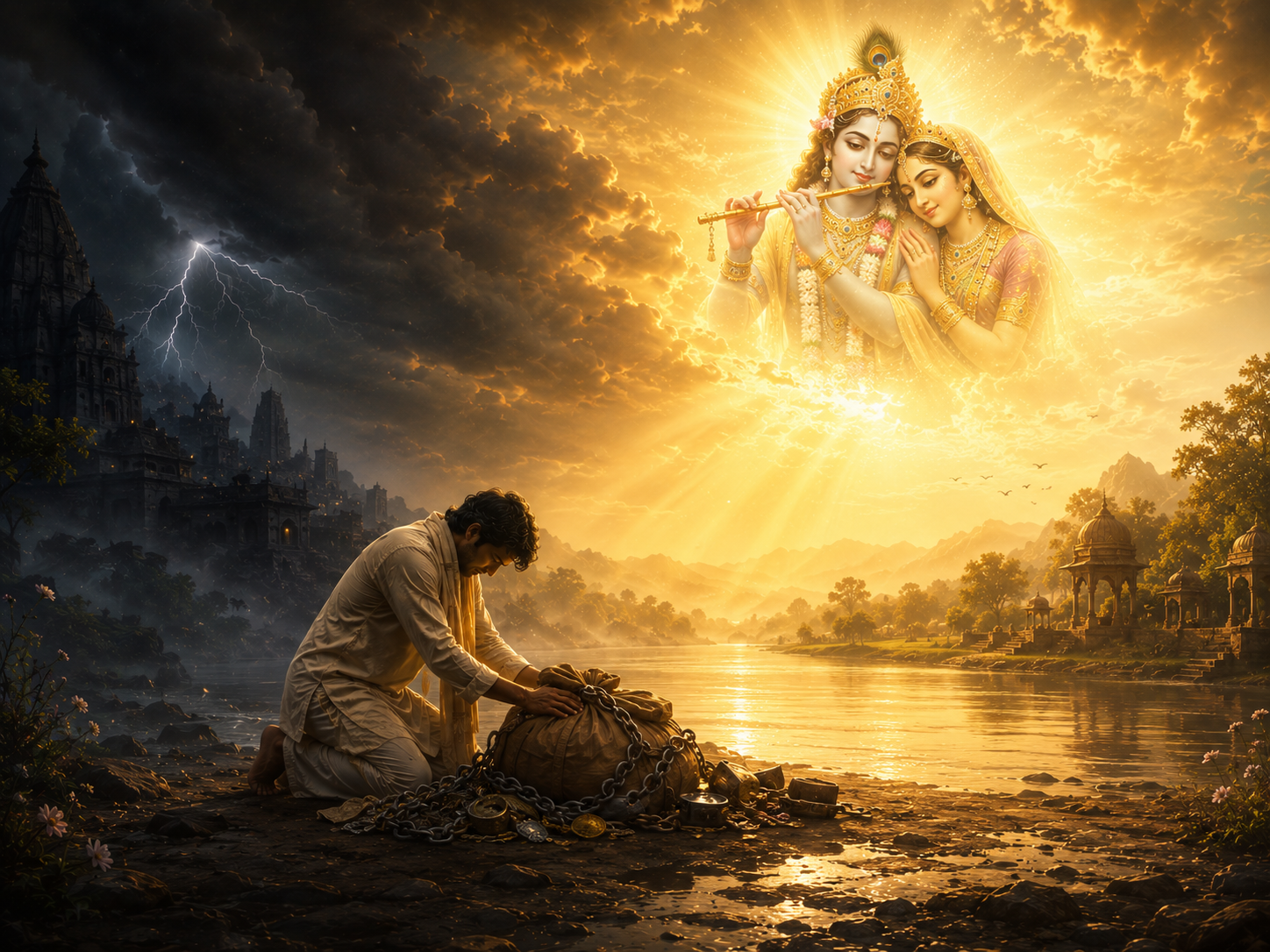
Discover the spiritual transformation that begins when the soul genuinely surrenders and comes under Divine Grace and protection.

Can surrender “earn” Divine Grace? Explore why surrender is not a transaction, why material effort cannot purchase Divine realization, and how Grace remains causeless.

What does surrender really mean? Learn why surrender is necessary before Divine Grace descends and how true dependence upon God transforms spiritual life.

If Divine Grace is necessary for realization, what must the soul do? The scriptures explain that Grace is not arbitrary. Spiritual effort prepares the heart, but surrender makes the soul receptive to Divine Grace.

Does God perform every action? The scriptures reject this misunderstanding completely. Discover why fatalism destroys spiritual life, and how Divine Grace and personal responsibility operate together.

svamini (स्वामिनी, svāminī ) means Ladyship or a proprietress who wields the ultimate authority. Shri Radha is Svamini of Gopis and Shri Krishna. Further Reading and References * Related Concepts: * Shri Radha Krishna - The Divine Couple * Names of Shri Krishna * References: * Prema Rasa Madira - The Intoxicating Bliss

Siddhis (सिद्धि | siddhi) are eight divine powers that remain in service of God and God-realized saints, enabling supernatural feats. What It Means Many of God’s powers are described as personified śaktis that exist in His service. Through prescribed spiritual practices, a seeker may receive a limited manifestation

Some devotees accept Shri Krishna to be their Beloved with an expectation of experiencing Him with all their senses. Their love is called madhurya bhava of sadharani rati (Devanagari: साधारणी रति ISO15919: sādhāraṇī rati ). Leading example of such a devotee is Kubja. LEARN MORE * Siddha bhakti * Perfect devotion

Satyakamah (सत्यकाम | satyakāma) refers to Desires factualize. The Divine Attribute It means "one whose desires immediately come to fruition." It is one of the eight divine qualities of God described in the Dahara Vidya section of the Chandogya Upanishad. Attainment by the Soul While this power

Shadvikar (षड्विकार; ṣaḍvikāra ) is made by blending two Sanskrit words. * shad - six * vikar - changes or deformations Every material body in the entire creation goes through the following six states. These are * Exists or asti (अस्ति; asti) - body starts to form. * Born or jayate

Satya Sankalp means "True Resolve." Discover this divine quality where God's will is instantly fulfilled, contrasting human uncertainty with Divine perfection.
Meaning A Sant (संत | sant) is a God-realized soul—one who lives in constant awareness of God and is free from ignorance. Also Known As * Saint * Mahāpurush (महापुरुष | mahāpuruṣa) Primary Meaning (Philosophical Use) In Shri Maharaj Ji teachings, Sant refers to a realized being who has

Shruti prasthana (श्रुति प्रस्थान | śruti prasthāna) refers to the Upanishads that serve as the final and irrefutable authority on spiritual matters. Of the estimated 1,130 original Upanishads, only 108 are available in the present age. Among these, the nine most prominent ones are: Ishavasya,

Shmashana Vairagya (Devanagari: श्मशान वैराग्य; ISO 15919: śmaśāna vairāgya) signifies "cremation ground detachment," a form of temporary renunciation. It refers to the momentary realization of life's impermanence that arises when one accompanies a body to the cremation ground, understanding for a

shaddarshana (षड्दर्शन | ṣaḍdarśana) mean the six schools of philosophy collectively referred to as Darshan Shastra. Further Reading and Reference * Related Concepts: Darshan Shastra — Schools of Philosophy * Reference: The Supreme Spiritual Master - His Biography