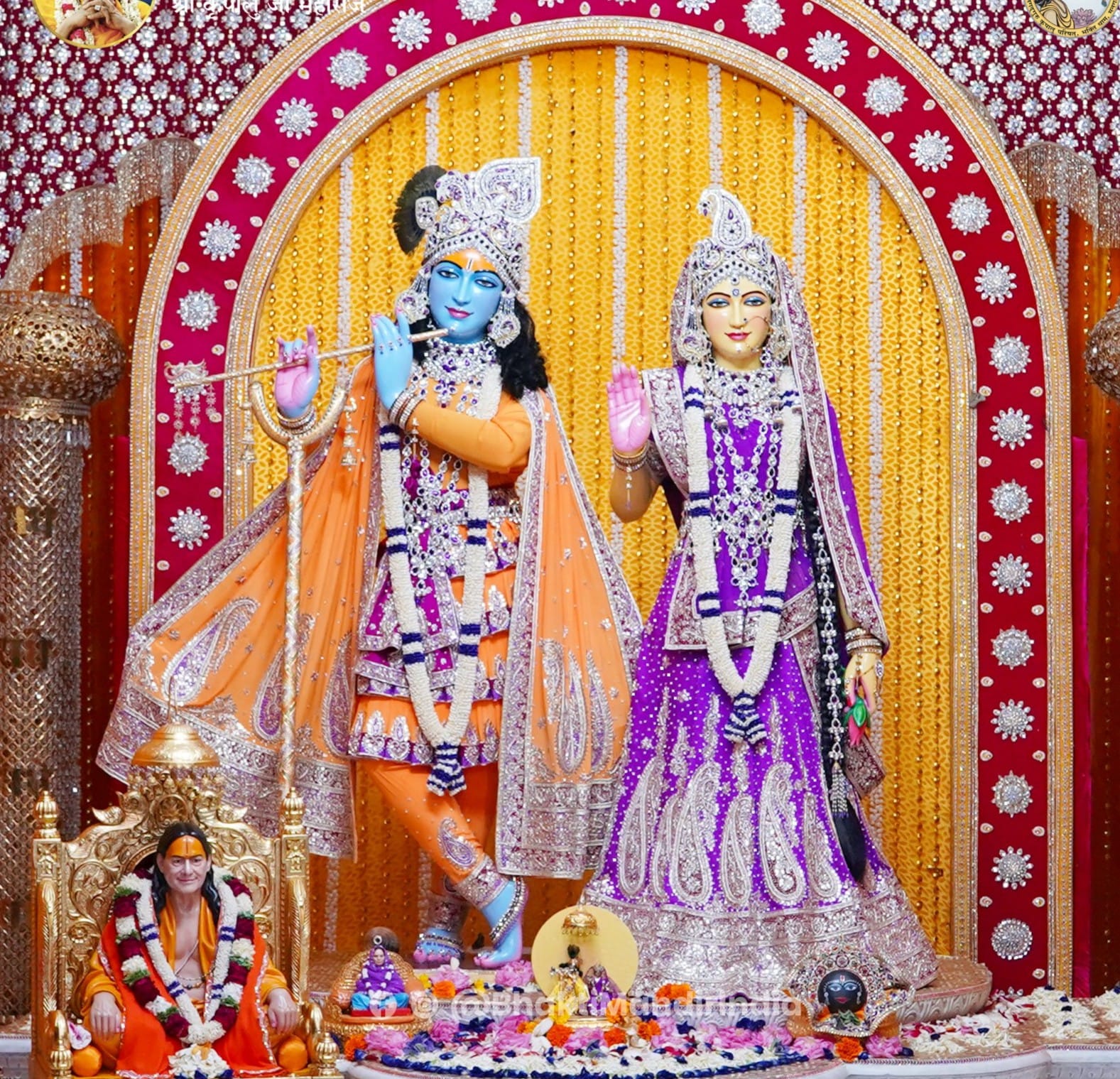
Is Serving God a Burden or the Greatest Privilege?
Is serving God a burden? Discover why being a Nitya Dasa (eternal servant) is the highest privilege, offering infinite Anand (Bliss) beyond liberation.
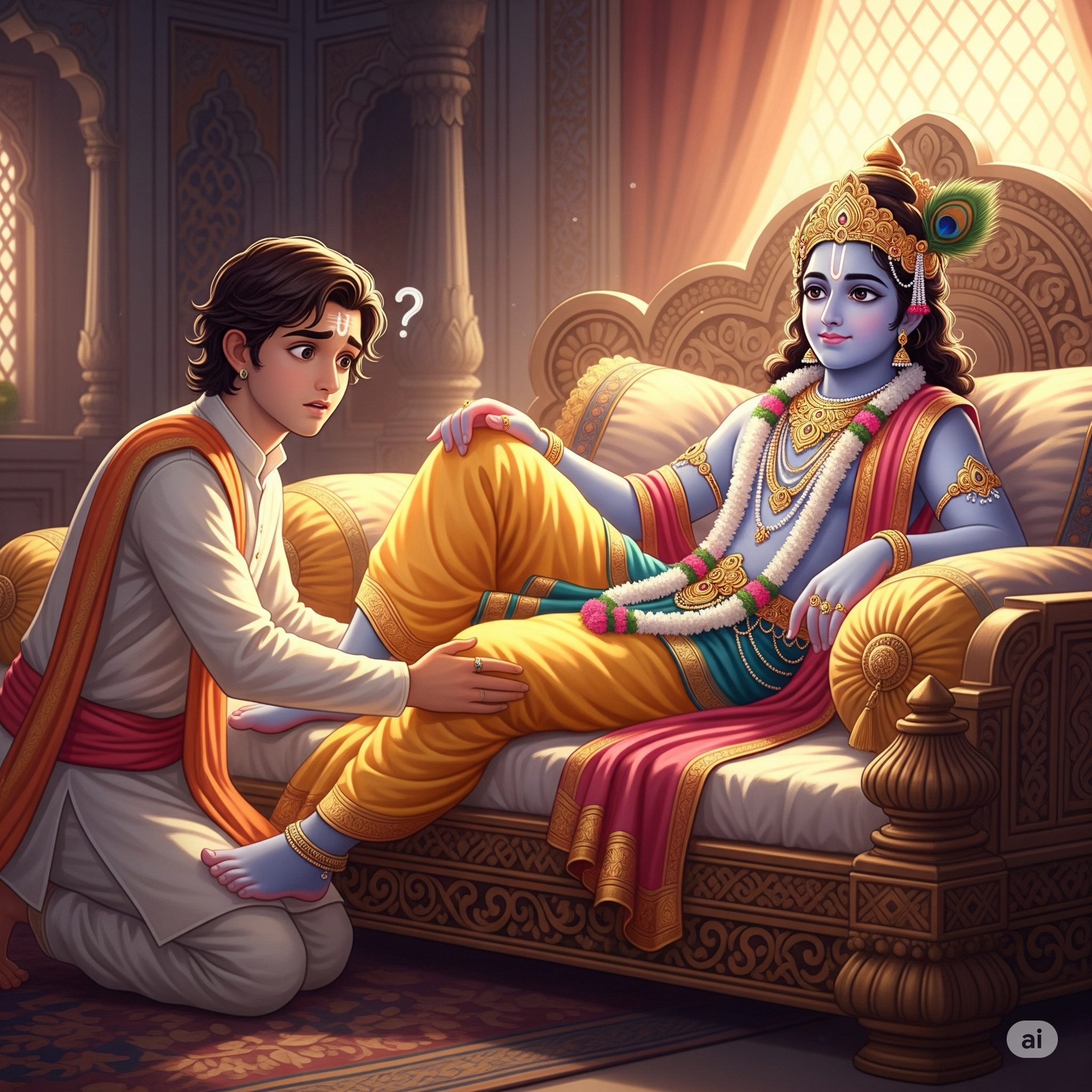
Question: When we attend satsang, we often hear statements such as “We are servants of God.” For many, this phrasing can feel belittling. We naturally think, "I perform actions for my own happiness. Being anyone's servant just to bring them joy is not my goal. Why should I strive to be a servant for eternity?"
Answer: The idea of being a servant (Devanagari: दास; ISO 15919: dāsa) often feels belittling to the material mind. However, Vedic philosophy redefines servitude as the soul’s natural state of infinite happiness.
The sentiment of belittling stems from the mistaken conclusion that God enjoys being served while the servant remains bereft of joy. As all living beings naturally seek anand(Bliss) this misunderstanding of serving God can lead to apprehension.
To resolve this concern, we must understand the fundamental nature of God, the jeev (Soul), and the relationship between them.
The Relationship: Part and Whole
All scriptures assert that God is the very personification of bliss and peace. The jeev an inseparable and eternal part (Ansha) of God. The undisputed law of nature is that every component or fraction naturally serves the source from which it originated.
For instance, the branches, leaves, and stems are parts of a tree. They exist to serve their origin—the tree. If the tree were to die, no part of it could survive for even a moment.

Because the jeev is a part of God, the Scriptures unanimously proclaim:
जीवेर स्वरूप होय कृष्णेर नित्य दास ।
jīvēra svarūpa hōya kr̥ṣṇēra nitya dāsa.
"The Svarupa (natural form) of the Jiva is to be an 'eternal servant' of Shri Krishna."
Svarupa refers to one's intrinsic nature. Habits can be altered, but one's inherent nature cannot be changed, even if one were to practice for eons.
Redefining Servitude
People often dislike being called "servants." In the politically correct language of the world, we prefer terms like employees, partners, or associates. However, God is Satyasankalpa (one whose will is instantly realized); He does not "need" to hire help because He is self-satisfied (Atmarama).
Yet, if we look closely at the world, everyone is serving someone.
- Employees: Work to support the goals of those who hire them.
- Parents: Earn a living to educate, feed, and support their children.
- Social Life: When we invite friends over, we clean, cook, and buy gifts to please them.
We all provide services to others in some form. We seek happiness, and if serving makes us happy, we do so. There is not a single living being in God’s entire creation who wishes to be unhappy.
Upon deeper introspection, we find that we work for happiness; thus, we are actually servants of happiness. We may not know it or may choose not to believe it, but our quest for happiness drives every action.

God Also Serves
It is a profound truth that the Supreme Master, God, not only rules but also serves us. His actions span from the awe-inspiring to the seemingly menial:
- He creates the world and provides food, air, water, and land.
- He permeates every particle of the universe to maintain divine law.
- He digests the food we eat (as the digestive fire).
- He ensures we breathe in and out even when we sleep.
- He sends His divine associates to guide His misguided children back home.
- He notes every thought that crosses each person's ensures that everyone gets fruits in this life according to those past karma.
God serves not only those who acknowledge Him but also those who deny His existence. Thus, while the material jiva is a servant of God, God is also the servant of the entire creation.
Servitude: An Unchanging Nature
Does this servitude end after God Realization? No. Even after liberation, the jiva continues to remain a servant of God because that is where the highest bliss lies.
Before Lord Ram descended on earth, He asked the residents of His divine abode (Saket Lok) to play different roles in His pastime. When He asked, "Who wants to be Kaikeyi?"—the queen who would banish Ram to the forest—everyone raised their hands. Lord Ram was surprised. He clarified, "I am asking about being Kaikeyi, the one who will be blamed for my exile, not Kaushalya." The associates responded, "We know. But there is no Ramayana without Kaikeyi. We are happy to help you in your Leela."
They were willing to take on infamy just to please their Lord. This is the highest level of service: prioritizing the Lord's pleasure over one's own reputation.
The Bliss of Loving Service
God is a benevolent Master. He allows the jiva to serve Him through various intimate relationships (Bhav)—as a Master, Friend, Child, or Beloved.
One might ask: Why not just merge into God (Mukti) and be done with service? The answer lies in the bliss. When Lord Ram asked Hanuman to ask for any reward, even Mukti (liberation), Hanuman Ji promptly refused.
भवबन्धच्छिदे तस्मै स्पृहयामि न मुक्तये । भवान् प्रभुरहं दास, इति यत्र विलुप्यते ॥ bhavabandhacchidē tasmai spr̥hayāmi na muktayē bhavān prabhurahaṁ dāsa, iti yatra vilupyatē
"I do not desire that liberation where the relationship 'You are my Master, and I am Your servant' ceases to exist."

In Mukti , the soul merges into Brahm. While pain is gone, the unlimited bliss of loving service is also lost.
Therefore, do not be offended when scriptures call us "servants of God." It is not a belittling phrase. It is an invitation to uplift yourself from being a servant of Maya to your rightful place as a servant of the Lord. When you attain this state, even Yamraj (the God of Death) will bow down to you.
अरे भक्त के सामने भी जाता है यमराज तो सिर नीचा कर के बैठता है और प्रार्थना करता है, "महाराज आप का समय हो गया है । यदि आप चाहें तो मैं विमान लाया हूँ ।" वहाँ भी वो अपना शासन नहीं चला सकता है । तो भक्त उसके सिर पर पैर रखकर पुष्पक विमान पर बैठता है ।
जगद्गुरूत्तम स्वामी श्री कृपालु जी महाराज
"When it is time for a Saint to depart for his divine abode, Yamraj presents himself subserviently with his head bowed... God grants the Saint such a high status that to ascend into the Pushpak Viman, the Saint uses the head of Yamraj as a step-stool." — Jagadguruttam Swami Shri Kripalu Ji Maharaj