Is Attaining Svarg the Ultimate Aim?
Why do the Vedas call seekers of Svarga "utter fools"? Discover why temporary heaven fails and why eternal service to the Supreme Lord is the ultimate aim.
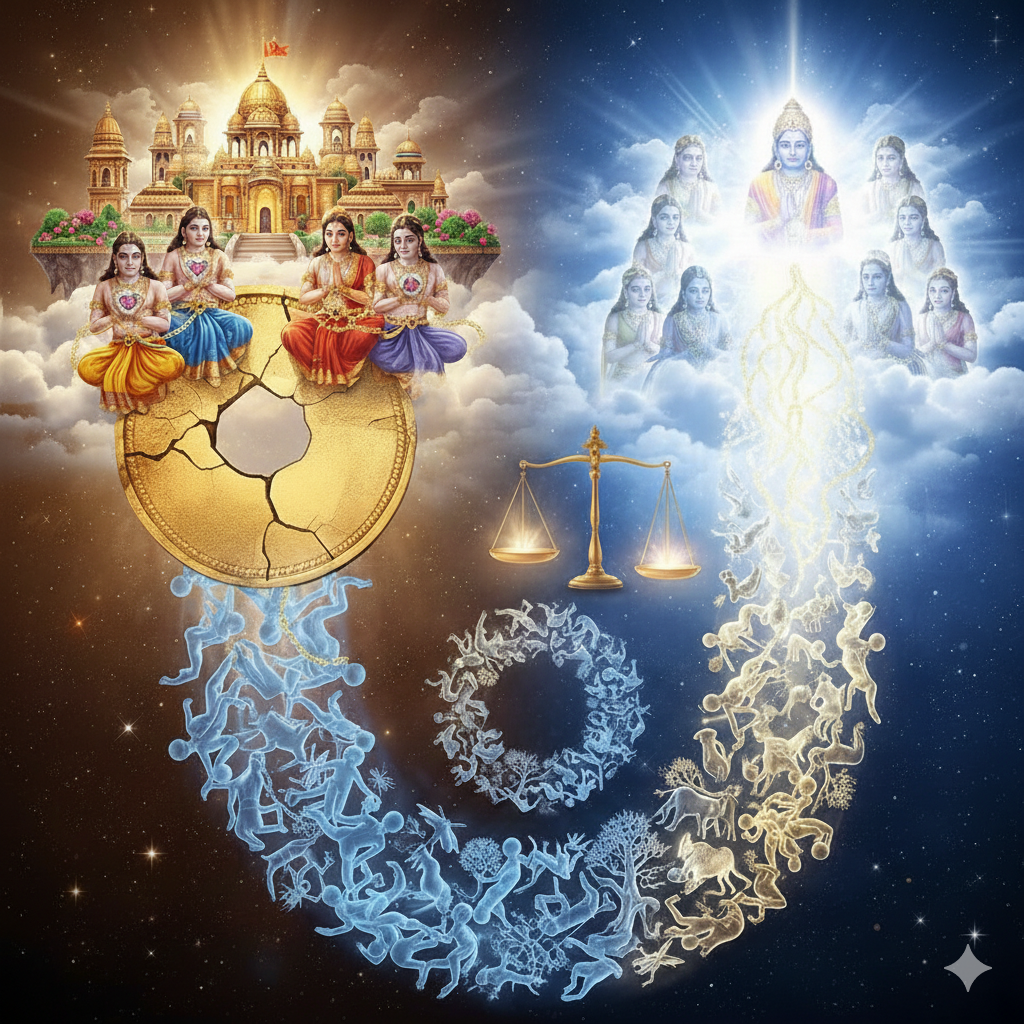
While Svarg is often mistaken for the final destination due to its luxury and lack of physical suffering, the Vedas categorize it as a temporary state. Those who strive solely for this realm are termed pramoordha (प्रमूढ़, Pramūḍha), meaning "utter fools," because they exhaust immense effort for a fleeting reward.
Why Svarga is Not the Ultimate Aim
- Impossible Standards: In the current age of Kaliyuga, the rigorous rituals and perfect punya required to reach Svarga are nearly impossible to perform.
- Mental Afflictions: Though physical pain is absent, the mind remains bound by mental afflictions like lust, anger, greed, attachment, .
- Stagnant Growth: Despite having superior knowledge and powers, residents of Svarga do not have the right to practice spiritual self-upliftment. It is a place of "enjoyment" (bhoga), not "attainment".
- The Inevitable Fall: Once the credit of one's good deeds is spent, the soul is cast back into the cycle of sansar, potentially returning in lower life forms like insects, animals or trees.
A Contrast in Spiritual Wealth
To understand the difference between the celestial realms and the ultimate goal, consider the nature of the "abode" one reaches:
- Svarga: A place where you "spend" your hard-earned spiritual currency until you are bankrupt and forced to return to the lower worlds.
- The Divine Abode (Golok): A place where your "wealth" (service) is eternal and never diminishes.
The Superior Goal: Service and Liberation
The Ultimate Aim: Seva
The ultimate aim is not a place of material luxury, but the right to eternally serve the Supreme Lord. This not only breaks the cycle of birth and death but leads to a permanent, loving union with God in His divine abode, a state of eternal bliss that far outlasts the fading pleasures of the celestial realms.