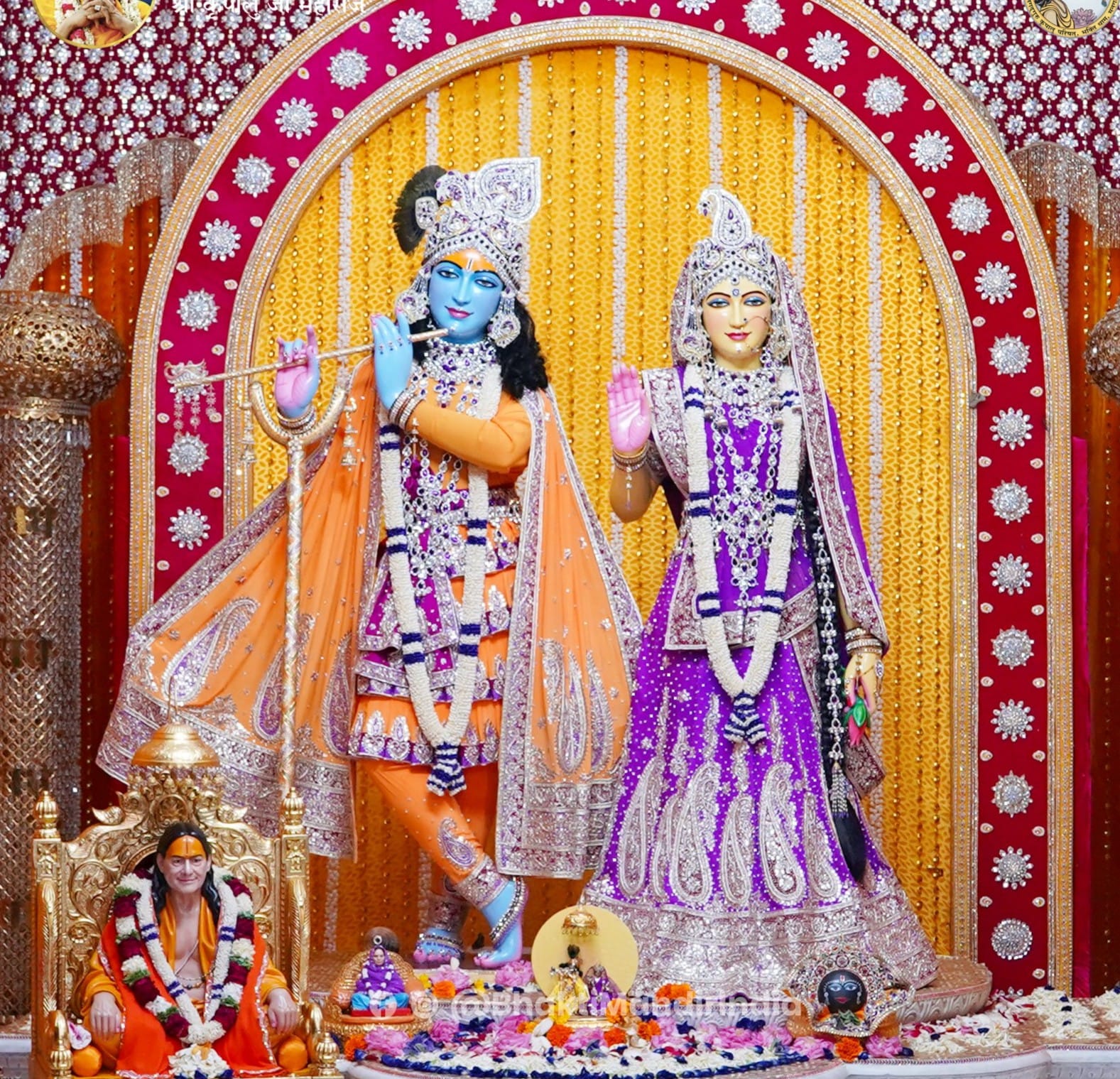
Are devatas God?
Are Devatas like Indra the Supreme God? No. They are bound by Maya. Learn the distinct difference between celestial beings and the Supreme Lord.
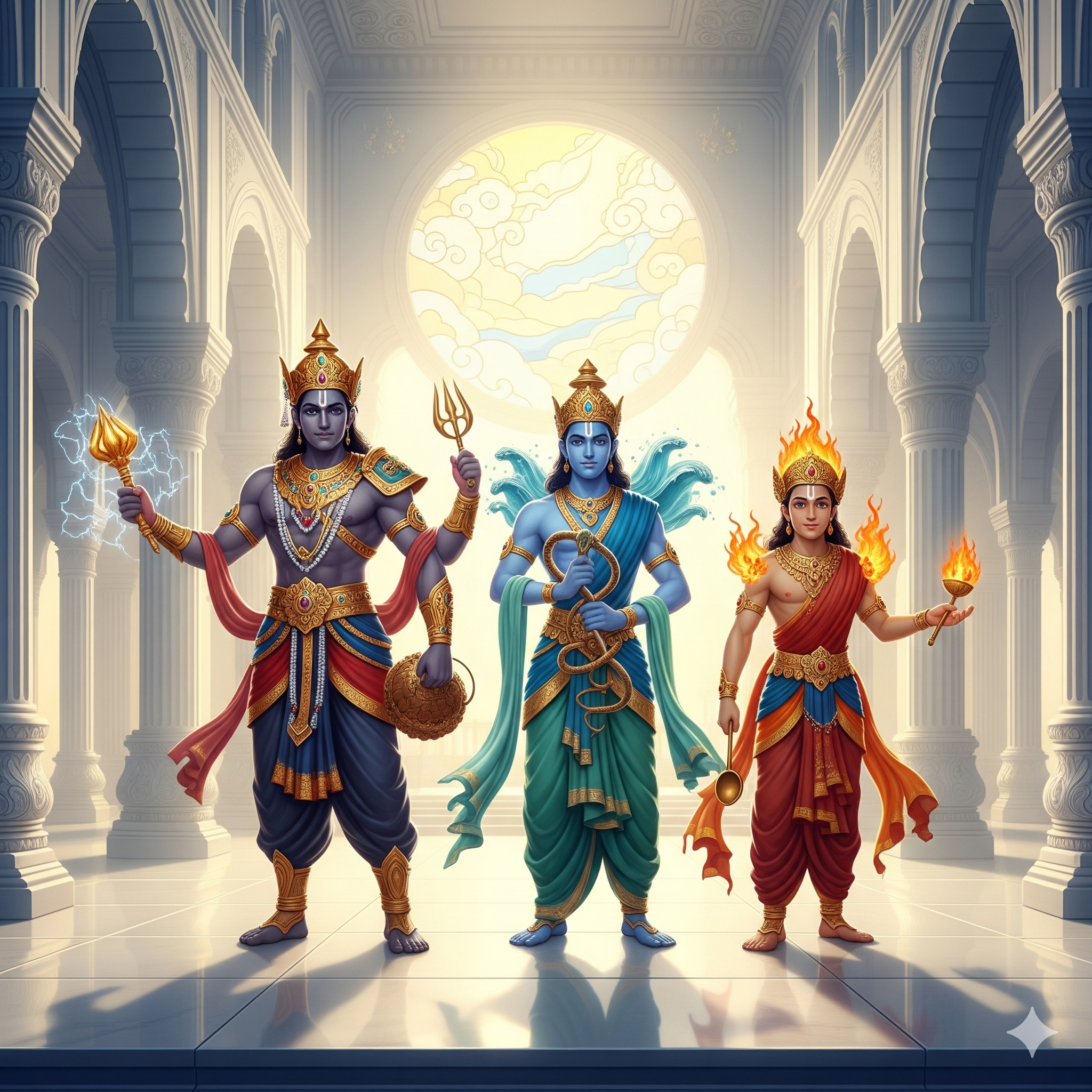
Do 330 million gods mean 330 million Supreme Rulers? A common confusion in Sanatan Dharma is equating celestial administrators (Devatas) like Indra or Varuna with the Supreme Lord. Are they equal? Do they possess the same power? Let’s demystify the Vedic hierarchy to understand who truly rules the cosmos.
Absolutely Not!
There is a fundamental difference between God and the Celestial Gods (Devatas). God is Divine and the Supreme Ruler (Parameśvara). He is not bound by any material rules. Devatas, on the other hand, are material beings. Although the material mode of goodness (सत्त्व गुण • sattva guṇa) is predominant in them, they are still within the realm of Maya. They live in higher celestial realms (ऊर्ध्व लोक • ūrdhva loka) and possess radiant bodies made of the gross material element fire tej (तेज • teja).
There are 330 million Devi-Devatas in total. The One and Only Supreme God assigns them special powers and administrative duties to manage the brahamand. For example:
- Indra: The lord of thunder and rain.
- Kuber: The lord of wealth.
- Varun: The lord of water.
1. The Position is Temporary
The position of a Devata is not eternal; it is a designated post. Any living being (जीव • jīva) who perfectly follows the duties of Varnashrama Dharma can rise to these celestial realms. For instance, to become Indra (the King of Heaven Svarg), a soul must flawlessly perform 100 Ashvamedha Yajnas (Horse Sacrifices).
However, this status is fleeting. Once the jiva exhausts the rewards of their accumulated good deeds (पुण्य • puṇya), they are forced to return to Earth. They may even be born in lower life forms (like dogs or cats) depending on their remaining karma. Thus, like ordinary humans, Devatas also unwillingly and involuntarily go through the cycle of birth and death.
2. Bondage of Maya vs. Freedom
Scriptures may sometimes refer to the Supreme God using names that are also used for Devatas, but one must not be confused.
- God and Saints: They are Mayateet (beyond Maya). They are free from the cycle of birth and death and untouched by the afflictions of Maya (such as Panchaklesh, Tritapa, etc.).
- Devatas: They are Mayabaddha (bound by Maya). They suffer from mental afflictions like anger, passion, lust, and jealousy, just like human beings.
Examples of Flaws:
- Lust: Indra frequently gets attracted to women on Earth (e.g. Ahalya wife of Sage Gautam), despite them having gross material bodies.
- Jealousy & Insecurity: Indra became jealous when the child Dhruv started worshipping the Lord, fearing he might lose his throne. Similarly, when King Dilip was performing his 100th Ashvamedha Yajna, Indra stole the sacrificial horse out of fear that Dilip would replace him as the King of Heaven.
- Material Desire: Even when the Supreme Lord appears before Indra, Indra often asks for material pleasures (like a beautiful woman) rather than divine love, proving his material mindset.
3. The Difference in Bodies
The bodies of Devatas are made of Teja (light/energy). Therefore, they are lustrous and cannot consume the gross material food of Earth. They possess specific supernatural characteristics:
- Their feet do not touch the ground.
- Their bodies do not cast a shadow.
- Their eyes do not blink.
The Story of Nala and Damayanti This distinction is famously highlighted in the story of Damayanti. During her Swayamvara, four Devatas (including Indra and Agni) took the form of King Nala to trick her. Damayanti was confused seeing five identical Nalas. However, she recognized the real (human) Nala because he cast a shadow, his feet touched the ground, and his eyes blinked, whereas the Devatas showed none of these signs.
4. The Nature of God's Descent
The Supreme Lord is contrary to these behaviors. His body is eternally divine (Divya). Yet, when He descends on Earth as an Avatar, He uses His potent power called Yogamaya (योगमाया • yogamāyā) to behave like a human for the pleasure of His devotees.
- Unlike Devatas who cannot touch gross matter, God eats our food and drinks water.
- He learns to crawl, walk, and run like a child.
- He allows His body to appear as though it excretes, just to mimic human behavior (Naralila).
Conclusion Devatas are powerful administrators appointed by the Lord, but they are fellow souls caught in the cycle of birth and death. The Supreme God alone is the master of Maya and the true object of eternal devotion.
God is divine and the Supreme ruler. He is not bound by any material rules.