Aim of Life
What is the ultimate aim of life? Discover why every living being universally seeks happiness and how to find this eternal Bliss (Ananda) in God rather than the material world.

The Universal Quest for Happiness
All living beings, in all forms and of all ages, desire the attainment of something tangible—all the time, everywhere, and in every situation. Their actions may appear contrary to one another, yet the motivation is one and the same.
A genius, a layperson, even an insane person—everyone desires to attain the same Aim (Devanagari: लक्ष्य; ISO 15919: lakṣya). Even the saints and God perform every action with this same aim in mind.
The Single-Minded Pursuit
This statement may seem ridiculous at first. After all, even the nature, habits, and views of twins are not similar. How can one believe that everyone has the exact same goal?
It becomes quite apparent if one deeply ponders the desired outcome of every action we perform. Just think: if you aim at higher education, ask yourself this series of questions:
- "Why are you studying so hard, sacrificing your comforts?"
- "Because I have to succeed in attaining my Law degree."
- "Why?"
- "To make good money."
- "Why do you want to make good money?"
- "So that I can buy a nice car and a home of my own choice."
- "Why do you want to buy all this?"
- "Because I wish to live a happy life."
- "Why do you want to be happy?"
Now, there is no answer. Simply put: "Everybody wants to be happy."
In the same vein, one might desire wealth, fame, family, or friends. Keep asking "Why?" The questionnaire will always end with the same answer: "I want to attain happiness." This proves that we do not actually desire money, property, or fame for their own sake; we consider them merely as means to attain happiness. Peace, bliss, joy, and enjoyment are all synonyms for this same ultimate aim.
Why is This Desire So Universal?
Why does everyone feel this way? According to holy scriptures like the Vedas, Bhagavad Gita, Ramayana, Quran, and Bible, we are the eternal and inseparable parts of God. And God is Happiness.
There is a natural law that every part naturally wants to mingle with its source of origin.
- The flame rises upward to meet its source, the Sun.
- All rivers run towards their source, the ocean.
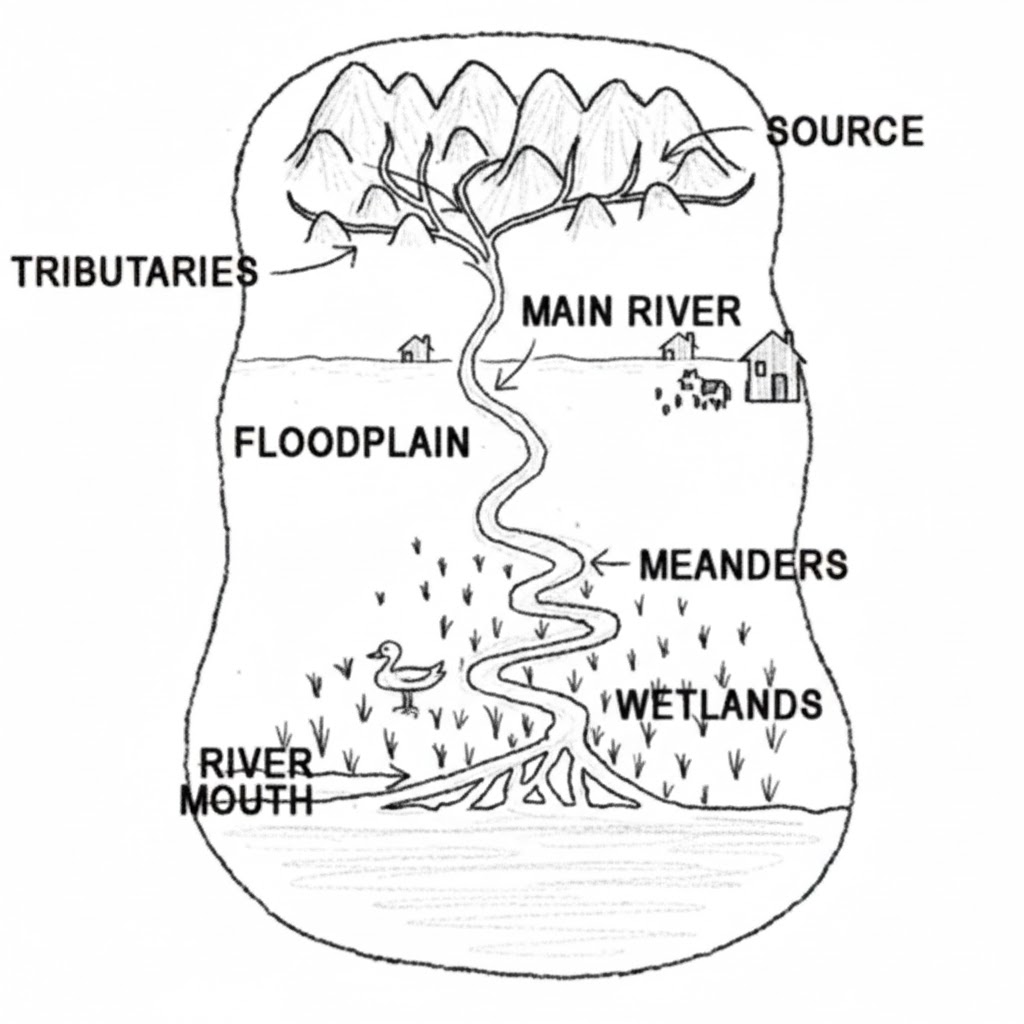
Likewise, the jiva (Living Being) inherently desires to meet God, who is Ananda (Bliss).
The Great Mistake
If we have been seeking this since eternity, why haven't we attained it? Despite our sincere and constant quest for bliss day and night, we have failed because we are searching in the wrong area. We are searching for divine happiness in the world made by Maya (the divine material power).
How to Attain Happiness?
We have to affirm the knowledge by constant contemplation that
- I belong to God alone
- The Material World (sansar) is made of Maya, where there is no trace of Happiness.
- God is my sole relative. All my relationships are with Him.
As the famous verse declares:
त्वमेव माता च पिता त्वमेव त्वमेव बन्धुश्च सखा त्वमेव।
त्वमेव विद्या द्रविणं त्वमेव त्वमेव सर्वं मम देवदेव ॥
tvameva mātā ca pitā tvameva tvameva bandhuśca sakhā tvameva।
tvameva vidyā draviṇaṁ tvameva tvameva sarvaṁ mama devadeva ॥
"You alone are my mother, You are my father. You are my brother, and You are my friend. You are my knowledge and my wealth. O Lord of Lords, You are my All in All."
Why was this world given to us?
If the world doesn't have happiness, why are we here? This world is given to us as a tool to attain that ultimate goal. Without the world, jiva (souls) would have remained idle in the infinite belly (karnarnav) of God during dissolution (Pralaya). God created the world with His power of Maya, and Maya created this body with senses, mind, and intellect. These are the instruments we must use to realize that God is our only relative and the ocean of bliss. Attainment of this bliss is our divine heritage.